

Why AI Search Needs Clear Company and Service Information

Why AI Search Needs Clear Company and Service Information is not mainly a copywriting question. It is an information and ownership question. A prospective customer asking an assistant about providers needs enough evidence to decide what the company does, where it works and what evidence supports it. The page, record or plan should make that decision easier without exposing controlled material.
A weak version usually starts with broad claims. A useful version starts with company identity, services, markets, locations, cases and ownership. That difference affects procurement, search visibility and the quality of the first conversation.
What is the direct answer?
Start with a controlled record of company identity, services, markets, locations, cases and ownership. Publish the smallest set of facts that lets a prospective customer asking an assistant about providers judge what the company does, where it works and what evidence supports it. Give every important claim a source, date, boundary and owner. Keep project-sensitive detail in the approved tender, data-room or client process.
Avoid vague claims spread across disconnected pages. That may look persuasive at first glance, but it creates questions during technical review and makes later updates difficult.
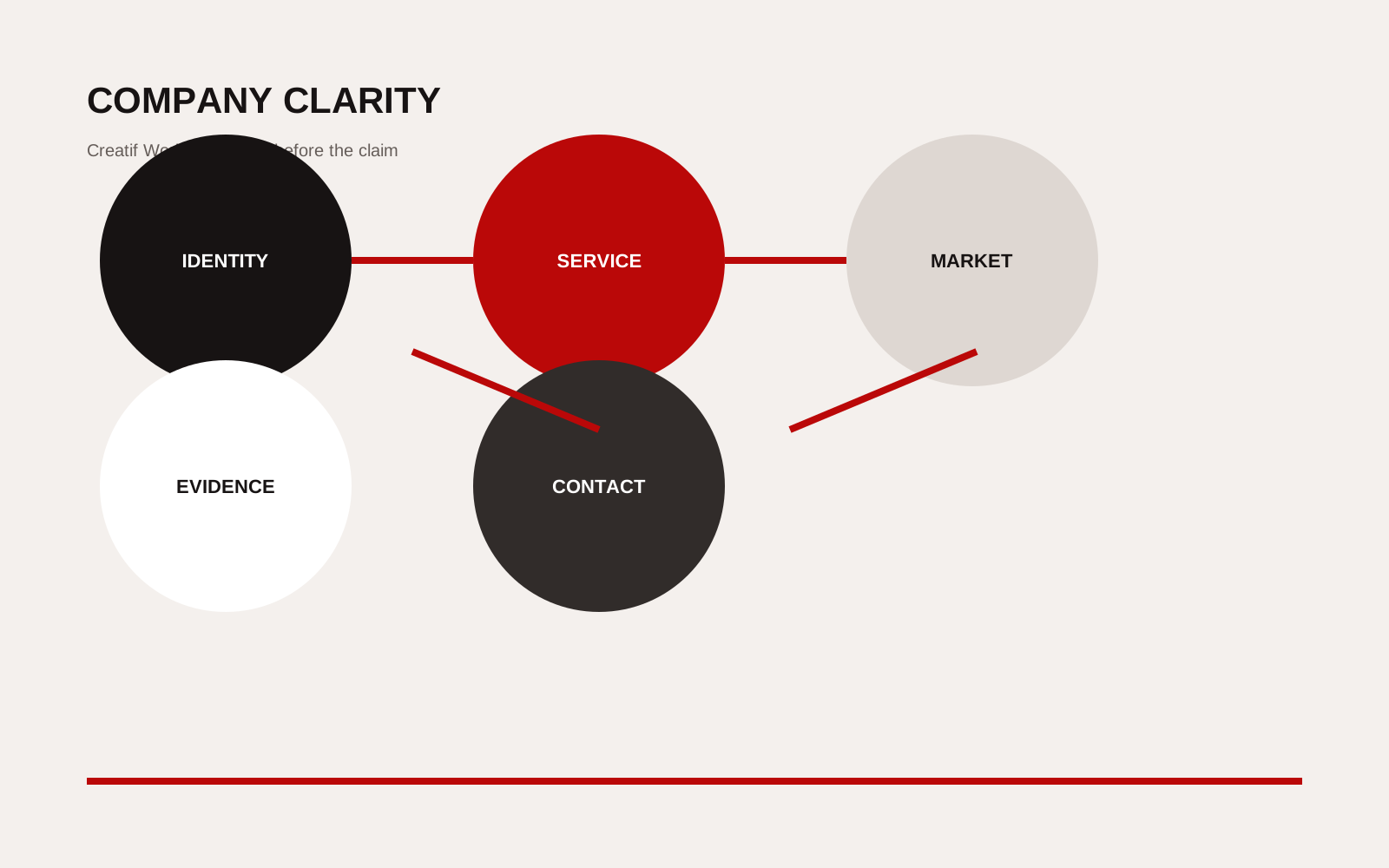
Editorial decision map for company and service clarity for AI search.
What does the official guidance establish?
The Google generative AI search guidance explains that AI features rely on core Search systems and publicly accessible content. It does not replace the project brief, contract, applicable standard or legal advice. It gives a reliable public reference for the structure of the decision.
Use the current official page near publication. Record the access date in the editorial file. If a threshold, programme or reporting route has changed, update the article before it goes live rather than adding a note after readers have acted on it.
The official source establishes the outside requirement. The company still has to prove its own role. Do not turn a national policy, standard or search guideline into an endorsement of one supplier.
Build the evidence record first
Create one source record before writing a headline or designing a card. Use these fields consistently:
| Evidence field | Publication rule |
|---|---|
| Company identity | State the approved fact and its boundary |
| Service definition | Link the fact to a current source record |
| Market and location | Name the person who can approve a change |
| Project evidence | Show the status, date and applicable condition |
| Current contact route | Keep sensitive detail in the controlled pack |
Add the internal source file, approver and next review date behind the public record. The website should not become a second uncontrolled database.
Where a number is used, retain the unit, reference period, method and denominator. Where a project is used, state the company's exact contract role. Where a location is named, distinguish a staffed base from travel, partner or remote coverage.
Separate fact, plan and example
Readers often misread a proposed capability as current, or one project result as a general promise. Use three states:
- Current fact: supported by a record that remains valid on the publication date.
- Committed plan: approved and resourced, with a stated dependency or milestone.
- Example: a bounded project, test or scenario that does not define every future case.
Keep these labels next to the statement. Do not rely on a footnote far below a large number. If the status changes, update the source record first and then every public use.
This also helps search. A clear page gives people and search systems stable facts, rather than several pages that describe the same capability differently.
Design the page around the buyer decision
The opening should name the situation and answer the main question. The next section should show the fields a buyer compares. Put project proof after the capability or decision boundary is clear.
A practical order is:
- the buyer's condition;
- the direct answer;
- the relevant scope and exclusions;
- a comparison table or process map;
- one approved example;
- the evidence or document route;
- a specific contact path.
Do not add a section only because another firm's website has one. Every block should answer a buyer question, establish a boundary or help the visitor take the next step.
Tables must remain readable on a phone. Essential facts should be text, not embedded only in an image. Downloads should show title, revision, issue date and file type.
Keep controlled information controlled
Public evidence and tender evidence have different jobs. The public page can show capability, method, approved results and the types of records available. Controlled material may include client documents, security details, personal data, live capacity, pricing or sensitive dependencies.
Define three release levels:
| Level | Suitable content | Control |
|---|---|---|
| Public | Approved capability, method and bounded example | Normal page governance |
| Qualified buyer | Detailed schedule, certificate or sample | Named request and approval |
| Project | Drawings, operational records and contract evidence | Client system or controlled data room |
The same identifier and revision logic should connect all three levels. A buyer should not receive a document that contradicts the public page.
Use this publication checklist
- Use one trading name.
- Define each service.
- State geographic limits.
- Connect cases.
- Make facts crawlable.
- Use matching schema.
- Avoid duplicate pages.
- Review Search Console.
Add a final technical and commercial review. The technical reviewer confirms accuracy and limits. The commercial reviewer confirms the contract role, permission and enquiry route. Marketing owns clarity and maintenance, not the underlying engineering fact.
Test the content with a real task
Give the draft to a colleague who did not prepare it. Ask them to find the answer to what the company does, where it works and what evidence supports it. Record where they pause, which term they misunderstand and which source they need next.
Then ask the evidence owner to trace three public claims back to the approved record. If a claim cannot be traced, remove it or repair the record before publication.
Use one recent enquiry, tender or project review as the test case. A real task exposes gaps that a general proofreading pass will miss. It also shows whether the page asks for the right information in its contact form.
Measure whether the page helps
Traffic alone does not show whether company and service clarity for AI search works. Review qualified enquiries, questions repeated by buyers, document requests, failed searches and the time staff spend explaining missing basics.
Set a review trigger as well as a calendar date. Triggers can include a new standard, product revision, changed location, new project permission, platform change or altered service model.
The general page provides the broader context. Creatif Work's relevant service connects the evidence to a maintainable website, content system or operational tool.
Creatif Work starts by mapping the decision, source record and owner. If the current material exists but a prospective customer asking an assistant about providers still cannot judge what the company does, where it works and what evidence supports it, start with the problem.