

AMSA's 2026 Inspection Priorities: Evidence Marine Operators Should Organise
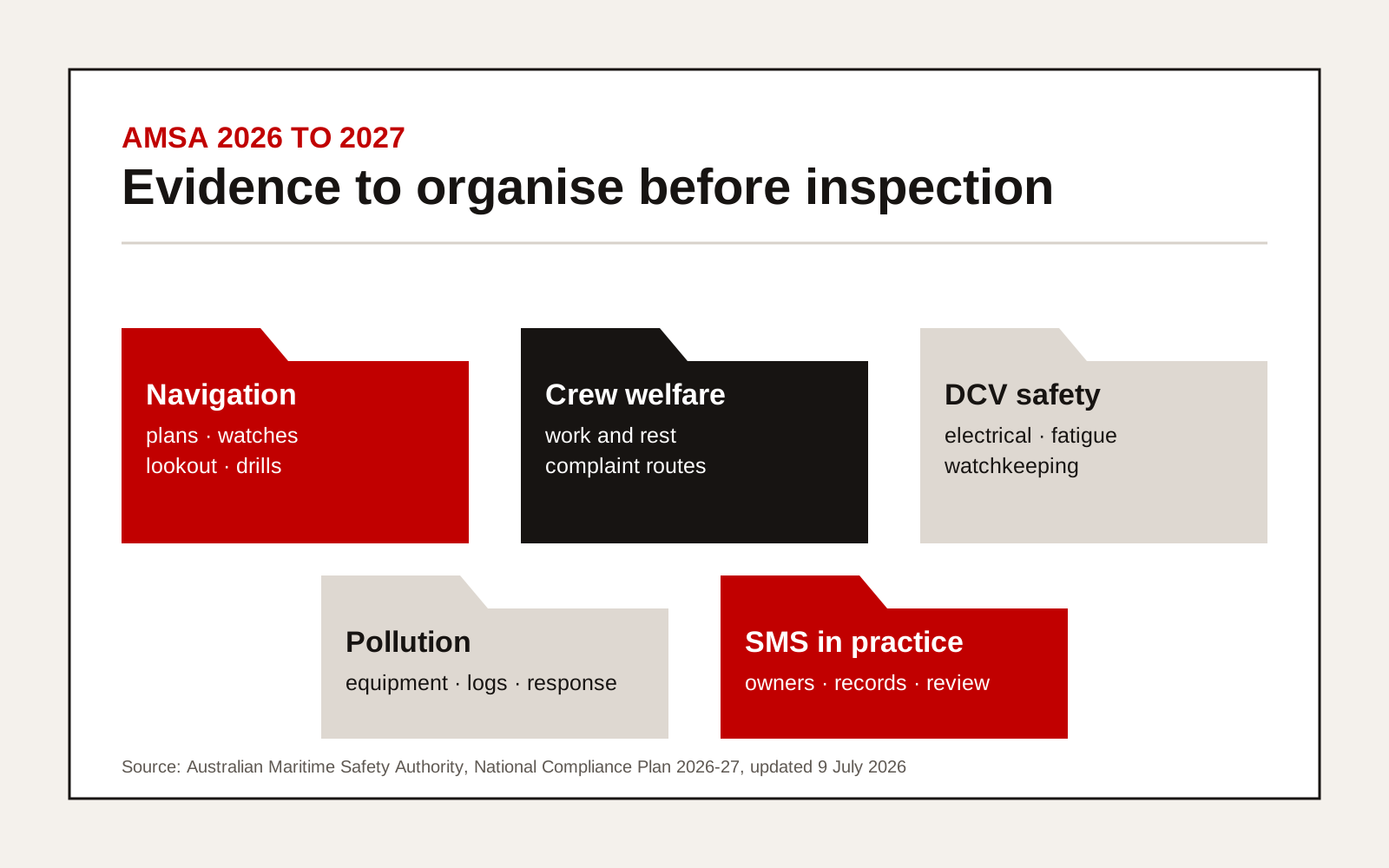
The Australian Maritime Safety Authority's 2026 to 2027 compliance plan gives marine operators a useful warning before an inspector arrives. The plan names navigational safety, pollution prevention, cargo securing, seafarer welfare, electrical safety, watchkeeping, lookout practices and fatigue management among its focus areas.
The practical response is not to make a new folder called "AMSA inspection". It is to check whether current records show that the vessel's procedures are used, reviewed and understood by the people on board.
This article turns the published priorities into an evidence review. It does not replace the legislation, an operator's safety management system or advice for a particular vessel.
What is AMSA focusing on in 2026 to 2027?
AMSA is using risk-based inspections and compliance checks to focus on navigational safety, pollution prevention, cargo securing and stowage, seafarer safety and welfare, hours of work and rest, electrical safety, watchkeeping, lookout practices and fatigue management. The plan runs from 1 July 2026 to 30 June 2027.
The source is AMSA's National Compliance Plan 2026-27, last updated 9 July 2026. AMSA says the priorities draw on inspection data, incidents, investigations, audits, search and rescue activity and ongoing compliance monitoring.
That does not mean every inspection will cover every item below. Vessel type, flag, operation and risk history still matter. Use this as a preparation map, then check the rules that apply to your own operation.
| AMSA focus area | Evidence worth checking now | Weak answer during an inspection |
|---|---|---|
| Navigation, watchkeeping and lookout | Passage plans, standing orders, watch schedules, familiarisation and drill records | A procedure exists, but the current crew cannot explain it |
| Fatigue and hours of rest | Risk assessment, work and rest records, crewing assumptions, exceptions and corrective actions | Rosters are recorded without checking actual workload |
| Cargo securing and stowage | Cargo plan, securing manual where applicable, inspection records and defect close-out | Photos or forms are stored with no vessel, voyage or date reference |
| Pollution prevention | Equipment checks, maintenance, logs, incident response and crew training | Certificates are current, but operating records do not support them |
| Electrical safety | Planned maintenance, isolation procedures, test results, defect reports and repairs | A fault was fixed, but no cause or verification was recorded |
| Seafarer safety and welfare | Employment and complaint procedures, accommodation and catering records, medical access, work and rest evidence | A policy is public, but the onboard process is unclear |
Start with the records people actually use
An inspection file assembled the night before often creates two problems. It pulls documents away from their normal location, and it can hide the fact that the working record is out of date.
For each priority, identify the system of record and the person responsible for it. Then test a real example from start to finish. A maintenance defect, for example, should show when it was found, the temporary control, the repair, who checked the repair and when the item returned to service.
AMSA's guidance says a domestic commercial vessel's safety management system should be based on its operational risk assessment and explain how safety, maintenance and operation are managed. It also stresses that an SMS must be put into practice, not simply held as a document. See AMSA's safety management systems guidance.
Check fatigue against the real operation
Fatigue evidence cannot stop at a standard roster. Compare planned hours with actual hours during delays, weather changes, breakdowns, loading peaks and emergency work.
For domestic commercial vessels, AMSA's updated SMS requirements took effect on 1 June 2025. Among the changes, fatigue risk assessments must identify and address master and crew fatigue for affected vessel classes. A useful review asks:
- Does the risk assessment describe the work this vessel actually performs?
- Do hours-of-rest records agree with logs and work activity?
- Who can stop or change work when fatigue controls fail?
- Are exceptions recorded with a reason and a corrective action?
- Does the crewing decision account for maintenance, emergency readiness and the operating area?
The AMSA guide to developing an SMS also requires records for crew qualifications, induction, familiarisation, training and drill participation. It says the SMS must be reviewed at least every 12 months, with changes and actions recorded.
Separate public proof from controlled records
A marine operator's website can show that a safety process exists, who is responsible and how a client raises an urgent issue. It should not become the vessel's controlled safety record.
Public content may include:
- the scope of the safety management system
- current certifications, with issuing body and expiry where appropriate
- service coverage and escalation contacts
- a factual explanation of fatigue, maintenance and incident processes
- approved safety outcomes from named projects or periods
Keep personal crew information, security-sensitive procedures, detailed access arrangements and live operational records in controlled systems. Our guide to Australian marine safety management systems explains how to present useful evidence without publishing the whole manual.
Review welfare evidence as operational evidence
AMSA's plan states zero tolerance for breaches of the Maritime Labour Convention relating to seafarer health, safety and welfare. Marine Order 11 covers conditions of employment, accommodation, food and catering, medical care, welfare and social security protection for vessels within its scope.
The AMSA seafarer welfare page also explains its role in inspecting vessels and processing MLC complaints. Operators should confirm that complaint routes, onboard procedures and shore contacts work in practice, not only that a form exists.
Test the route with a simple question: could a seafarer find the procedure, understand who receives the complaint and know what happens next without asking a supervisor who may be involved in the concern?
A 30-minute evidence review before the deeper audit
Choose one vessel and one recent voyage or operating period. Then run this short review:
- Open the current SMS from its normal location.
- Pick one focus area from the AMSA plan.
- Find the current procedure and its named owner.
- Trace one real record that shows the procedure was used.
- Ask a crew member to explain their part without reading the procedure aloud.
- Check whether a defect, exception or missed control led to an action.
- Confirm that the action was closed and verified.
- Record the gap, owner and due date in the existing system.
If this fails for one ordinary example, buying another compliance template will not fix it. The problem is usually ownership, retrieval or follow-through.
Creatif Work helps marine firms organise technical website content and the systems around it. When the gap sits between vessel records, shore teams and approved public evidence, our custom software work can help make the handoff visible without exposing controlled information.