

Australia's Regional Infrastructure Shortage: A Bid Capacity Checklist
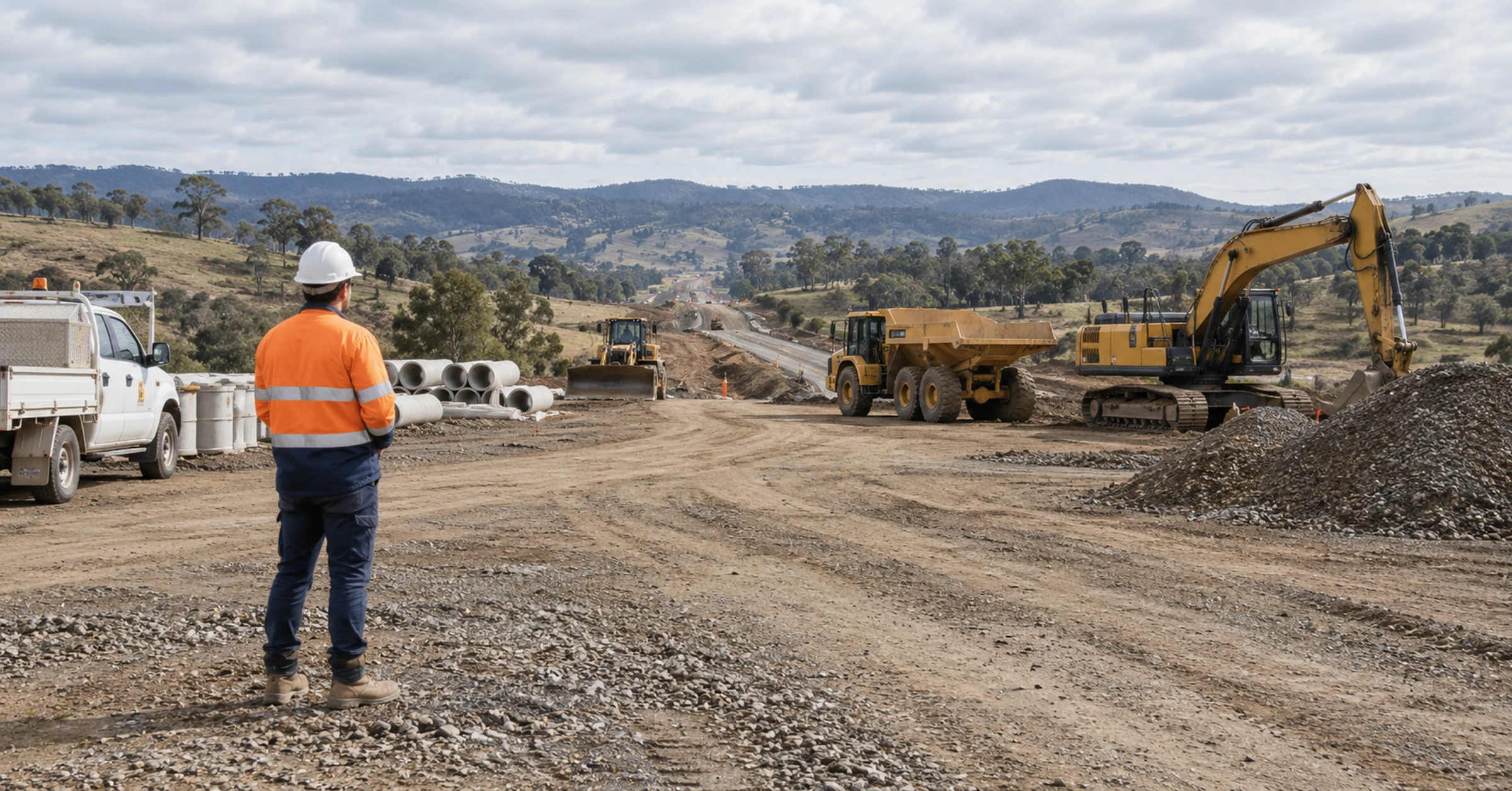
Australia's regional infrastructure pipeline is growing while regional workforce shortages are forecast to become much larger. A contractor should not answer that pressure with a generic statement about national resources. A credible bid shows how people, accommodation, logistics, supervision and suppliers will be available in the project location and period.
Capacity evidence should be time-based. The same team cannot be fully committed to several tenders at once.
What should a regional infrastructure bid prove about capacity?
Prove the required roles by month, current commitments, recruitment and subcontract routes, accommodation and travel, plant and materials, supervision, fatigue controls, and the contingency if planned resources do not arrive.
Infrastructure Australia's 2025 Infrastructure Market Capacity Report says the major public infrastructure pipeline contains $63 billion of work outside the eight capital cities, or 27% of the pipeline. It projected the regional workforce shortage to rise from 38,200 in October 2025 to 181,000 at its 2027 peak. These are national modelled estimates, not a forecast for every project or trade.
| Capacity area | Bid evidence | Delivery warning |
|---|---|---|
| Workforce | Role histogram, source and confirmed availability | Named people also committed elsewhere |
| Supervision | Ratios, experience and relief cover | Growth without enough frontline leaders |
| Accommodation | Location, capacity, travel and welfare | Housing assumed but not reserved |
| Plant | Owned, hired or subcontracted route | Lead time or transport not checked |
| Materials | Supplier capacity, lead time and alternatives | One distant source with no buffer |
| Local participation | Actual packages and support | Targets not connected to scope |
| Fatigue | Roster, travel and emergency coverage | Commuting excluded from risk review |
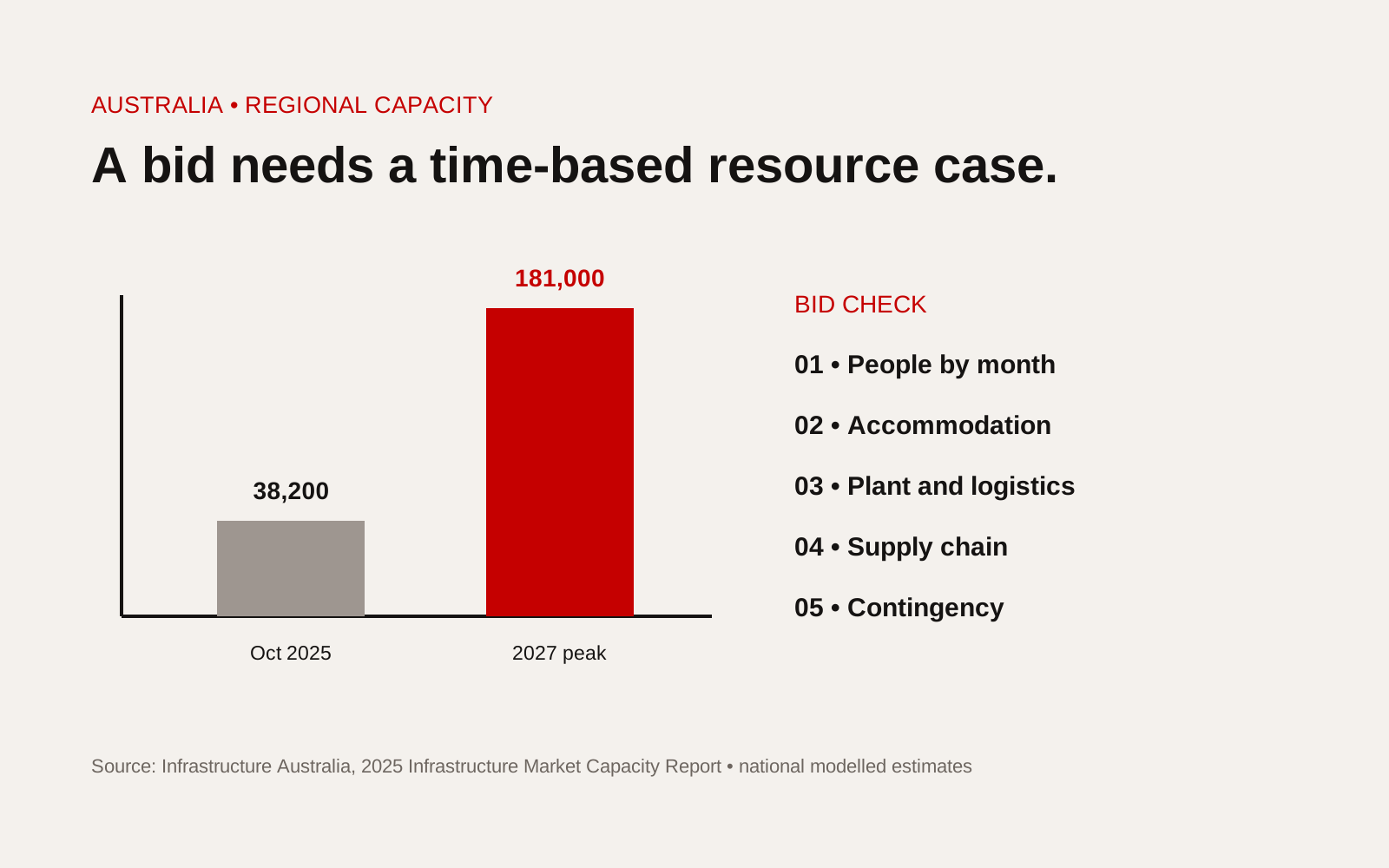
Australian regional infrastructure capacity chart and bid readiness checklist for workforce, logistics and supply chain.
Build a time-phased resource picture
Start with the programme and work breakdown. For each month or phase, show role, quantity, competency, source and status.
Use four status labels:
- named and confirmed
- employed but subject to current-project release
- subcontract or labour partner confirmed
- recruitment or market assumption
The final category is still a plan, not secured capacity. State the date and trigger for closing the gap.
Include the current portfolio
Show how this bid overlaps with awarded work, preferred positions and other live tenders. A buyer needs to see the allocation rule if several opportunities proceed.
A useful portfolio table includes project, location, role demand, start and finish, current status and probability rule. Avoid presenting every tender as both likely and fully resourced.
Treat mobilisation as an operating system
Regional mobilisation affects safety, cost and retention. Describe travel, accommodation, meals, transport to site, medical and emergency access, communications and roster handover.
Ask:
- How far is accommodation from the worksite?
- Does the roster include travel time and recovery?
- What happens during weather or road disruption?
- How are new starters inducted and supervised?
- Is accommodation capacity held for peaks and replacements?
- Who supports workers away from their home community?
Do not reduce these questions to a workforce number.
Map subcontractor and supplier capacity
Critical subcontractors face the same regional pressure. Request time-phased confirmation, key people, plant, supplier lead times and contingency. Check whether several tier-one bidders are relying on the same local firms.
For materials, record source, transport route, storage, testing, approval and alternative. Regional demand can affect quarries, concrete, precast, fuel, cranes, heavy transport and temporary facilities.
Connect local participation to real packages
Identify packages that can be performed locally, when they will be procured and what onboarding or support is required. Publish a realistic supplier engagement route instead of asking local firms to register with no package visibility.
Regional capacity may improve when work is packaged to suit local capability, but the contractor still needs to manage interfaces, quality and payment.
Bid capacity checklist
- Programme translated into monthly role demand
- Current projects and tender overlap disclosed internally
- Resource sources labelled by confidence
- Critical competencies and supervision ratios checked
- Accommodation and travel routes evidenced
- Fatigue and welfare controls include travel
- Plant and heavy transport lead times confirmed
- Critical suppliers and common dependencies tested
- Local packages have scope and timing
- Contingency owners and decision dates recorded
Put the evidence where evaluators can find it
Use a short capacity narrative supported by tables, named attachments and cross-references. Do not repeat a corporate workforce total that includes people unavailable to the project. Keep the public website factual and hold project-specific allocations in the controlled bid.
Creatif Work helps contractors organise construction evidence so public capability and controlled tender detail agree. Our website service can publish regional capability and supplier routes, while custom software can support reusable bid records when teams are reconciling resources across projects and spreadsheets. See also our guide to Australian infrastructure tender evidence.