

How to Write a Built Environment Pilot Case Study Before Full Rollout
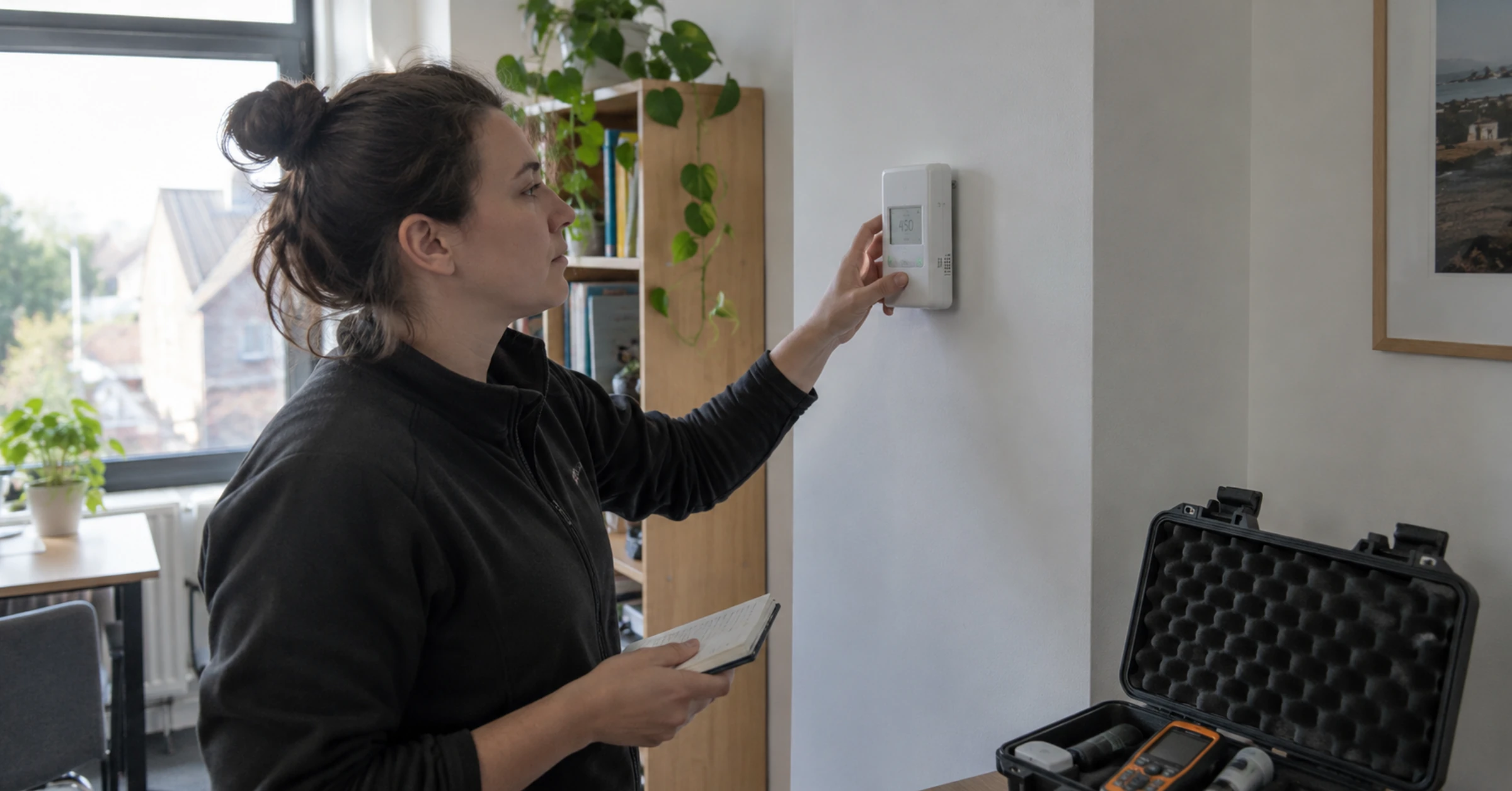
A pilot case study is worth publishing before full rollout if it states exactly what was tested. The page should help a buyer judge the result without suggesting that a limited site, user group or operating period represents every project.
That balance is especially useful for built-environment technology, where site constraints, trade coordination, safety controls and project stage can materially change performance.
How should a pilot case study be written?
Write the project context, baseline, trial boundary, configuration, operating period, measures, observed result, limitations and next decision. Label projected benefits separately from measured outcomes.
| Section | What to include | What to avoid |
|---|---|---|
| Context | Building type, project stage, user and task | Client praise with no setting |
| Baseline | Existing process, volume, time and data source | An undocumented industry average |
| Trial | Site area, duration, system version and people | "Deployed on site" with no boundary |
| Result | Measured value and comparison method | A percentage with no dates or unit |
| Limits | Conditions not tested and known constraints | Hiding exceptions in a footnote |
| Next gate | What evidence or approval comes next | Claiming full adoption from interest alone |
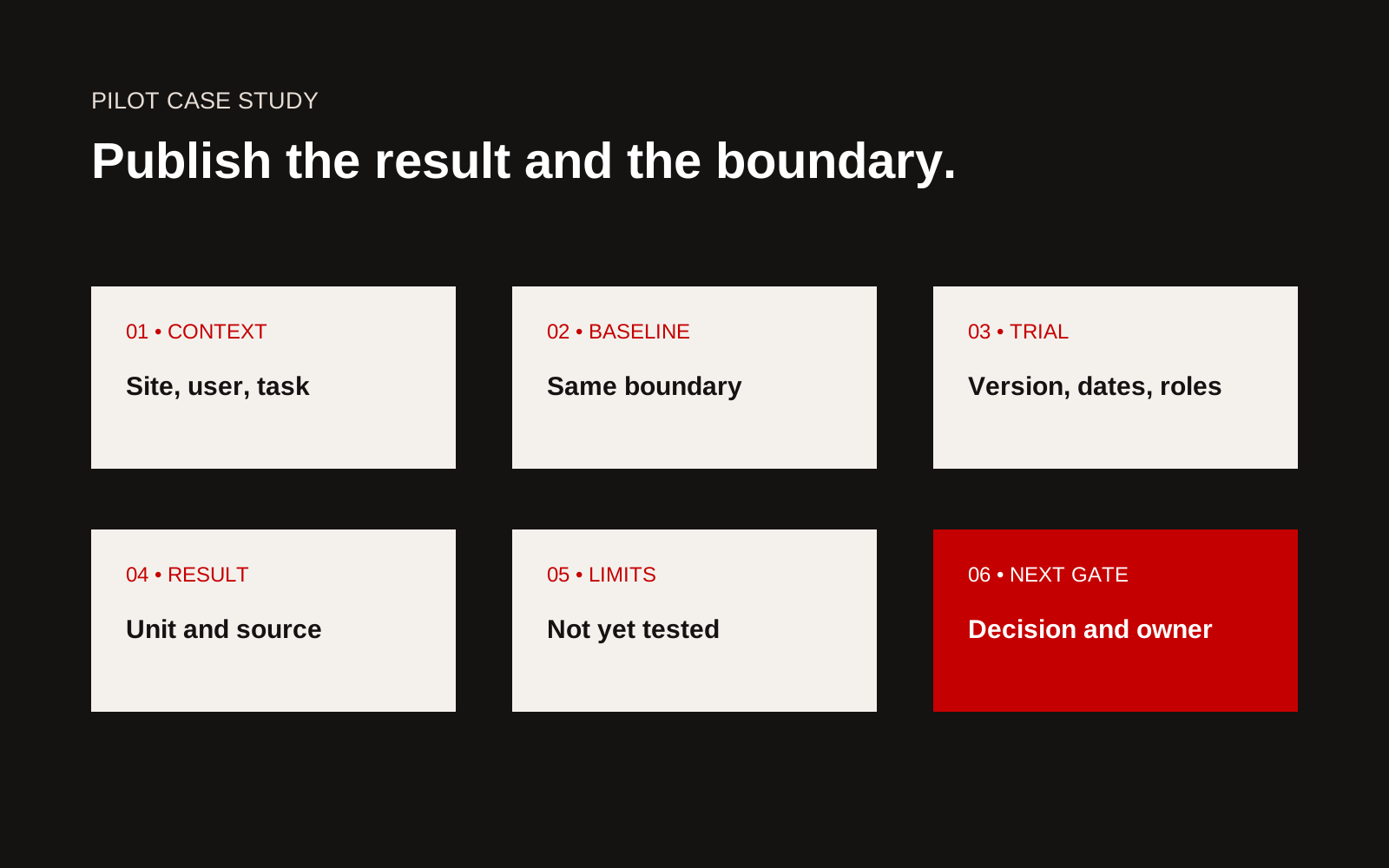
Built environment pilot case study template separating context, baseline, trial, result, limits and next gate.
State why the pilot existed
Name the decision that the pilot was designed to support. It may assess technical feasibility, workflow fit, regulatory acceptance, safety, integration, commercial value or user adoption. Trying to prove all of these in one short pilot usually produces shallow evidence.
A precise opening can say:
The pilot tested whether the system could complete a defined inspection workflow in one occupied building zone, with trained project users, during the stated period.
That sentence gives the reader a boundary before any result appears.
Build the baseline from the same task
Record the current process before the trial. Use the same start and end points for both cases. If the pilot measures time from capture to approved report, the baseline must do the same.
Capture:
- number and type of tasks
- people and roles involved
- elapsed and active work time
- equipment and access used
- errors, rework or incomplete records
- safety and permit steps
- data or document handoffs
- project conditions that affect comparison
If the baseline is based on interviews rather than records, disclose that limitation.
Describe the trial configuration
Version details matter. State the hardware, software, sensors, integrations and training used. Explain whether vendor staff were present throughout. A process that works only with the product team on site is at a different maturity stage from one run by trained client staff.
Singapore's BCA is supporting more built-environment test-bedding and procurement pathways. Its July 2026 measures make the quality of pilot evidence more important because a demonstration may need to support a later buying decision.
Report outcomes and exceptions together
Show the main result in a table with the unit, period and data source. Then include exceptions.
| Measure | Baseline | Pilot | Interpretation |
|---|---|---|---|
| Task volume | Actual count | Actual count | State any complexity difference |
| Elapsed time | Same start and end | Same start and end | Separate waiting from work |
| Staff input | Hours by role | Hours by role | Include supplier support |
| Complete records | Number and percentage | Same measure | Define complete |
| Exceptions | Type and count | Type and count | Explain resolution |
Do not fill this table with invented demonstration data. Publish the approved project values or leave a field qualitative.
Show the rollout gap
A good pilot page explains what remains before wider adoption. That could include additional sites, weather conditions, user groups, system integration, security review, regulatory advice, support capacity or commercial approval.
Use a next-gate list:
- repeat the workflow without continuous supplier presence
- test an additional project type or trade
- validate integration with the client's record system
- close safety or regulatory actions
- confirm training and support model
- agree data retention and access
- define commercial scope for the next phase
This does not weaken the story. It shows that the supplier understands responsible adoption.
Approve the page from the source evidence
Create a claim register containing the exact sentence, source file, data owner and client approval. Check every number, project description and logo use. Remove personal, security-sensitive and contract-restricted material.
Pilot case-study checklist
- One decision and test objective stated
- Project context described without exposing controlled data
- Baseline uses the same process boundary
- Trial dates, area and configuration included
- Metrics have units and sources
- Supplier support is not hidden
- Exceptions and failed cases included
- Measured and projected outcomes separated
- Limitations and next gate visible
- Client and technical approvals recorded
Creatif Work builds construction websites where pilots are shown as evidence, not slogans. Our website service connects each case study to the problem and service it proves, and our guide to construction case studies for French firms provides another practical evidence structure.