

How to Choose a Website Design Agency in Singapore

Do not choose a website agency from its visual style alone. A strong portfolio can still hide a weak process, unclear ownership or a proposal that prices pages before anyone understands the business problem.
Choose the team that can explain what should change, what should stay, how the decision will be tested and what your company owns afterward.
How should a Singapore business choose a website design agency?
Compare agencies on diagnosis, relevant project evidence, content responsibility, technical decisions, accessibility, search foundations, ownership, change control and post-launch support. Give each agency the same problem brief. Ask for assumptions and exclusions so the proposals can be compared on risk, not page count alone.
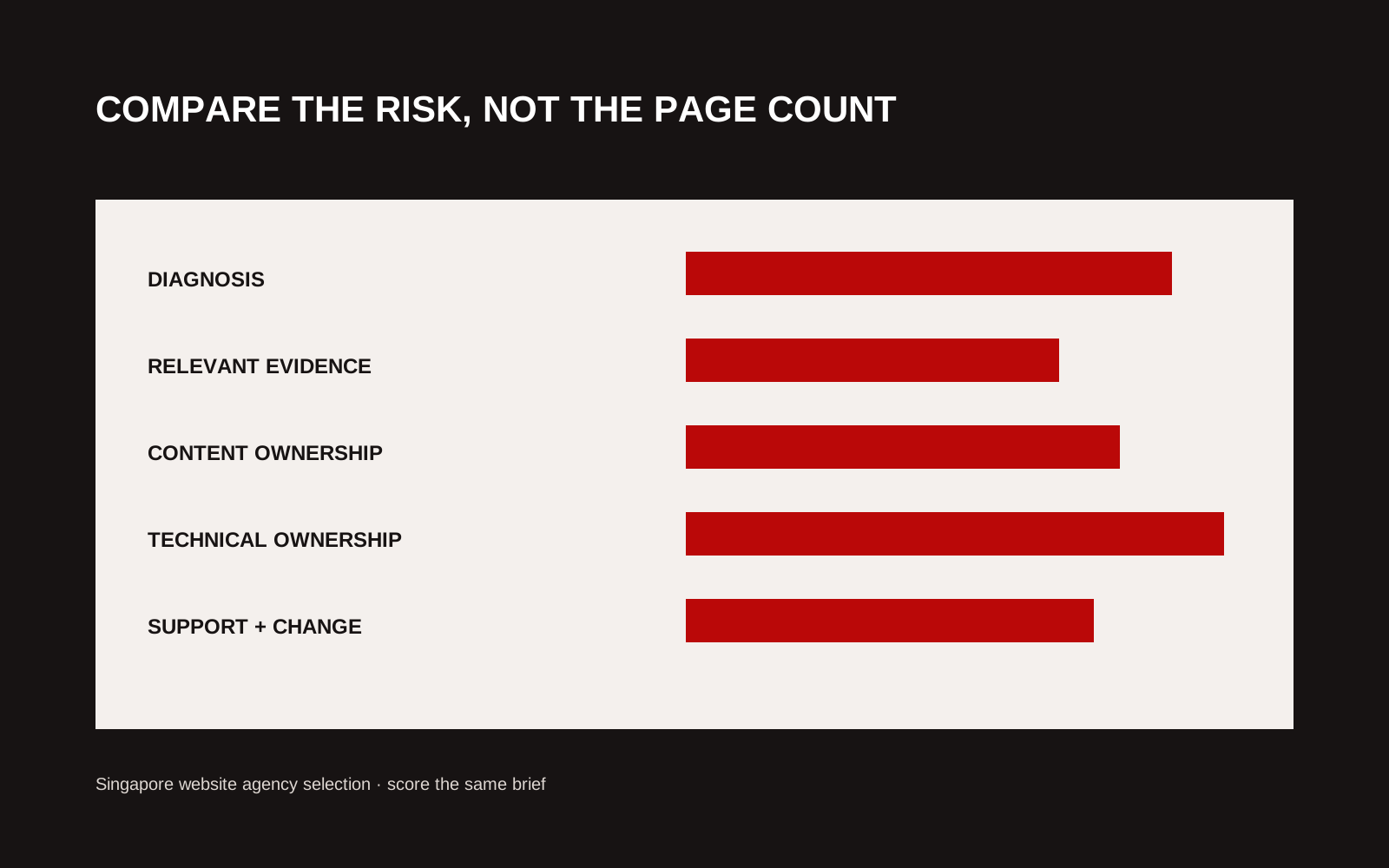
Website agency selection scorecard covering diagnosis, evidence, ownership, delivery and support.
Start with a problem brief
Before contacting agencies, write one page covering:
- business situation;
- target buyer and decision;
- what the current site prevents or fails to explain;
- evidence and content already available;
- required systems or integrations;
- internal decision makers;
- immovable dates and why they exist; and
- how success will be judged.
Do not prescribe a feature unless it is genuinely required. “We need a portal” may hide a document-control or enquiry-routing problem.
Compare the approach, not the presentation
| Area | Strong question | Warning sign |
|---|---|---|
| Diagnosis | What will you learn before design? | Scope begins with page count only |
| Evidence | Which comparable problem have you handled? | Portfolio without role or result |
| Content | Who gathers, writes and approves facts? | Client told to supply copy later |
| Technology | Why does this platform fit? | Platform chosen before requirements |
| Accessibility | How will it be designed and tested? | Treated as a final checklist |
| Search | How will pages be crawlable and measured? | Ranking guarantees |
| Ownership | What do we receive and control? | Vague hosting or account access |
| Support | Who handles changes and incidents? | No named post-launch process |
Ask for the case behind the screenshot
A relevant case study should state the original problem, agency role, constraints, important decisions, launch scope and result. Ask what the agency deliberately did not build. That answer often reveals whether the team can control scope.
Check live work on mobile. Test navigation, forms, text size, performance and error states. A still image does not show the operating website.
Make content responsibility explicit
Many projects stall because design starts before facts, approvals and imagery are ready. The proposal should state who interviews subject-matter experts, writes, fact-checks, sources images, clears permissions and enters the final content.
For technical firms, ask how the agency handles specifications, certificates, project results and confidential information. Marketing copy should not extend beyond the approved evidence.
Review ownership before signing
Confirm ownership and access for:
- domain and DNS;
- hosting account;
- content management system;
- analytics and search tools;
- source code and design files where included;
- fonts, images and other licences;
- form and email services;
- backups; and
- documentation and credentials.
The contract should explain what happens at handover or termination. “You own the website” is not enough if the company cannot access or move it.
Compare change control
Website projects change as evidence and decisions improve. Ask how the team records assumptions, approves scope changes and assesses their effect on timing.
A clear change note should state:
- requested change;
- reason;
- affected work;
- timing impact;
- commercial impact, if any;
- decision owner; and
- approval date.
Unlimited revisions can sound generous but often hide the absence of acceptance criteria. A defined review process is more useful.
Check search claims against official guidance
Google's Search Essentials explain the technical and quality basics. No agency can guarantee a ranking. Ask how the site will be crawlable, how redirects will protect existing URLs, how structured data will match visible content and how Search Console will be configured.
If AI visibility is part of the pitch, compare it with Google's generative AI search guidance. Google says normal SEO remains relevant and warns against supposed shortcuts.
Use a weighted scorecard
Set weights before proposals arrive. A technical B2B firm may give more weight to content and evidence than to campaign creative. Score the written response, references and working session, then record uncertainties separately.
Do not average away a critical risk. If ownership, security or delivery responsibility is unacceptable, treat it as a gate rather than a low score.
Our website brief template helps prepare comparable proposals. Our website service starts with diagnosis and maps the buyer decision before page layouts.
Creatif Work is a Singapore practice working across websites, content and operational tools. We are a poor fit when the requirement is only to copy an existing layout by a fixed date. If the underlying problem still needs to be found, start with the problem.
Run one working session before appointment
Ask the shortlisted team to work through one real page or user journey with your stakeholders. The goal is not free design. It is to see how the agency asks questions, handles disagreement, identifies missing evidence and records decisions.
Give every shortlisted agency the same material and time. Observe whether it jumps to layout, or first clarifies the buyer, business condition, content source and success measure. Ask what the team would need from you in the first month.
Afterward, score the session against the written proposal. Note who attended and whether those people will work on the project. A senior sales presentation does not show the delivery relationship if the assigned team is different.
Call references with specific questions about decision speed, content workload, change control, launch problems and support. Ask what surprised the client and what they would scope differently. Use the answers to adjust contract assumptions before signature. The best selection process reduces uncertainty on both sides before a long programme begins.