

AIA, CDE and Model Delivery: How German Contractors Can Show Readiness
A German infrastructure bid can ask for an AIA response, a BIM execution plan, work through a common data environment and defined model deliveries. Saying the team uses BIM software does not show that it can manage those obligations.
Readiness is visible when a contractor can trace one client requirement from the tender documents to a named owner, a model or data field, a review state and an accepted delivery.
That trace should exist inside the delivery process. The website or capability statement only needs a safe, approved summary of it.
How can a contractor prove AIA, CDE and model-delivery readiness?
Show one complete information chain: the client's AIA requirement, the team's planned response, the common data environment workflow, the model check and the accepted delivery. Name the roles, formats, review states and evidence produced. A software list or a claim that the team follows BIM standards does not prove delivery.
The German terms matter:
- AIA, Auftraggeber-Informationsanforderungen, sets the client's information requirements.
- BAP, BIM-Abwicklungsplan, records how the delivery team will meet them after contract.
- CDE, common data environment, controls how information is shared, reviewed, issued and retained.
- Model delivery is the actual information exchange, checked against the agreed requirement.
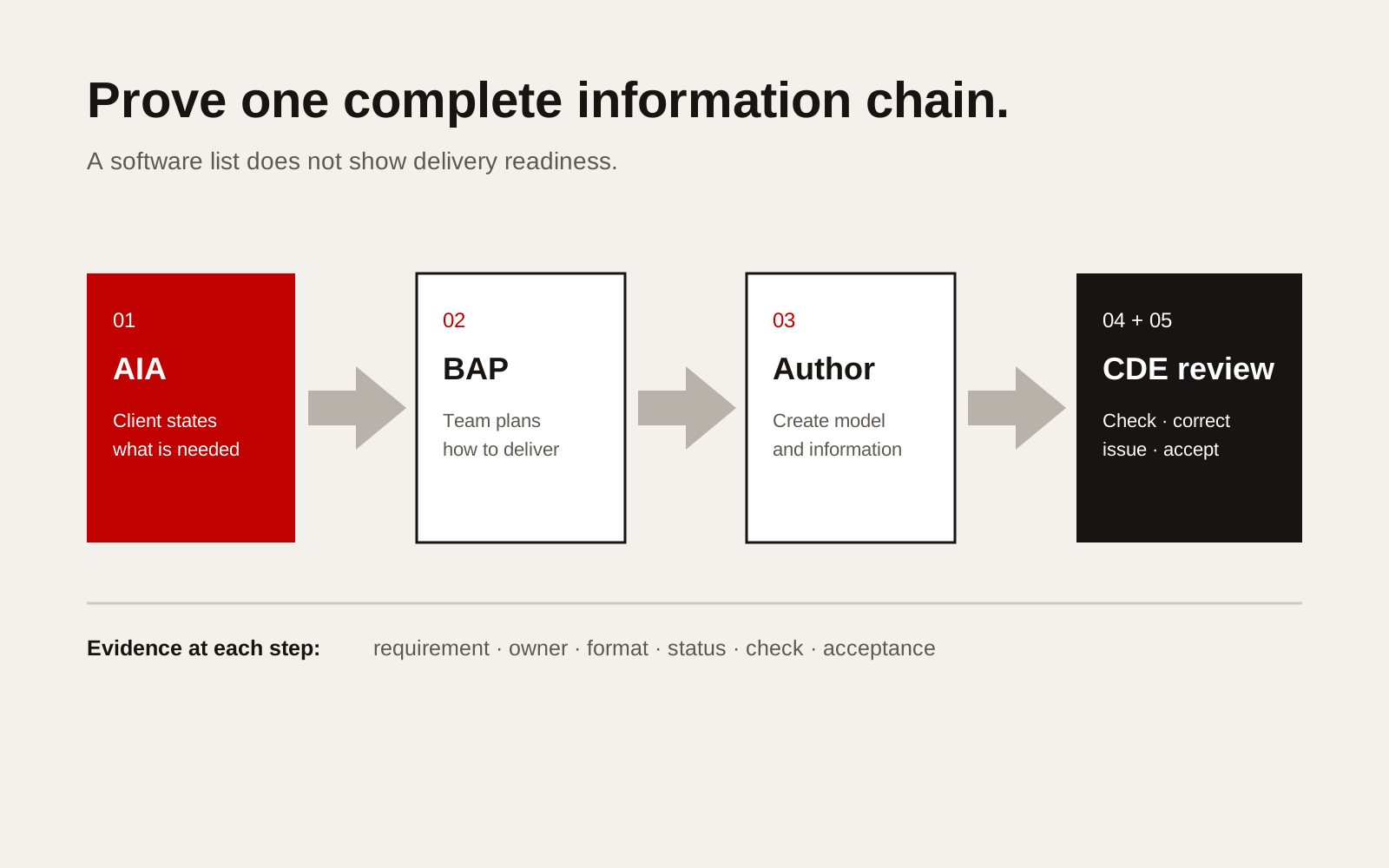
German BIM delivery workflow from client AIA through execution planning and CDE review to accepted model.
Start with a requirement-to-evidence matrix
Use one line for every material AIA requirement. Do not group ten obligations under "BIM coordination".
| Field | What to record | Example of acceptable evidence |
|---|---|---|
| Requirement | Exact AIA reference and purpose | AIA section and information-use identifier |
| Delivery | Model, document or dataset required | Coordination model plus issue report |
| Stage | When the information is due | Design release, construction release or handover |
| Owner | Person responsible for authoring | Named role in the responsibility matrix |
| Reviewer | Person or party approving it | Discipline lead and client review role |
| Format | Native and exchange formats | Project-specific agreed formats |
| CDE state | Where it sits in the workflow | Work in progress, shared, published or archived state |
| Check | Rule, method and threshold | Automated property check plus visual review |
| Acceptance | Proof the delivery passed | Transmittal, acceptance record or closed issue set |
BIM Deutschland explains that the AIA defines the type, scope, structure and quality of required information. Its federal building AIA example also states that the AIA is a basis for the BAP, which sets out how information will be delivered after contract.
Show how the CDE controls status
A CDE screenshot proves that an account exists. It does not show information control.
A stronger diagram shows:
- where authors create working information
- who checks it before sharing
- what review makes it suitable for a defined purpose
- who authorises publication or contractual issue
- how superseded information is retained
- how comments and model issues return to the responsible author
Keep platform names secondary. The same process should remain understandable if the client specifies a different CDE.
For bid evidence, use a sanitised workflow and one completed example. Label the project stage, delivery, status change, reviewer and outcome. Remove usernames, client-sensitive filenames and live links.
Make model checking repeatable
Model checking needs an input, a rule, a result and a resolution path. "Clash detection completed" describes an activity but not the acceptance condition.
Separate at least three kinds of review:
- geometry and coordination checks
- information and property checks
- visual or professional review that cannot be reduced to a machine rule
For each, state who runs the check, when it runs, the rule set or requirement, how issues are assigned and what closes them.
The federal BIM Portal now supports object templates and checking rules exported in Information Delivery Specification format. BIM Deutschland's June 2026 workshop information describes using IDS to enrich and check models against portal requirements. This can make property checks more repeatable, but it does not remove project-specific review or contractual judgement.
Prepare six pieces of evidence for a bid
A compact bid pack can show readiness without exposing an entire project environment:
1. An AIA response extract
Use an anonymised matrix with several representative requirements. Show that the team can separate information purpose, timing, format and acceptance.
2. A BAP responsibility extract
Name roles and decisions. Avoid a large organisation chart with no link to the information deliveries.
3. A CDE status workflow
Show how information moves and who can change its status. Include rejection and correction, not only the happy path.
4. A model-check report
Show the requirement tested, pass and fail counts, assigned owner, correction date and final verification. If figures are presented, label the model stage and rule-set version.
5. An accepted delivery record
Use a transmittal, acceptance note or handover receipt with sensitive details removed. The important fact is that the receiving party accepted the agreed information.
6. A lesson carried forward
Describe one change made to the next project's template, check or review timing. This shows the process is maintained rather than copied unchanged.
Audit the public capability page
The capability page should let a procurement or technical reviewer answer these questions:
- Which asset types and project stages has the team delivered?
- Has it worked from client AIA through BAP and model acceptance?
- Which information exchanges and open formats can it support?
- How are models checked before issue?
- How does the CDE workflow control review and approval?
- What evidence can be shared during prequalification?
- Who leads technical clarification?
Link the page to detailed case studies, not a gallery of model images. Our guide to Germany's federal BIM Portal explains the four portal modules bidders should understand. The broader German construction BIM evidence checklist covers public proof for international buyers.
Keep the claims within the evidence
Do not claim a standard, client acceptance or project role that the source record does not support. "Delivered the coordination model" is different from "led project-wide information management". "Used the client's CDE" is different from "administered the CDE".
Write the narrow fact. Add the project stage and responsibility. A technical buyer will recognise the boundary, and the claim will survive review.
Creatif Work structures construction websites around evidence a buyer can check. Our website service can turn approved AIA, CDE and model-delivery records into clear capability pages and case studies while keeping client information controlled.