

Malaysia's 2026 Manufacturing Investment: Where Engineering Suppliers Fit
Malaysia approved RM51.3 billion of manufacturing investment in the first half of 2026. That number is useful context, not a sales pipeline. An engineering supplier still has to identify which approved projects match its process, when procurement begins and what evidence the owner or main contractor will require.
The firms most likely to benefit are not those that repeat the investment headline. They are those that translate it into packages, qualification requirements, relationships and capacity decisions.
Where is Malaysia's 2026 manufacturing investment going?
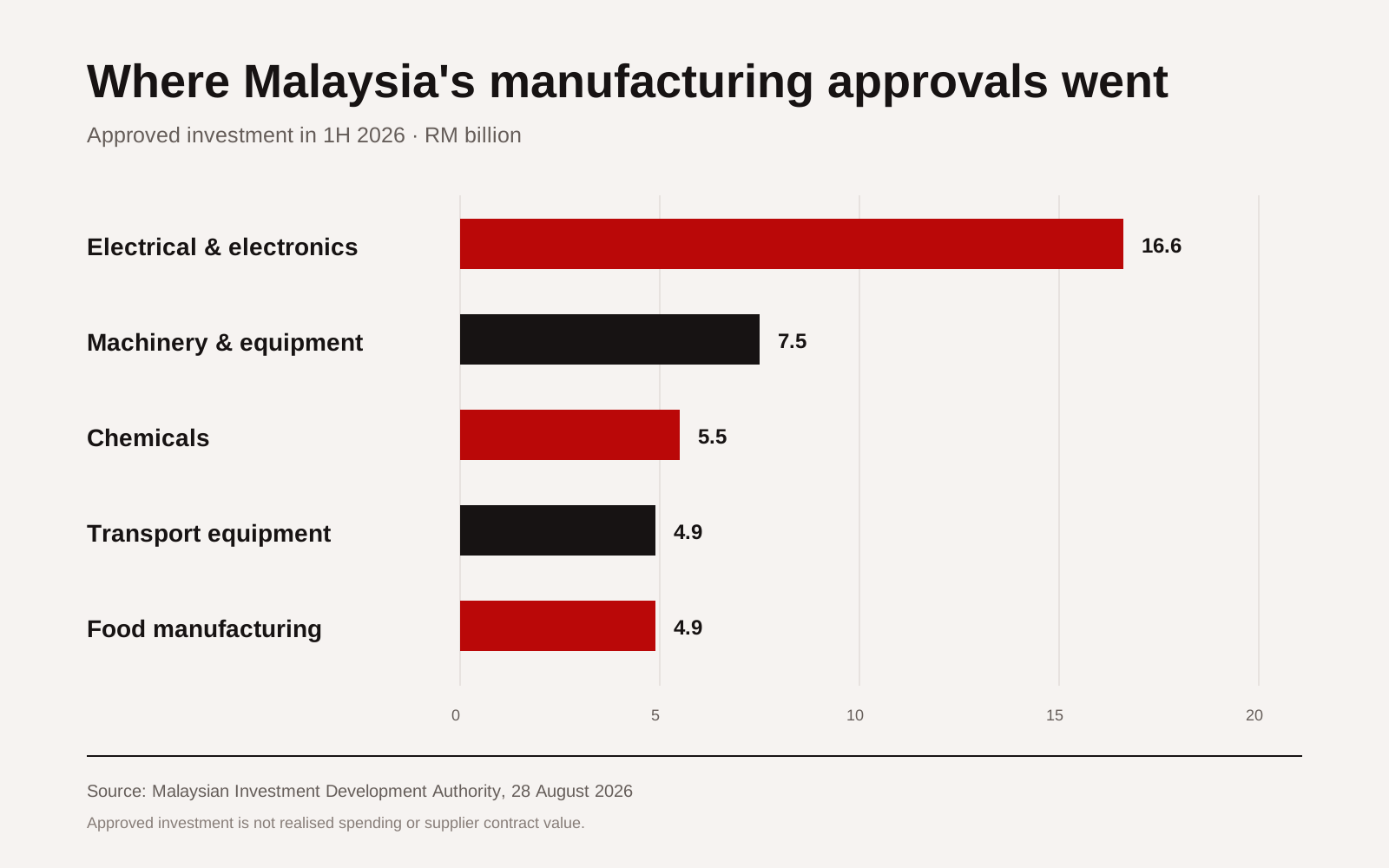
Electrical and electronics led first-half 2026 manufacturing approvals at RM16.6 billion, followed by machinery and equipment at RM7.5 billion, chemicals at RM5.5 billion, transport equipment at RM4.9 billion and food manufacturing at RM4.9 billion. Together, those five industries represented 76.9% of manufacturing approvals.
The figures come from MIDA's first-half 2026 investment release, published 28 August 2026.
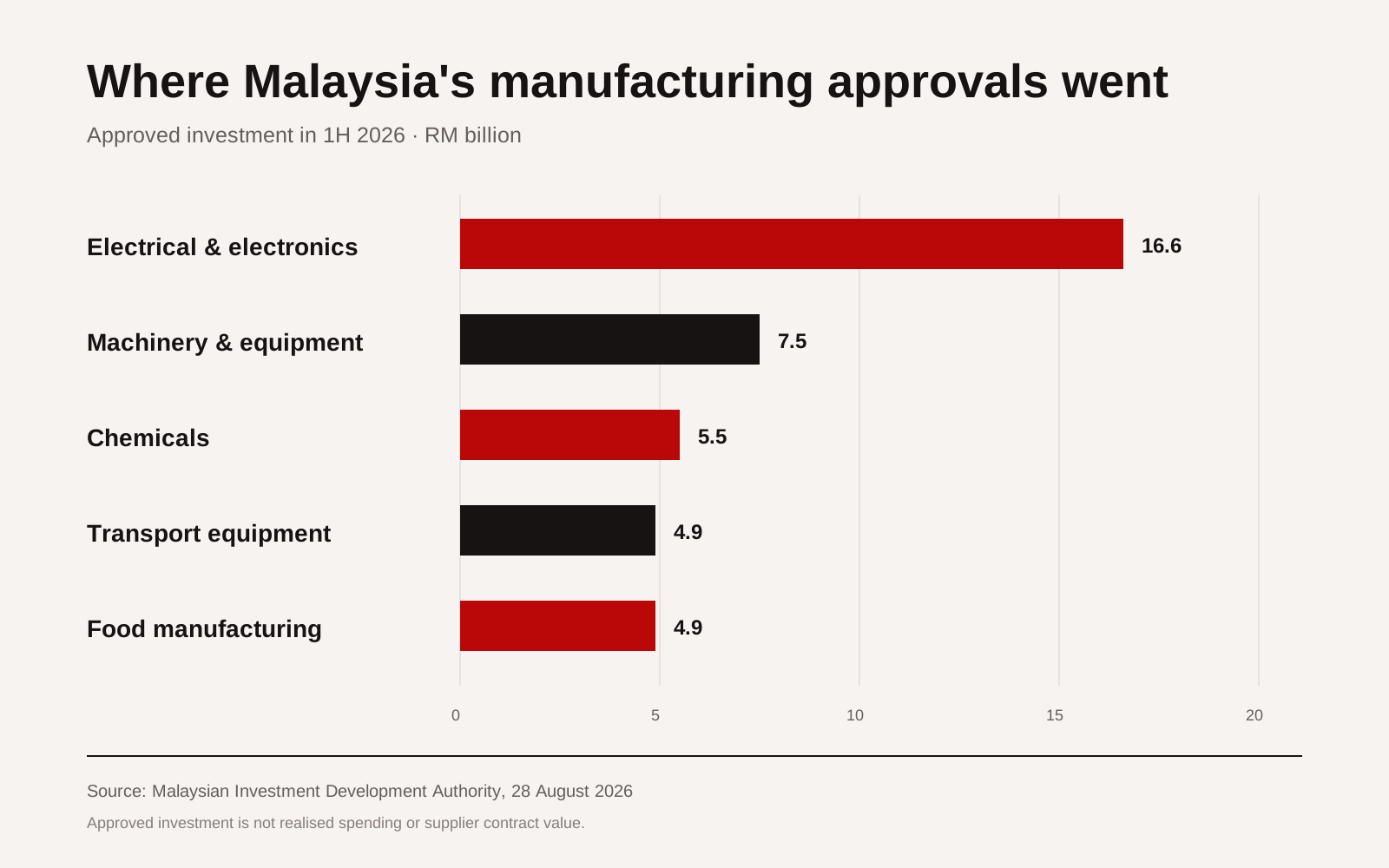
Source: Malaysian Investment Development Authority, 28 August 2026. Figures are approved investment, not realised spending or supplier contract value.
MIDA reported 973 approved manufacturing projects. New projects accounted for RM25.8 billion and expansion or diversification projects for RM25.5 billion. Foreign investment represented RM32.7 billion, while domestic investment reached RM18.6 billion and was 23% higher than the same period a year earlier.
Those distinctions matter to suppliers. A greenfield facility may create packages for site infrastructure, utilities, production equipment and commissioning. An expansion may favour firms that can work around an operating plant, connect to existing systems and plan short shutdown windows.
Where do engineering suppliers fit?
Start with the facility's operating need, not the sector label.
| Investment area | Likely engineering needs | Evidence a supplier should prepare |
|---|---|---|
| Electrical and electronics | Clean utilities, precision handling, controls, power quality, testing and contamination control | Tolerances, clean-work method, inspection records and relevant completed facilities |
| Machinery and equipment | Fabrication, machine integration, guarding, controls, installation and commissioning | Working envelope, materials, integration responsibility, factory acceptance and site acceptance process |
| Chemicals | Process piping, hazardous-area work, containment, instrumentation and maintenance | Applicable codes, material traceability, welding records, test packs and shutdown experience |
| Transport equipment | Tooling, fixtures, automation, inspection, traceability and line support | Quality-system scope, measurement capability, change control and production references |
| Food manufacturing | Hygienic systems, utilities, process equipment, automation and maintenance | Material grades, cleanability, inspection method and experience in controlled production environments |
This table is a pursuit map, not a claim that every approved project will buy every package. The owner, project stage, delivery model and local supply strategy determine the real opportunity.
Approved investment is not awarded work
MIDA's figures record approved projects and expected outcomes. They do not mean the full value has been spent, that every project will proceed on the same schedule or that procurement is open.
Before adding a project to the forecast, confirm:
- project owner and Malaysian operating entity;
- greenfield, expansion or diversification status;
- site and expected implementation stage;
- engineering, procurement and construction route;
- likely package owner and decision location;
- local, regional and global vendor requirements;
- prequalification or approved-vendor process; and
- realistic timing for design, tender, award and mobilisation.
Use confidence stages. “Approved investment reported by MIDA” is an early signal. “Package owner identified” is stronger. “Prequalification submitted” is a live pursuit. “RFQ received” belongs in the sales forecast. Mixing those stages creates an impressive pipeline that operations cannot plan against.
Choose the right supplier position
An engineering company can enter a manufacturing project in several ways. Each requires different proof.
Direct specialist supplier
The firm contracts with the manufacturer for a defined system or service. It needs exact capability, commercial responsiveness, quality records and a clear interface with the owner's engineering team.
Subcontractor to an EPC or main contractor
The firm delivers a package inside a larger contract. It needs relevant registrations, safety and quality records, comparable site experience, manpower and programme control. Relationship mapping should focus on the package owner, not only the end investor.
Local partner to an international equipment company
The Malaysian company provides fabrication, installation, service or regional support. It needs to show geographic coverage, trained people, workshop resources, documentation discipline and the ability to work under another company's procedures.
Expansion and maintenance partner
Existing plants require shutdown work, modifications, spare parts, controls changes and reliability support. Expansion projects may be less visible than new facilities but easier for a proven local supplier to enter. Evidence should emphasise work in live environments, isolation, permit control and return-to-service testing.
Build a project pursuit sheet
Create one page for each priority project. Keep it operational.
- Investment signal: official source, announcement date and stated industry.
- Facility: site, new or expansion status and intended output.
- Relevant package: the specific system or work your firm can deliver.
- Buyer map: owner, consultant, EPC, equipment company and known local partners.
- Qualification gap: certification, reference, people, equipment or registration still missing.
- Timing: next verified decision and date.
- Owner: one person responsible for the pursuit.
- Stop condition: the fact that would make the firm decline the opportunity.
Review the sheet monthly. Remove projects that no longer fit. Investment news can become a distraction when the company has no credible route to a package.
Prepare evidence before the RFQ
An initial supplier pack should let a technical and procurement team decide whether to continue. Include:
- legal entity, locations and ownership details;
- precise services and package boundaries;
- facility, machine and workforce capacity;
- certifications with scope, issuer and validity;
- three comparable projects with role and result;
- quality, safety and traceability methods;
- mobilisation and service coverage; and
- a named commercial and technical response route.
The website should carry the public version of those facts. Keep pricing, customer-owned records and sensitive drawings in the controlled pack.
Our guide for Malaysian engineering firms pursuing export buyers covers the evidence needed when the decision sits outside Malaysia. The same discipline helps when an international owner qualifies a local supplier for a Malaysian project.
Use the figures to make capacity decisions carefully
MIDA reported that manufacturing projects approved in the first half of 2026 were expected to create 64,555 jobs. It also reported that 302 approved manufacturing projects planned to export at least 80% of their output. These are signals of demand for skills, quality systems and export-ready support, not guarantees for one supplier.
Before adding equipment or headcount, separate three decisions:
- Market evidence: enough relevant projects exist.
- Access evidence: the company can reach the buyer or package owner.
- Award evidence: a qualified opportunity justifies near-term capacity.
Buying machinery against a news headline creates fixed cost before access is proven. Waiting until an award to solve every capacity gap can make the bid unbelievable. Use staged options such as partner capacity, rental, subcontracted processes or conditional hiring while the pursuit matures.
Turn investment data into a buyer-facing position
Do not publish “we are ready for Malaysia's manufacturing boom”. State the package, evidence and operating condition instead.
For example:
- installation and commissioning for live semiconductor facilities;
- hygienic stainless process work with material traceability;
- controls upgrades planned around short production shutdowns; or
- local service coverage for imported production equipment.
Each position should lead to a detailed capability page and a relevant project, not a campaign landing page with no technical depth.
Creatif Work builds engineering websites that connect market priorities to verifiable supplier capability. Our website service organises process limits, project proof and enquiry routes so an investor, EPC or multinational buyer can qualify the firm before requesting the full pack. If the investment list is clear but the firm's position is not, start with the problem.