

Singapore Construction Outlook 2026: What to Prepare
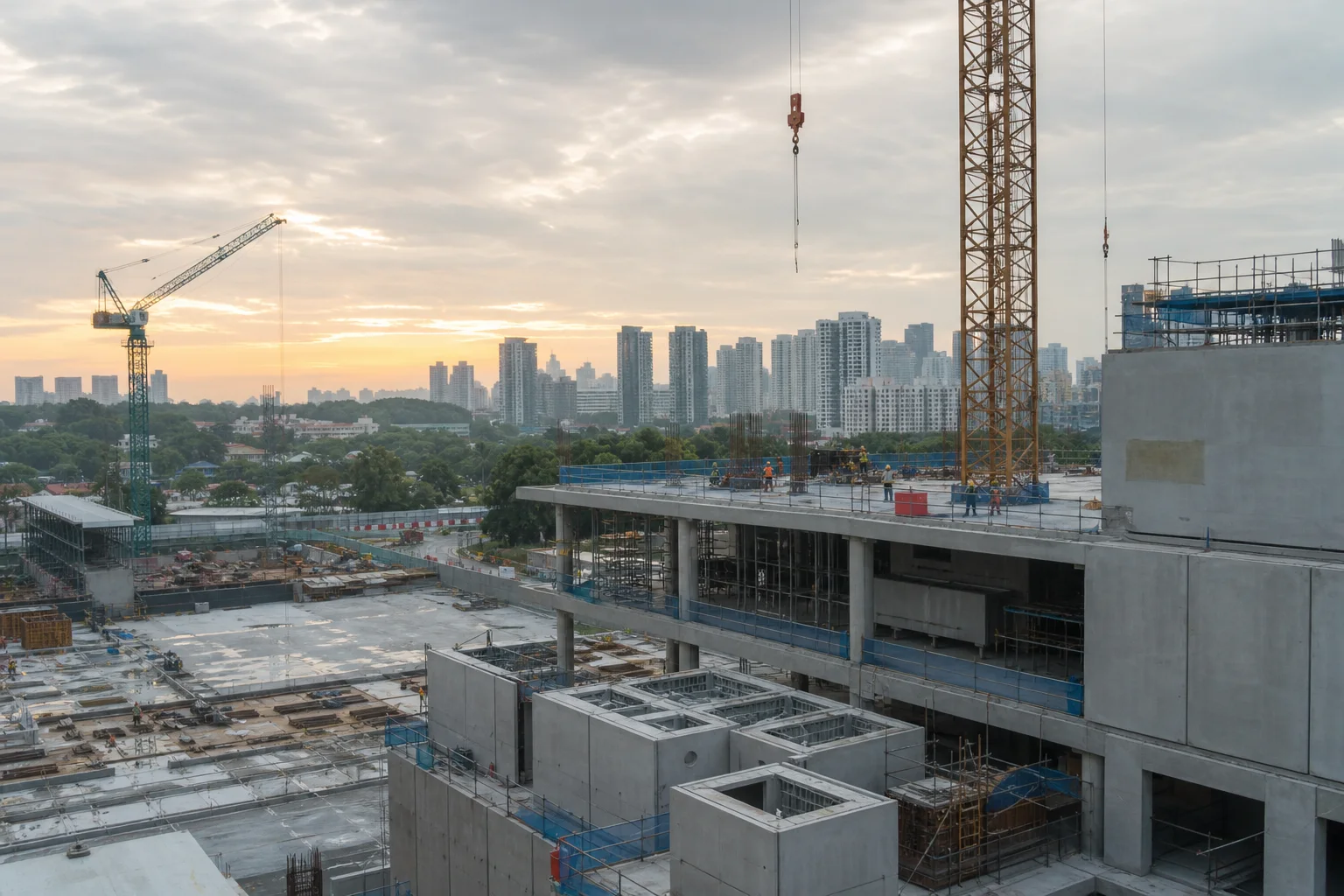
The Singapore construction outlook for 2026 is strong, but a large pipeline does not make every contractor equally busy. The Building and Construction Authority expects S$47–53 billion of construction demand this year and S$43–46 billion of output. The opportunity is real. So are the pressure on people, cash flow, coordination and the evidence firms need to win the right work.
For a managing director, the practical question is not whether Singapore has projects. It is whether the company can identify the packages it should pursue, prove it can deliver them and absorb the work without weakening the jobs already in hand.
Singapore construction outlook 2026 at a glance
BCA’s January 2026 forecast puts construction demand, meaning the value of contracts awarded, at S$47–53 billion. It expects construction output, meaning the value of certified progress payments, to reach S$43–46 billion, up from a preliminary S$41.7 billion in 2025.
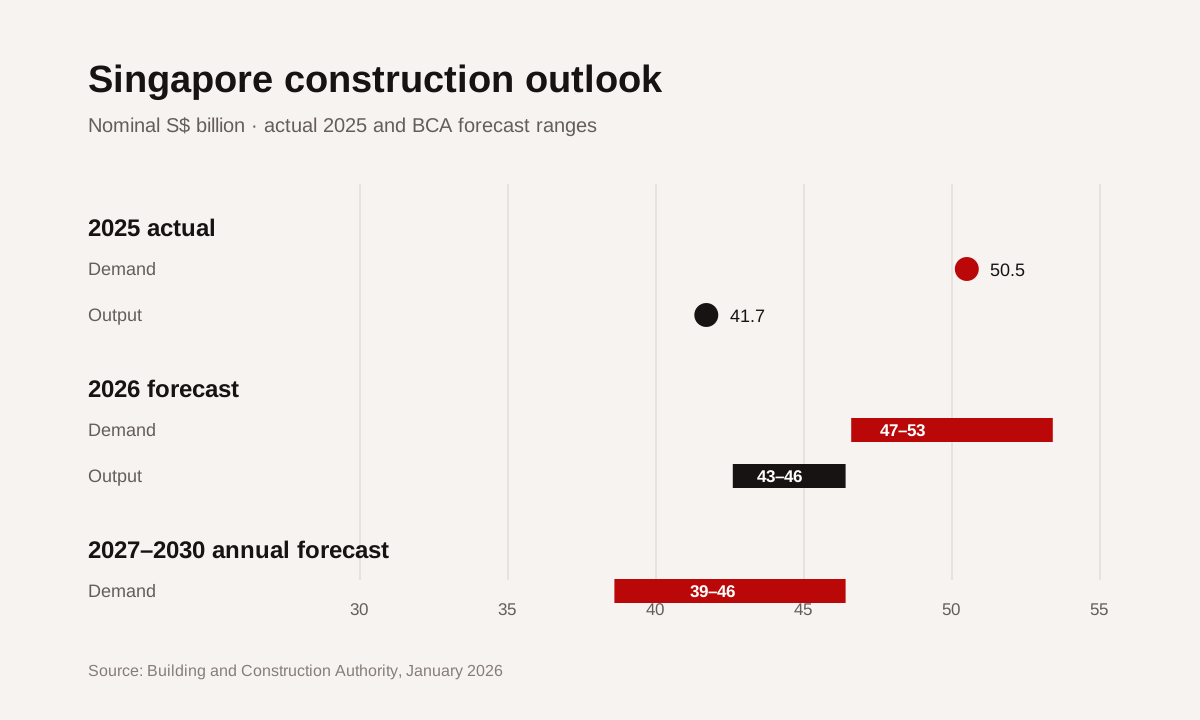
Source: Building and Construction Authority. Figures are nominal Singapore dollars; 2026 and 2027–2030 values are forecasts.
The distinction between demand and output matters. Demand tells you how much new work is being awarded. Output tells you how much work the sector is expected to execute and bill. A wide pipeline can therefore coexist with operational strain: firms may be tendering new packages while labour, equipment and management attention are already committed to contracts won in earlier years.
BCA identifies additional packages for Changi Airport Terminal 5, the Marina Bay Sands expansion, the New Tengah General and Community Hospital, the Downtown Line 2 Extension and the Thomson-East Coast Line Extension among the projects supporting 2026 demand. For 2027–2030, it forecasts S$39–46 billion of demand a year, supported by programmes including HDB building, the NUH redevelopment and the new SUSS city campus.
This is not one market. It is a series of packages with different workheads, delivery models, technical risks and buyer groups. The useful forecast is the one translated into your own bid/no-bid decisions.
What should contractors prepare for in 2026?
Prepare for more selective bidding, more structured project data and earlier proof of productivity. High demand increases opportunity, but it also increases the cost of chasing the wrong tender. The firms best placed to benefit are those that can qualify quickly, show comparable delivery evidence and explain how they will reduce time, manpower or coordination risk.
1. Turn the market forecast into a package map
A list of major developments is not a sales plan. Break the pipeline into packages your firm can actually deliver and record, for each one:
- likely client, consultant, main contractor and decision route;
- workhead, grade, licence and safety requirements;
- anticipated tender and mobilisation window;
- comparable projects completed in the last five years;
- people, plant and specialist partners required; and
- the reason to pursue or decline the opportunity.
This produces a short pursuit list instead of a long watchlist. A civil contractor with credible rail and utilities work should not assess a hospital package the same way as a specialist M&E firm. A technology provider entering through a pilot needs a different route again.
BCA’s July announcement introduced an Innovative Procurement Partnership approach intended to reduce barriers between a successful pilot and adoption on further JTC projects. That creates a route for firms selling inspection robots, computer vision and remote construction systems, but only if they can present a testable use case, measurable result and implementation risk, not simply a technology brochure.
2. Make prequalification evidence reusable
The same information is repeatedly requested by clients, main contractors, consultants and partners. It should not be rebuilt from old folders for every submission.
Create one controlled evidence library containing:
- current BCA workheads, grades, licences and tender limits;
- bizSAFE and ISO certificates with scope and expiry dates;
- project sheets stating role, scope, value band, duration and result;
- key personnel profiles and named technical responsibilities;
- safety, quality and environmental records; and
- approved photographs, drawings and client references.
The public version belongs on the website in text, not only in scanned certificates. The private version can carry commercially sensitive documents for submissions. Our guide to publishing bizSAFE, BCA and ISO evidence explains what a buyer needs to see beside each credential, while the M&E subcontractor shortlist guide shows how that information is used during an actual desk check.
The commercial benefit is speed. A business development manager should be able to assemble a credible first response in hours, with the same facts that appear on the website and capability statement. Contradictions between those surfaces create avoidable doubt.
3. Show how productivity will be achieved
“We use technology” is not an answer to a productivity requirement. Buyers need the operating change behind it.
Singapore’s construction policy is moving toward robotics, automation, collaborative contracting and structured information exchange. BCA says its Built Environment Innovation Hub has hosted more than 170 demonstrations and testbeds since 2023. Its 2026 Productivity Solutions Grant supports qualifying SMEs adopting pre-approved digital solutions and advanced equipment, with co-funding of up to 50% of qualifying costs under the current tranche.
For each proposed technology, publish or submit a one-page adoption case:
- the task and current constraint;
- the equipment or software introduced;
- the workflow before and after;
- the measured effect on time, labour, quality or safety;
- the project conditions in which the result applies; and
- the implementation owner.
A claim without a baseline is marketing. A result with a baseline, method and limit is evidence that a project director can assess.
4. Treat project information as an operational asset
The sector is also standardising how information moves. BCA’s guidance on value-chain collaboration and data-driven decision-making points firms to SS ISO 19650:2-2024, common data environment principles and Site Management Data Standards covering safety, productivity, quality, time and cost.
This has consequences beyond BIM teams. A contractor bidding for data-intensive projects should be able to answer:
- Which system is the source of truth for drawings, submissions and site records?
- Who approves a revision and how is the audit trail retained?
- Can project data be exported in the required structure?
- How are subcontractors brought into the workflow?
- What access is removed at handover?
- Which information can be published later as a case study?
The last question is easy to postpone and expensive to ignore. If photographs, performance data and approvals are not captured during delivery, the company finishes a major project with nothing usable to prove it happened.
5. Protect capacity and cash, not only revenue
A S$50 million order book can be healthy or dangerous. The forecast does not tell you which.
Before committing to another package, model the pressure points: mobilisation cash, retention, certification timing, labour peaks, key-person dependency, equipment availability and the effect of delay on concurrent jobs. Use the downside case, not only the programme submitted with the tender.
This is also where bid discipline becomes a brand decision. Declining work outside your capacity protects the record future buyers will inspect. Taking every opportunity and delivering unevenly creates a larger portfolio but a weaker one.
A 30-day readiness plan for directors
The following is small enough to complete before the next major tender lands.
Week 1: choose the work. Build the package map, name the five highest-value pursuits and write the reason the firm can win each one.
Week 2: close the evidence gaps. Audit every credential and project sheet. Remove expired material. Assign owners to missing safety, technical and commercial facts.
Week 3: document productivity. Select two real process improvements and capture the baseline, method, result and deployment conditions. Do not wait for a polished case study.
Week 4: test the buyer journey. Ask someone outside the tender team to find your grade, relevant project, safety status and named contact from the website. If any answer takes longer than a minute, the information architecture is working against the bid team.
What the 2026 outlook means for your website
In a strong market, a contractor website is not mainly an awareness channel. It is shared evidence. A consultant uses it to validate a capability. A main contractor forwards it while building a list. A candidate reads it before accepting an interview. A potential technology partner checks whether the firm has the scale and operating maturity to run a pilot.
That is why the site should mirror the way the company qualifies for work: sectors, capabilities, grades, comparable projects, delivery evidence and one clear route to the responsible person. The Creatif Work construction practice is built around that sequence, and our website service turns the same controlled evidence into pages that buyers and search systems can read.
If the pipeline is growing faster than the material used to explain your company, start with a website diagnostic. We will identify what a buyer cannot verify, what already works and whether the honest next step is a content repair, a structured refresh or a full rebuild.