

Business App Development Singapore: Discovery Before Coding
Business app discovery should reduce uncertainty before coding. It defines the users, workflow, decisions, data, exceptions, integrations, security and smallest useful release. It is not a workshop that produces a feature wish list.
Good discovery can also reveal that process or ownership needs fixing before software.
What happens during business app discovery?
The team observes current work, defines the problem and outcome, maps users and permissions, models the workflow and data, investigates integrations, identifies risks, prototypes uncertain parts and prepares a first-release scope with acceptance criteria.
| Discovery activity | Output | Decision supported |
|---|---|---|
| Problem framing | Outcome and boundary | Is software the right intervention? |
| User research | Roles, context and needs | Who needs which interface? |
| Workflow mapping | Steps, decisions and exceptions | What must the app control? |
| Data modelling | Records, fields and ownership | What is the source of truth? |
| Technical investigation | Integration and risk findings | What can be built responsibly? |
| Prototype | Tested interaction or assumption | Does the approach work? |
| Release planning | Prioritised scope and acceptance | What should be built first? |
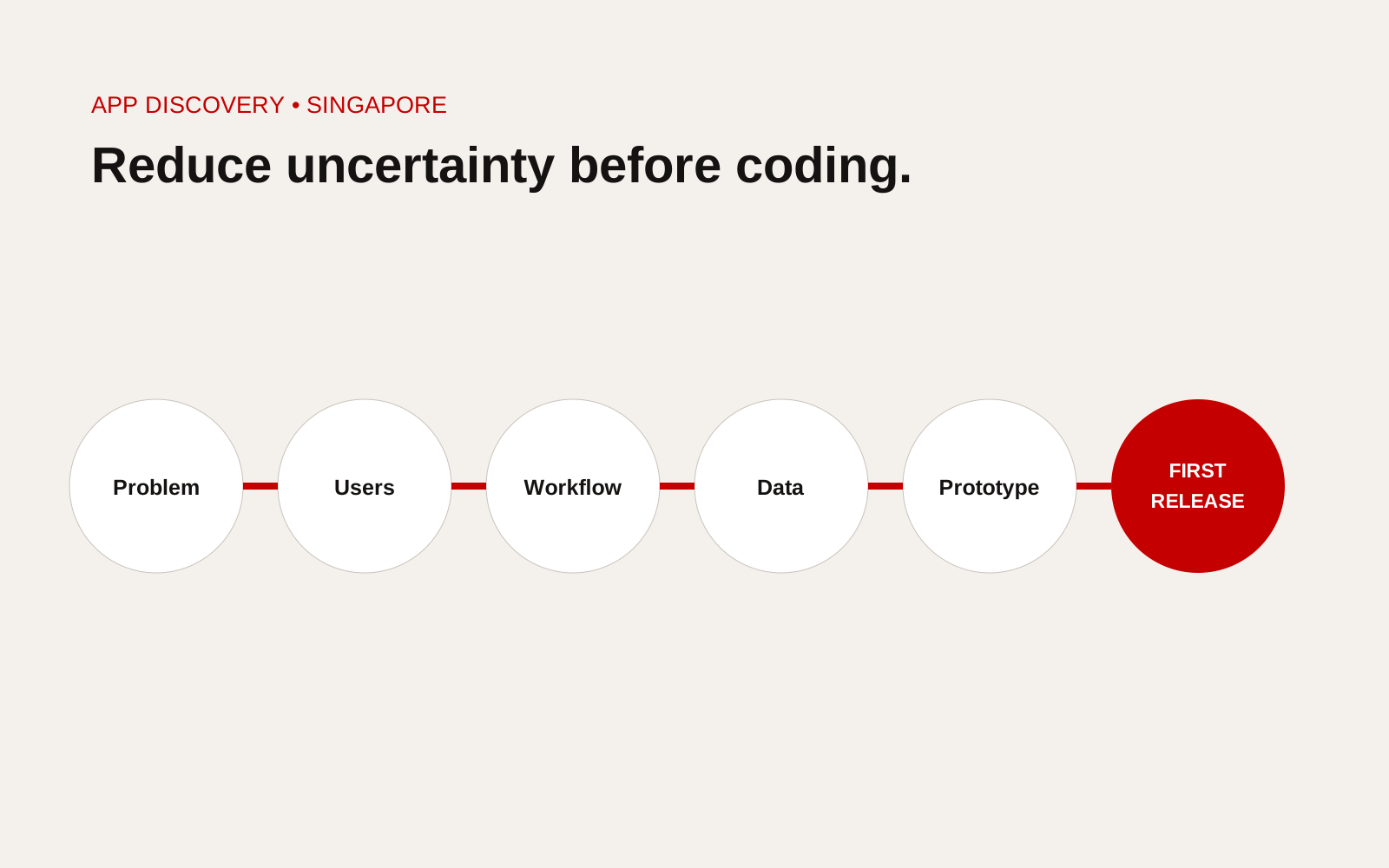
Business app discovery map from problem and users through workflow, data, risks, prototype and first release.
Begin with the business outcome
Define the loss or constraint in the current process: delay, duplicate entry, missing evidence, approval bottleneck, poor visibility or error. Measure a baseline if possible.
"Build a dashboard" is not an outcome. "Reduce the time between site submission and approved record while preserving review history" is testable.
Observe the current work
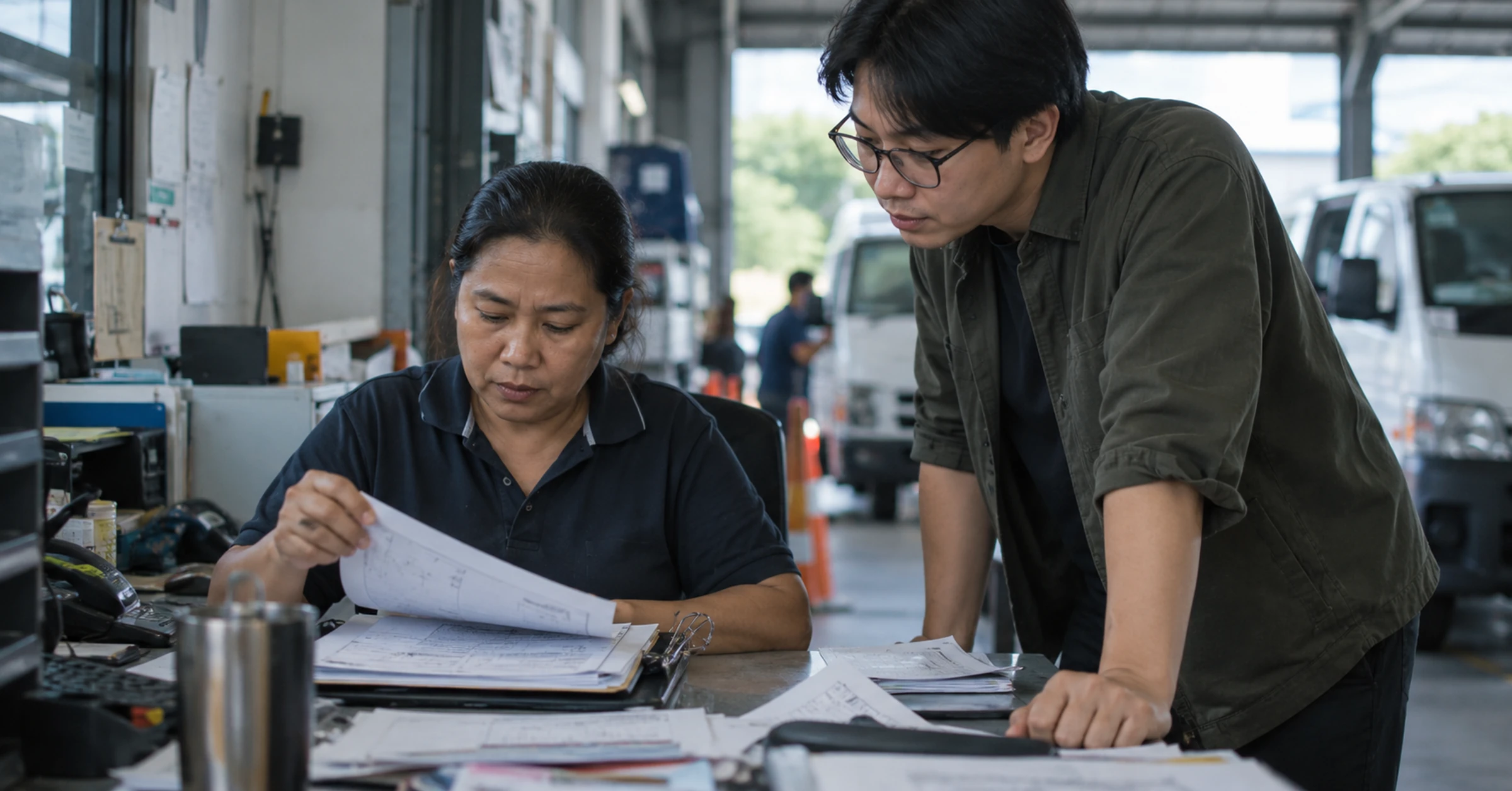
Interview users and watch real cases. Include normal work, exceptions and recovery. Collect forms, spreadsheets, messages and system records.
Look for:
- information retyped between systems
- decisions made outside the official record
- hidden approvals
- informal workarounds
- cases that return for correction
- missing ownership
- reports created only for management
Do not copy every workaround into the new app.
Map users and permissions
List internal teams, customers, suppliers and administrators. For each record, define who can create, view, edit, approve, export and delete.
Multi-company access can add substantial complexity. Test organisation boundaries and offboarding early.
Model data and retention
Define records, identifiers, relationships, required fields and source systems. Decide how long data is kept, how corrections work and what is exported.
Singapore organisations handling personal data should review the Personal Data Protection Act and current PDPC guidance. The applicable privacy and security work depends on the data and service.
Investigate integrations
Obtain API documentation, sample data, authentication, test access and owner contacts. Map data direction, source of truth, errors, retries and reconciliation.
If an integration is uncertain, prototype it during discovery rather than placing a confident estimate around an unknown.
Prototype the riskiest assumption
Prototype offline synchronisation, complex permissions, hardware access, large data views or a difficult user step. A polished home screen is less useful when the main technical risk remains untouched.
Define the first useful release
Choose one end-to-end workflow that produces a real outcome. Include administration, errors, audit history, monitoring, documentation and support needed to operate it.
Move future ideas into a separate backlog with the evidence required before prioritising them.
Include operations before launch
Discovery should identify who monitors the service, handles user access, answers support questions, reviews errors and decides whether a change is urgent. Define environments, backups, recovery, logging and release authority at a level proportionate to the business risk.
If the app supports a time-critical process, document what users do when it is unavailable. A manual fallback may be acceptable for a low-volume approval but unsafe for a field or customer service process. Test recovery, not only the happy path.
Agree the commercial and ownership boundary
Record ownership of source code, design files, data, cloud accounts, domains, third-party licences and documentation. State which recurring services are required and who can move the application later.
The discovery output should also distinguish fixed assumptions from items that need further investigation. This gives suppliers a comparable pricing basis and reduces contingency hidden inside the build estimate.
End with a decision pack
The final pack should contain the problem, workflow, users, data model, security needs, investigated integrations, prototype findings, release scope, exclusions, programme, client responsibilities and acceptance method. It should be usable even if the business chooses a different build supplier.
Discovery checklist
- Business problem and baseline stated
- Users observed in real context
- Workflow includes exceptions and recovery
- Roles and organisation boundaries mapped
- Data ownership and retention defined
- Integration access investigated
- Privacy and security needs identified
- Riskiest assumption prototyped
- First release supports one complete outcome
- Acceptance, rollout and support included
Demand a decision at the end
Discovery should finish with a clear choice, not an attractive collection of workshop notes. The decision pack should recommend build, buy, configure, improve the existing process or stop. It should show the evidence, trade-offs, unresolved risks and cost drivers behind that recommendation.
For a build, include a first-release boundary, data model, role map, integration findings, acceptance scenarios, rollout plan and support owner. List assumptions that still require proof and state when they will be tested. For a no-build recommendation, explain which process or policy change creates more value than software. Ask an executive sponsor, operational owner and technical reviewer to sign the same decision. This prevents a project from entering development with three different expectations. A useful discovery phase saves money partly by identifying functions that should not be built and dependencies that must be solved first.
Creatif Work builds custom software and web apps for Singapore businesses. Discovery is how we avoid coding the wrong workflow: we make users, decisions, data and risk visible before the build scope hardens.