

The Data Centre Vendor Pack Your Website Should Support

A vendor pack often arrives after the first call. That is too late if the website gives procurement no reason to make the call. The site should not publish every certificate and drawing. It should show that the right evidence exists, is current and has an owner.
For data centre suppliers, the distinction is especially important. Power, cooling, water, controls and maintenance information can be commercially sensitive. Some documents also reveal site architecture. A useful website creates a clear public index and a controlled route to the deeper pack.
What should a data centre vendor pack contain?
A practical vendor pack contains company identity, supply scope, technical data, quality and safety records, environmental evidence, project references, service coverage and document control. The public website should summarise each group and state how a qualified buyer can request the current controlled version.
Use a two-layer model:
| Public website | Controlled vendor pack |
|---|---|
| Capability and system boundary | Detailed technical schedules |
| Standards and certificate register | Current certificates and audit reports |
| Product data summary | Drawings, curves and calculations |
| Case-study boundary and result | Client-approved test and commissioning records |
| Service locations and response model | Contract-specific escalation details |
| Document owner and review date | Revision history and approval status |
This is not a marketing-versus-engineering split. Both layers should use the same identifiers, units and revision logic.
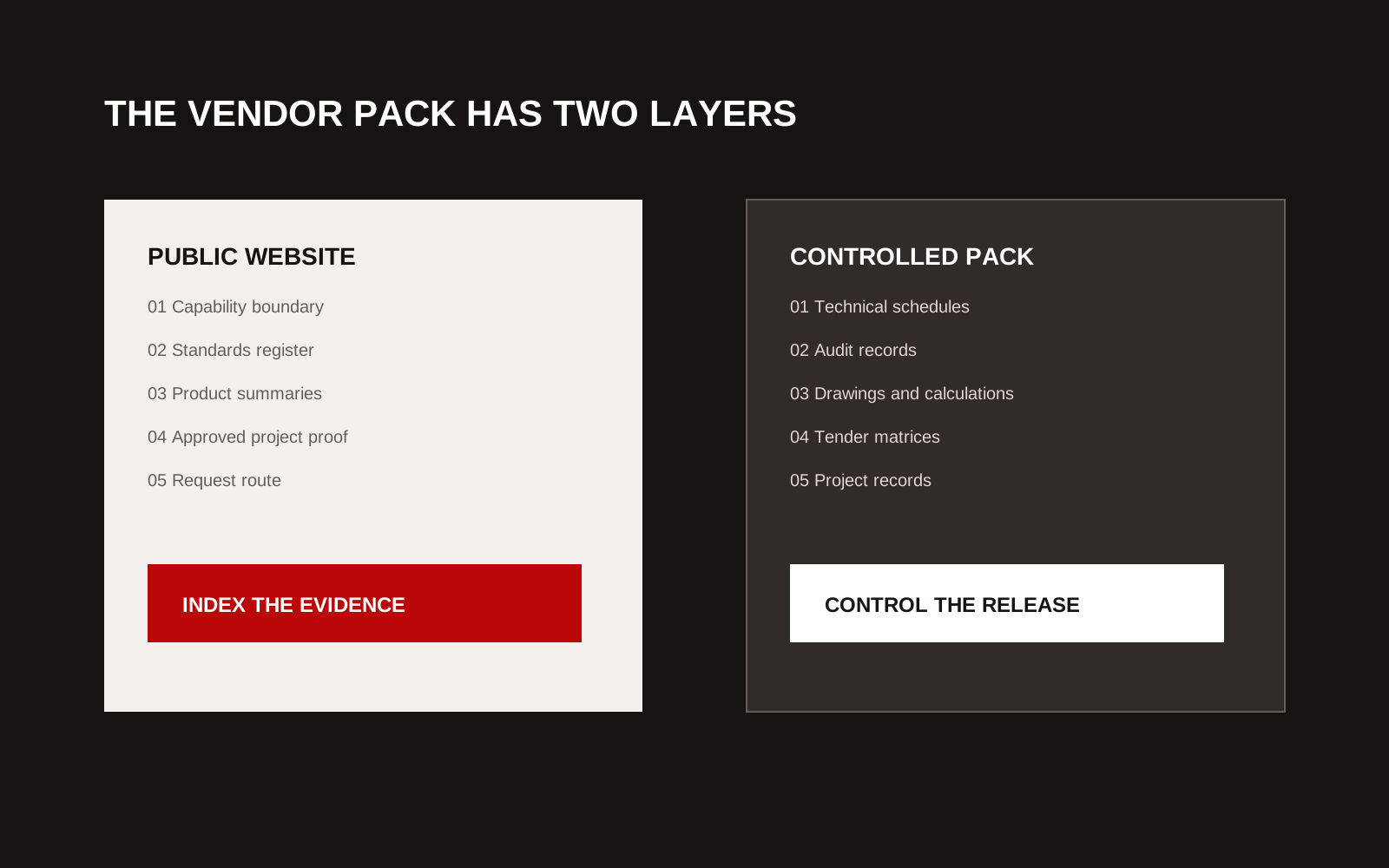
Website and controlled document layers in a data centre supplier vendor pack.
Start with a qualification index
Give buyers one page that answers the first review questions:
- What exactly does the company supply?
- Which part of the data centre system does it touch?
- Which countries and project stages can it support?
- What evidence can it provide?
- Which evidence is public, available on request or project-specific?
- Who can answer the technical question?
Avoid forcing a buyer to infer the scope from a list of sectors. “Data centres” alone does not reveal whether the firm designs, manufactures, installs, commissions or maintains the system.
Give every document a visible status
A PDF title is not document control. Add a small register with these fields:
- document name and identifier;
- revision and issue date;
- owner;
- scope or product family;
- status, such as current, superseded or project-specific;
- public or controlled access; and
- next review date.
Do not leave expired certificates live because an old proposal still links to them. Redirect the old file to a register page that shows the current status.
Malaysia's data centre sustainability guideline calls for monitoring and disclosure of performance measures including water use. A supplier page should therefore state what its own data can support, not claim a facility-wide outcome it does not control.
Separate product proof from project proof
Product proof describes what was tested and under which conditions. Project proof describes what happened after selection, installation and commissioning. Buyers need both.
A product page can include duty range, interfaces, standards, materials, test conditions and downloadable current data. A case study should add the project condition, the supplier's role, the installed configuration, the verification method and the result boundary.
Our article on what engineering buyers check before an enquiry provides a useful review list. The same principles apply here: a certification badge needs a scope and date, while a performance number needs a unit and condition.
Design the request route around risk
Not every visitor should receive the same file set. Define access levels before building the form.
| Access level | Example content | Sensible control |
|---|---|---|
| Public | Capability, standards, product summaries | Open page or current PDF |
| Qualified buyer | Detailed data sheets and certificate copies | Business email and manual approval |
| Tender | Compliance matrix and project references | Named opportunity and NDA where required |
| Project | Drawings, commissioning and operating records | Client platform or approved data room |
The request form should ask only what is needed to route the enquiry. A buyer requesting a product certificate should not face the same form as a full tender pack.
Make the pack maintainable
The most polished vendor library fails if nobody owns it. Assign a technical owner for accuracy, a commercial owner for release and a web owner for publication. Record the source system for every downloadable file.
Run a quarterly check:
- Are the certificates current?
- Do revision dates match the source library?
- Have product names changed?
- Are discontinued items labelled?
- Do contact routes reach a named team?
- Do project claims still have permission?
- Can a buyer find the latest file from a saved old link?
The engineering sector page shows how capability, evidence and enquiry routes can work together. Our website service can turn an existing vendor library into a public index and controlled request flow. We start by mapping who needs each record and what should remain private. If the pack has grown beyond email attachments, start with the problem.
Test the pack with a real buyer request
Choose one recent qualification request and ask a colleague who did not prepare the pack to find every requested item. Record where they searched, which document names were unclear and where they had to ask an expert. Time the exercise, but do not treat speed as the only result. A fast route to an obsolete certificate is still a failure.
Then test the reverse path. Start with a public claim and trace it to the approved record, source file and current owner. If the chain breaks, either repair the record or remove the claim until it can be supported.
The review should produce three lists: information safe for public release, information available after qualification and information restricted to a project. Approve those lists with technical, commercial and security owners. Repeat the exercise after a product revision, certification change or new service region. That is when gaps in document ownership usually become visible.