

Engineering Website Design: What Buyers Check Before an Enquiry
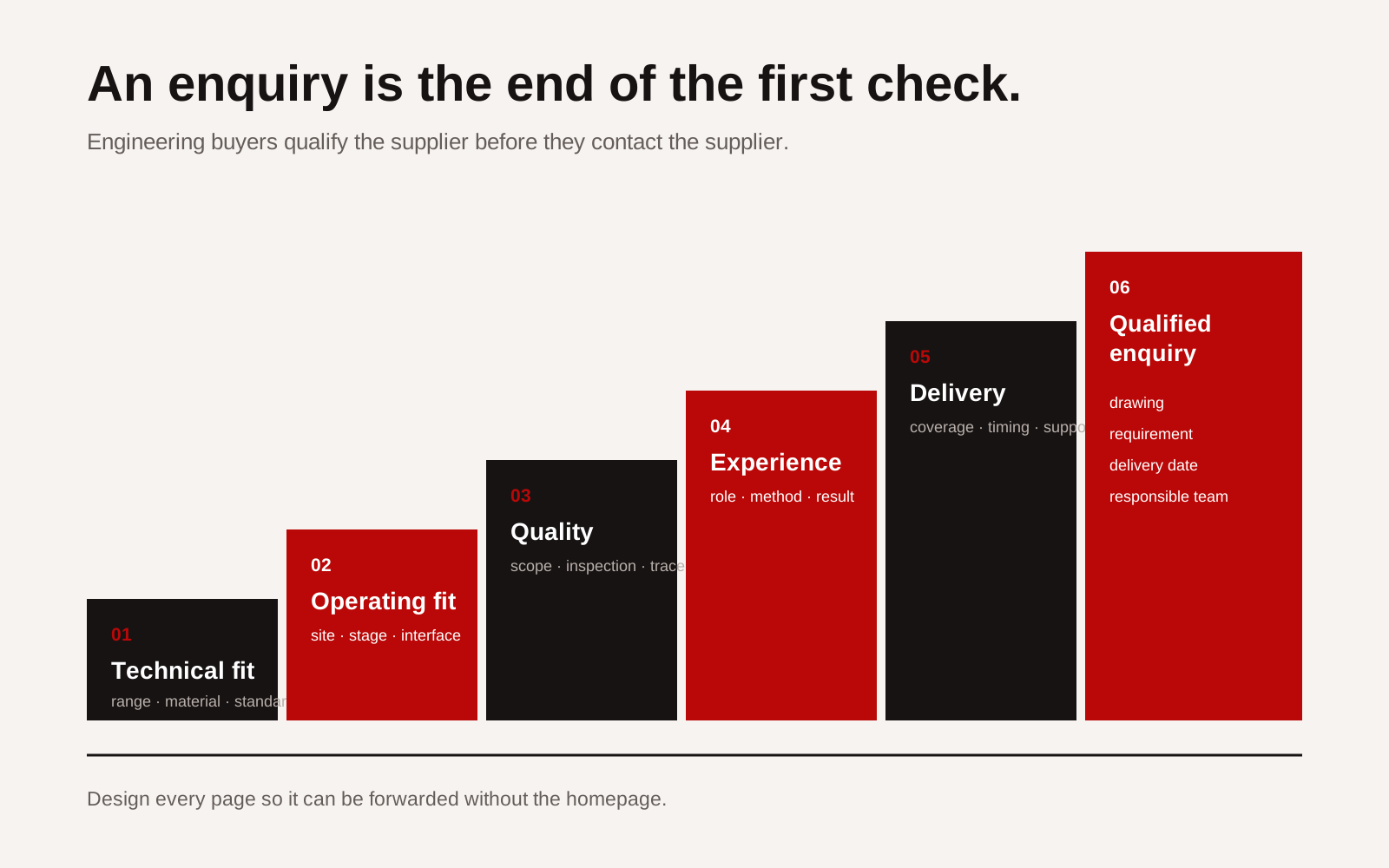
Engineering website design should help a buyer rule a supplier in or out before an enquiry. That means the site must answer technical fit, quality, delivery and responsibility questions in a sequence a procurement manager can forward to engineers and management.
The goal is not to persuade every visitor. It is to reduce the work required for a suitable buyer to decide that a conversation is worth starting.
What do engineering buyers check before an enquiry?
They check whether the supplier performs the exact work, within the required technical limits, under a relevant quality system, with comparable project evidence and a credible route to delivery. If those facts are unclear, the buyer may never reach the contact form.
ISO and IAF's guidance on external providers describes controls around approved providers, defined criteria and verification of externally supplied products and services. A public website is not a formal supplier evaluation, but it often supplies the first facts used to decide whether that evaluation should begin.
Design around the desk-check sequence
| Buyer check | Page that should answer it | Evidence to include |
|---|---|---|
| Technical fit | Capability or product page | Process, system, materials, ranges, standards and exclusions |
| Operating fit | Industry or application page | Site conditions, lifecycle stage and integration boundaries |
| Quality fit | Quality or certification page | Scope, issuer, validity, inspection and traceability method |
| Experience | Project or case-study page | Requirement, role, method, constraint and result |
| Delivery fit | Coverage or service page | Locations, lead-time factors, mobilisation and support model |
| Commercial next step | RFQ or contact route | Required inputs, file handling, owner and response expectation |
This is the information architecture. It can be expressed through many visual styles. If these answers do not have a stable place, changing fonts or adding motion will not repair the buyer journey.
Put technical fit before the company story
A buyer who arrives with a drawing, asset problem or package requirement first asks whether the company can help. Do not make that person read the founder's story before reaching the capability.
Each core capability page should state:
- the problem or requirement it addresses;
- the company's responsibility and exclusions;
- accepted inputs such as drawings, data or site information;
- process, equipment or method;
- materials, systems and operating conditions;
- relevant standards and inspection points;
- output or handover record; and
- the next technical question needed for qualification.
Use the terms buyers use. If the industry distinguishes design, fabrication, installation, commissioning and maintenance, do not merge them into “full-service engineering”. The stages carry different risk, insurance and approval responsibilities.
Make technical limits visible
Specifications should be readable on the page, not available only as a download. Use a table for dimensions, capacity, pressure, temperature, tolerance, voltage, material, accuracy or environmental limits when those parameters drive selection.
Add the condition beside the number. A tolerance may depend on material and geometry. A load may depend on configuration. A service response time may apply only inside a stated region. A number without its boundary can create a poor-fit enquiry or a false expectation.
The downloadable data sheet still has value for document control and internal forwarding. The web page should show enough for the first comparison and link to the current revision.
Our specification-sheet web-page guide provides a field-by-field structure for this content.
Explain quality evidence instead of displaying logos
Certification marks do not explain which entity, site or process is covered. Give each relevant certificate a text record with the standard, edition, scope, issuer, accreditation, certificate number, validity and verification route.
Then show how quality works in practice:
- material and batch traceability;
- drawing and revision control;
- inspection and test planning;
- calibration and measurement resources;
- non-conformance handling;
- external-process control; and
- release and handover records.
Do not publish customer records or internal audit findings. Describe the method and provide controlled evidence during qualification.
Build case studies for technical review
A project gallery answers “have you been busy?” A case study should answer “have you handled a comparable requirement?”
Use this six-part structure:
- Requirement: what the asset, facility or customer needed.
- Role: what the company was responsible for.
- Constraint: the condition that made the work difficult.
- Method: what the team changed, built, tested or coordinated.
- Evidence: the records or checks used for acceptance.
- Result: measured or verified outcome, with a limit.
Name the contract route. A subcontractor, equipment supplier and lead consultant may all contribute to the same project, but their evidence supports different claims.
When client confidentiality prevents naming the company, keep the engineering facts. Sector, country, operating environment, scale and responsibility can still help a buyer compare the work.
Give each buyer a forwardable page
The first visitor may not be the decision maker. Procurement forwards the supplier to engineering. Engineering asks quality to review certificates. Management checks completed work and risk. Design pages that retain meaning when opened without the homepage.
Every important page should include:
- the company identity and relevant operating entity;
- a clear page title describing the capability or evidence;
- a short answer before the detail;
- a current revision or review date where facts change;
- links to the supporting project and quality information; and
- a route to the responsible team.
Avoid hiding core content behind hover states, animated carousels or unexplained icons. Interaction can help comparison, but the information must remain readable on a phone and available to assistive technology and search systems.
Google's Search Essentials recommends using the words people use to look for content in prominent places, making links crawlable and supporting text with relevant images and structured data. Those practices align with the buyer's need for clear labels and stable pages.
Design the enquiry as a qualification step
A generic contact form creates a generic message. An engineering RFQ route should collect only the information needed to assign and review the opportunity.
Useful fields may include:
- capability, product or service required;
- asset, facility or application;
- material, system or drawing reference;
- quantity, scale or operating condition;
- required date and delivery location;
- standard, inspection or documentation requirement; and
- secure file upload.
Explain how submitted information is handled and who receives it. State a realistic acknowledgement or review process rather than promising an instant quotation for work that requires engineering input.
Give unsuitable buyers a clear route too. Publish exclusions, minimum information and service areas. A respectful disqualification saves time on both sides.
Test the site with an actual requirement
Do not review an engineering website only by clicking every page. Run a buyer task.
Choose one real requirement and ask someone unfamiliar with the company to find:
- the relevant capability;
- the technical limit that determines fit;
- the quality evidence;
- one comparable project;
- the service or delivery area; and
- the correct enquiry route.
Record how long each answer takes and where the person guesses. Repeat on a phone. The missing answers become the design and content backlog.
A second test should begin from a project page rather than the homepage. Buyers often arrive through search or a forwarded link. The project must link back to the capability, quality evidence and contact path without requiring them to reconstruct the site structure.
Measure whether the site improves qualification
Traffic alone does not show whether the engineering website is working. Track:
- enquiries that name a specific capability or project;
- percentage of enquiries with the technical inputs needed for review;
- poor-fit enquiries and their reason;
- time from first enquiry to technical meeting;
- capability pages used before a qualified enquiry; and
- project pages forwarded during sales and tender work.
Interview business development and estimating teams after launch. If they still answer the same basic questions in every first email, the public evidence is incomplete.
Creatif Work builds engineering websites around this desk-check sequence. Our website service connects capability, specification, quality, project and enquiry pages so informed buyers can qualify the fit before contacting the team. If the current site looks finished but buyers still begin from zero, start with the problem.