

How to Explain Sovereign Capability Without Writing a Corporate Essay
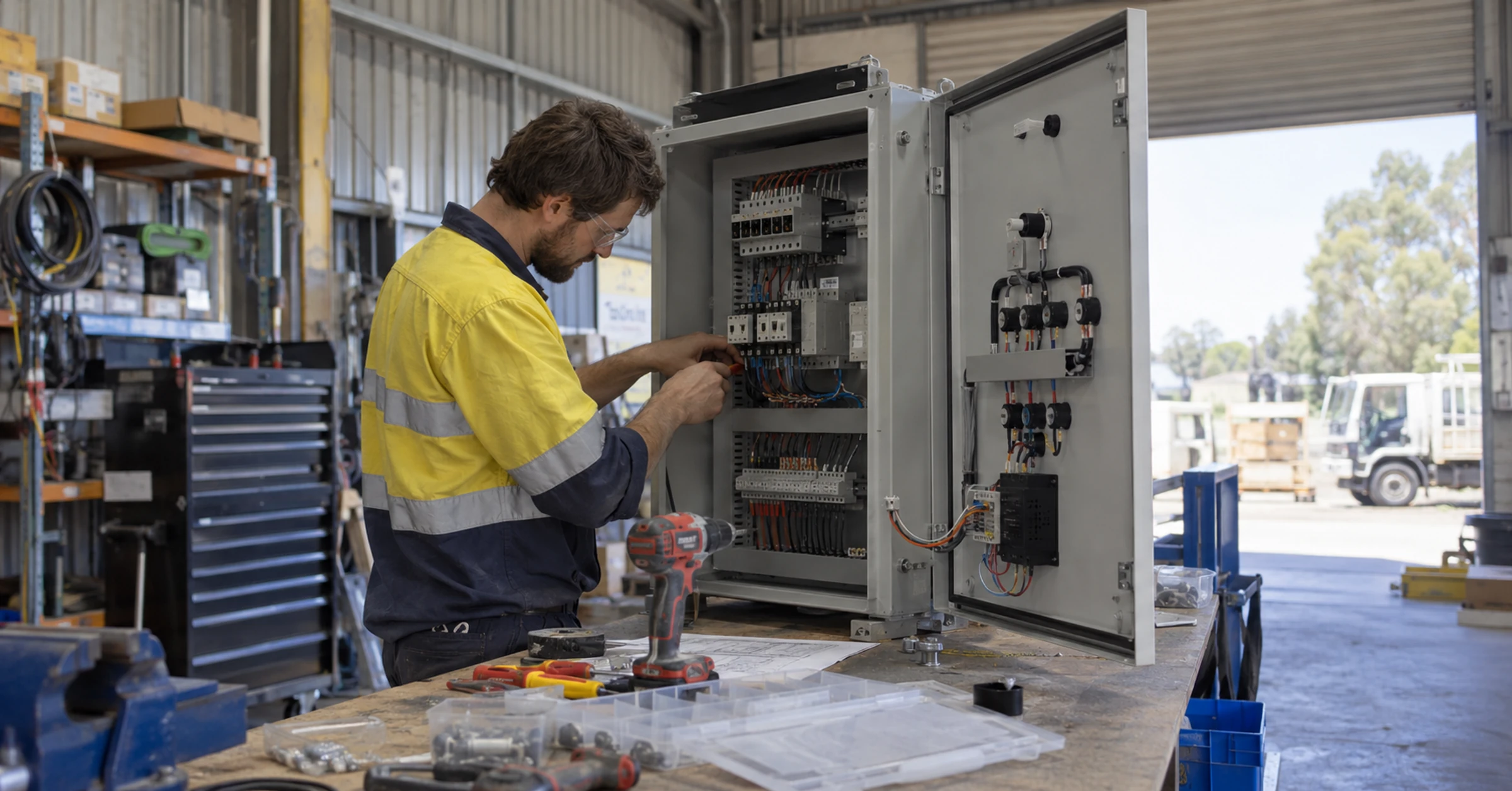
Sovereign capability pages often begin with national ambition and reach the useful facts too late. A buyer wants to know what the company can do in Australia, what it controls, what it depends on and whether the capability has been used.
Answer those questions in that order.
How should a company explain sovereign capability?
Use a one-page evidence structure: the capability, Australian location, work performed locally, controlled assets or knowledge, critical dependencies, workforce, current capacity and one relevant project. Label future investment separately. Link to controlled tender evidence instead of publishing sensitive detail.
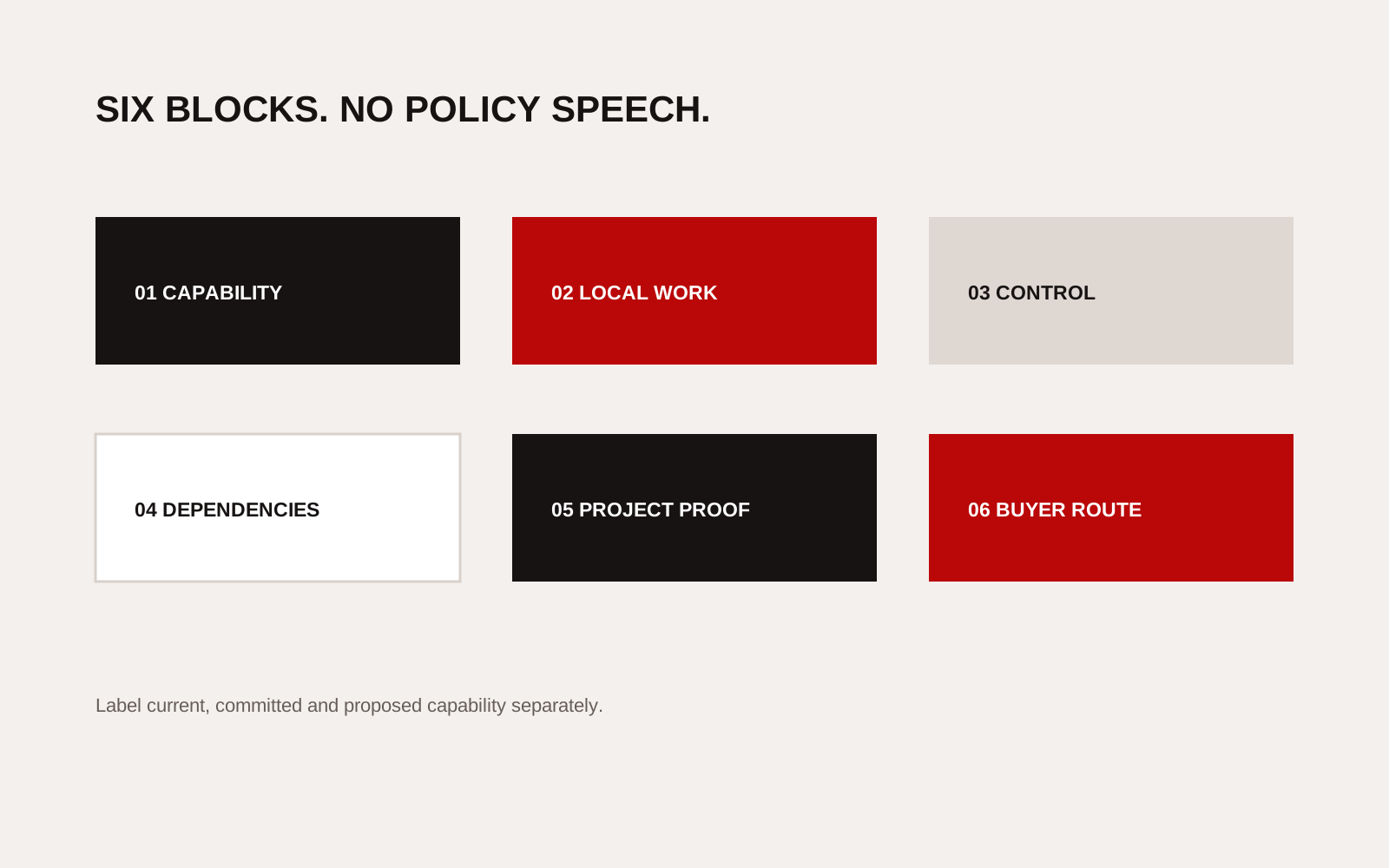
Concise sovereign capability page structure with local work, control, dependencies and project proof.
Use a six-block page
| Block | Content | Suggested length |
|---|---|---|
| Capability | One precise sentence | 25 to 40 words |
| Local work | Stages performed in Australia | Short process map |
| Control | IP, equipment, approvals and people | Four to six facts |
| Dependencies | Imported inputs and partners | Clear boundary |
| Proof | One or two relevant cases | Evidence block |
| Contact | Named buyer route | One action |
The length is a guide. The page should be as long as the evidence requires, not as long as the annual report.
Write the opening as a fact pattern
Use this structure:
At [location], [legal entity] performs [design, manufacture, assembly, test or support] for [defined system or market]. The team controls [important process or asset]. [Named dependency] is sourced from [location or route].
This gives the reader something to verify. Avoid “proudly Australian” as the main evidence.
Show the value chain
A simple horizontal map can show:
- design authority;
- critical materials;
- manufacture or assembly;
- test and certification;
- installation; and
- through-life service.
Mark each stage as local, partner-delivered or imported. If a process is planned, use a different status. Do not use colour alone; include text labels.
The Australian Treasury's Future Made in Australia overview explains the broader national framework. A company page should not imply government endorsement unless a formal programme or contract supports it.
Keep future investment separate
Use current, committed and proposed labels. For a committed expansion, state the approval date, intended capability and expected operational milestone where publication is permitted. For a proposal, state the dependency.
Never present projected jobs, capacity or local spend as achieved outcomes.
Publish dependencies with judgement
Sovereign capability does not mean every input is local. Buyers need to understand which overseas components, licences, materials or technical partners are critical and how continuity is managed.
Public wording can name the category and mitigation without exposing a sensitive source. A controlled tender pack can hold supplier names, stock policy and recovery detail.
Use a case as proof
A relevant case should state:
- customer type or approved name;
- Australian work location;
- exact contract role;
- controlled process;
- local and external interfaces;
- verification method; and
- result with its boundary.
Do not fill the page with unrelated projects simply because they happened in Australia.
Add a small evidence register
Give procurement a route to current documents:
| Record | Public status | Controlled route |
|---|---|---|
| Facility and capability profile | Public summary | Current detailed schedule |
| Quality certification | Scope and current issue | Audit details on request |
| Workforce and training | Dated aggregate | Tender-specific plan |
| Supply-chain map | Category and boundary | Approved dependency record |
| Project evidence | Client-approved case | References and reports |
Assign an owner and review date to the page. Sovereign capability changes as facilities, partners and programmes change.
Avoid the common language traps
Cut phrases such as “at the forefront”, “unmatched capability” and “committed to supporting the nation”. Replace each with a location, process, approval, role or result. If a sentence could appear on any supplier website, it is not evidence.
Our article on Future Made in Australia supplier evidence provides the underlying checklist. The engineering sector page shows how capability proof connects to projects and services.
Creatif Work builds technical company websites that let the facts carry the claim. If the capability is real but the page reads like a policy speech, start with the problem.
Test the page in two minutes
Give the draft to someone in procurement who is not close to the company. After two minutes, ask them to state what is done locally, what the company controls, which dependency remains and which project proves the capability. If they repeat only the headline, the page is still too abstract.
Then give it to the technical owner. Ask them to mark every sentence that needs a condition or date. Replace broad nouns with the actual process, facility, approval or role. Remove information that belongs only in a tender room.
Finally, test the mobile version. The value-chain map, status labels and evidence table must remain readable without relying on hover. Links to documents should show their current revision and file type.
Record the review date and page owner near the content record. Re-run the two-minute test after a sourcing change or facility expansion. Concision is not cutting detail at random. It is placing the few facts that determine qualification before the narrative around them.
Keep the detailed evidence register outside the page and connect each public fact to it. That lets the marketing team write plainly without becoming the authority for engineering, workforce or supply-chain data.