

Future Made in Australia: What Engineering Suppliers Can Evidence
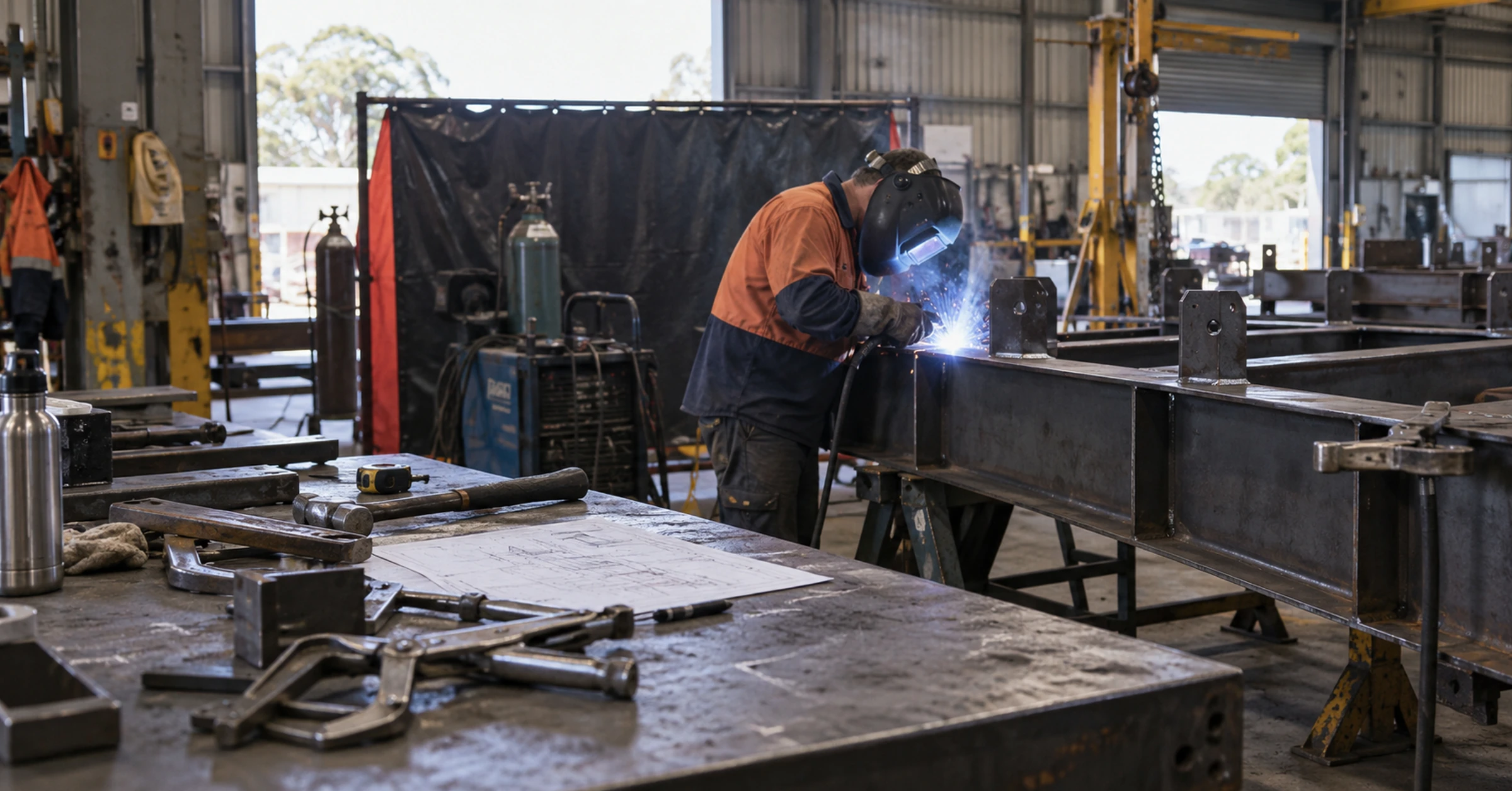
Future Made in Australia is a policy and investment framework, not a supplier badge. An engineering firm should not add the phrase to its website and assume it has demonstrated sovereign capability.
Buyers and programme owners need evidence of what is done in Australia, which capability is controlled locally, how delivery is assured and what benefit a contract can create.
What can an engineering supplier evidence?
Evidence the Australian legal entity and locations, work performed locally, controlled design or manufacturing capability, workforce and training, supply-chain dependencies, delivery capacity, quality records and relevant project outcomes. Separate current capability from planned investment and state any overseas dependency that affects delivery.
The Treasury's Future Made in Australia overview describes a plan to support net-zero opportunities and economic resilience. It states a commitment of $22.7 billion over ten years and explains that the National Interest Framework guides priority-sector assessment.
That does not create a universal tender rule. Read the specific programme, grant, contract and procurement requirements.
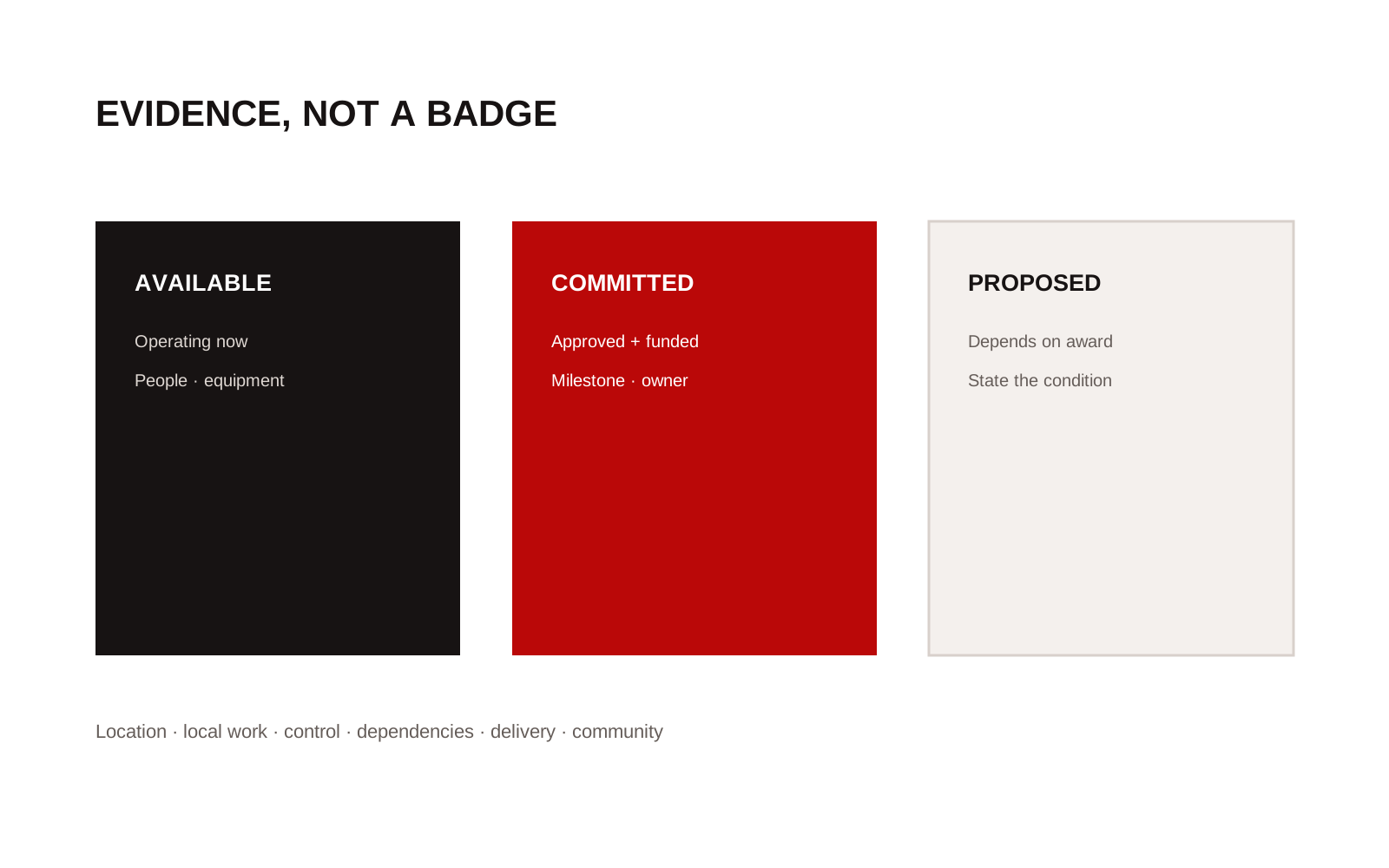
Future Made in Australia engineering supplier evidence map covering local value, capability, workforce and delivery.
Build a sovereign capability record
| Evidence area | Useful record | Avoid |
|---|---|---|
| Entity and place | ABN, facility and operating locations | “Australian” without a defined entity |
| Work scope | Design, manufacture, assembly, test or service performed locally | Counting imported finished work as local manufacture |
| Control | IP, process, equipment, licences and decision rights | Vague ownership claims |
| Workforce | Roles, skills, apprenticeships and training | Headcount without capability context |
| Supply chain | Local and overseas critical inputs | Hiding single-source dependencies |
| Delivery | Capacity, lead assumptions and project evidence | Unqualified future capacity |
| Community | Jobs, regional activity and supplier participation | Forecast benefits stated as achieved |
Use one reference period for workforce and spend figures. State whether they are actual, forecast or contract-specific.
Separate current and planned capability
Future projects often depend on investment that has not happened yet. Use three clear states:
- available: operating now with current people and equipment;
- committed: approved and funded with a stated delivery plan; and
- proposed: dependent on award, finance, approval or demand.
Do not show a render of a future facility next to present-tense capability copy. Label the stage and decision conditions.
Show where value is created
“Locally made” can hide a complex supply chain. Map the stages from design and material through manufacture, assembly, test, installation and service. For each stage, state location and responsible entity.
This lets a buyer assess both local value and resilience. Imported material may be acceptable. An undisclosed critical dependency is the problem.
The National Interest Framework supporting paper distinguishes sectors linked to net-zero comparative advantage and those tied to economic resilience or security. A supplier should connect its evidence to the relevant project need, not claim national importance broadly.
Prepare community-benefit evidence
Where a programme asks about benefits, define measurable commitments. These may include local jobs, training, safe work, regional participation, First Nations engagement or domestic supplier development.
Use a table with baseline, commitment, measure, frequency and owner. Do not report a target as an outcome.
| Commitment | Baseline | Measure | Evidence owner |
|---|---|---|---|
| Skilled roles | Current approved count | Filled roles by location | People lead |
| Apprenticeships | Current active number | Starts and completions | Training lead |
| Local suppliers | Approved current spend basis | Contracted and paid spend | Commercial lead |
| Capability transfer | Current controlled process | Training and qualification completion | Technical lead |
Put evidence on the website carefully
Publish the capability map, facility, current workforce profile, selected project proof and contact route. Keep pricing, sensitive capacity, supply vulnerabilities and security-relevant detail in controlled submissions.
Give every figure a date. Give each project a role and result boundary. Update the page when a proposed investment becomes committed or available.
Our guide to Australian engineering case studies shows how to publish project proof. The engineering sector page connects capability with buyer qualification.
Creatif Work structures engineering websites around evidence that can survive a procurement review. If the company has genuine Australian capability but the public story relies on broad labels, start with the problem.
Prepare a claim-to-record matrix
List every public statement about Australian content, jobs, facilities, suppliers and investment. For each claim, record the source, reference period, calculation method, owner, approval and next review date. Mark whether it is company-wide or contract-specific.
Test percentages carefully. Define the denominator and whether the figure refers to spend, parts, labour hours or value added. A local supplier count does not show local spend, and local assembly does not mean every component is locally manufactured.
Create a review trigger for acquisitions, facility moves, major sourcing changes and new programme support. Withdraw a claim when the evidence no longer matches rather than waiting for the annual website review.
For tenders, copy approved records into the response with the same date and boundary. Do not let each bid team recalculate local content independently. A controlled matrix lets leadership make stronger claims where proof exists and clearer disclosures where an overseas dependency remains.
Ask finance, operations and people teams to reconcile the matrix before release. Differences between payroll location, supplier address and place of value creation need an agreed treatment. Keep the calculation note with the result so a later reviewer can reproduce it.