

How Australian Buyers Qualify Engineering Firms
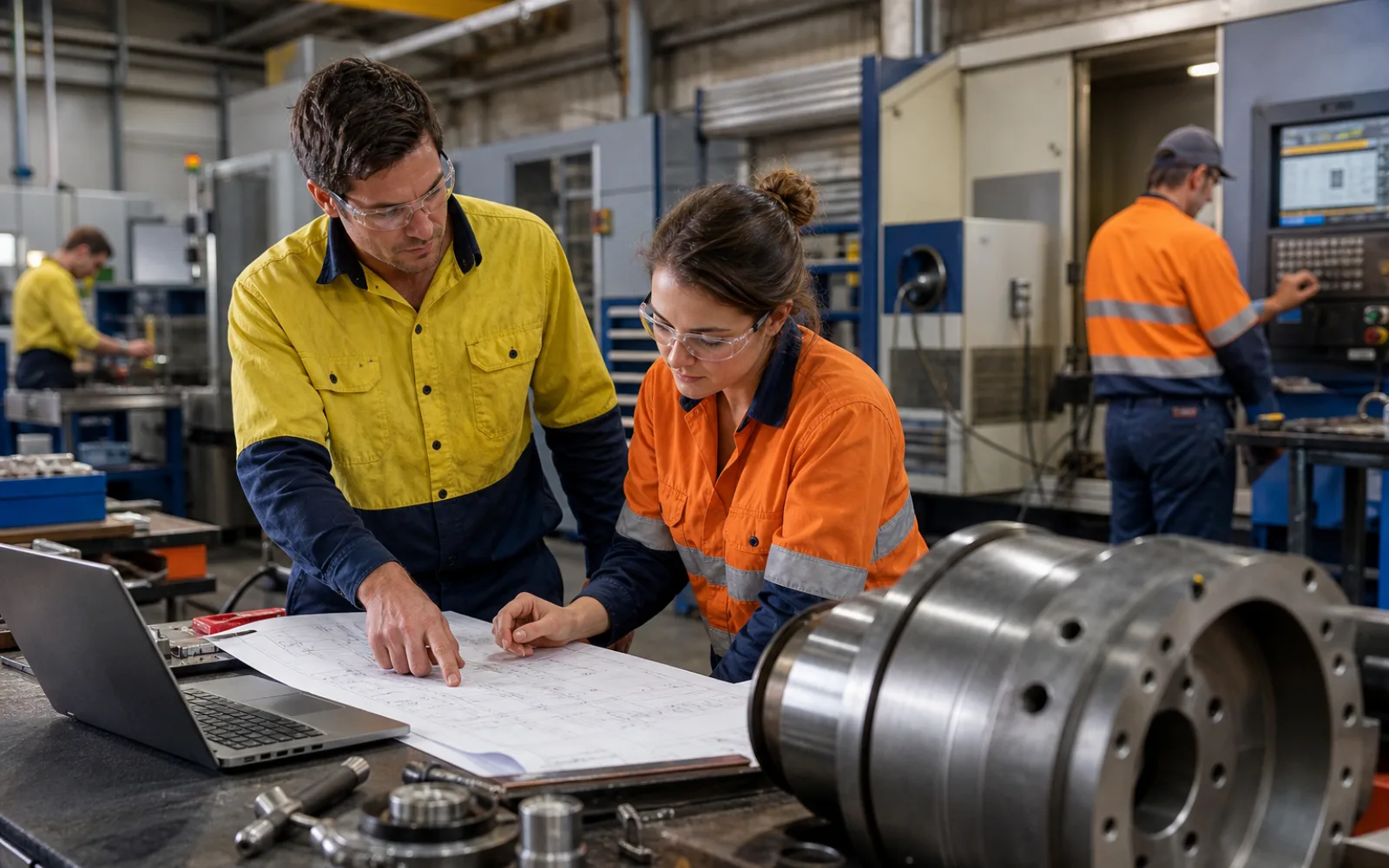
Australian engineering supplier requirements vary by sector and buyer, but the qualification logic is consistent: can the firm perform the exact scope, meet the applicable standards, support the work where it occurs and prove comparable delivery?
Overseas suppliers often weaken a credible offer by publishing a global capability claim with no explanation of Australian delivery. The buyer is left to investigate freight, service response, documentation and local responsibility.
What do Australian engineering buyers check?
They check technical fit, quality controls, safety, traceability, commercial readiness and the operating model behind the promise. Requirements become stricter when the work affects regulated assets, site safety or production continuity.
Australia's Department of Industry identifies advanced manufacturing and resilient supply chains as national priorities in its 2026–30 Corporate Plan. A supplier page should show how the business contributes in practice, not merely repeat those policy words.
Define the exact technical scope
Name the products, disciplines or processes offered. Publish the materials, operating ranges, working envelope, tolerances, inspection methods and exclusions that matter to qualification.
A sentence such as “precision machining for mining” is not enough. State whether the firm handles repair, low-volume replacement parts, production batches or full assemblies, and identify the drawing and data formats accepted for review.
Our guide to publishing manufacturing capacity and tolerance gives a useful model for this layer.
Explain the Australian delivery model
An overseas supplier should answer five questions plainly:
- Where is the work performed?
- Who owns the Australian customer relationship?
- How are freight, customs and urgent replacements handled?
- Is local commissioning or service available?
- Which entity contracts, invoices and provides warranty support?
Do not obscure a partner network. Buyers can work with distributed teams when accountability is clear.
Put standards in context
List relevant certifications with scope, issuer and expiry. Then connect each to the process or product it supports. If an Australian Standard applies, state how conformity is established and which evidence accompanies delivery.
Avoid a wall of certification logos. A buyer needs searchable names, current dates and the boundary of certification. Sample inspection records, material certificates or traceability workflows can be described without publishing client-confidential data.
Use comparable project evidence
Choose records that resemble the buyer's operating environment. State the sector, problem, scope, materials or systems, delivery constraint and verified result. Explain what support happened after shipment.
If the firm has no Australian project yet, say so and present the closest relevant international evidence. Transparency gives the buyer a basis for risk assessment; vague claims create more risk.
Make the next step technical
The contact route should request the information needed for a useful response: drawing, material, quantity, service location, standard and required date. Name the applications engineer or commercial owner and set a realistic acknowledgement target.
Creatif Work structures engineering websites around this qualification path. For firms entering Australia, we combine technical pages, project proof and clear market delivery information through our website service, giving procurement teams fewer unanswered questions before the first call.