

Precision Engineering Website Design: Specifications Buyers Need
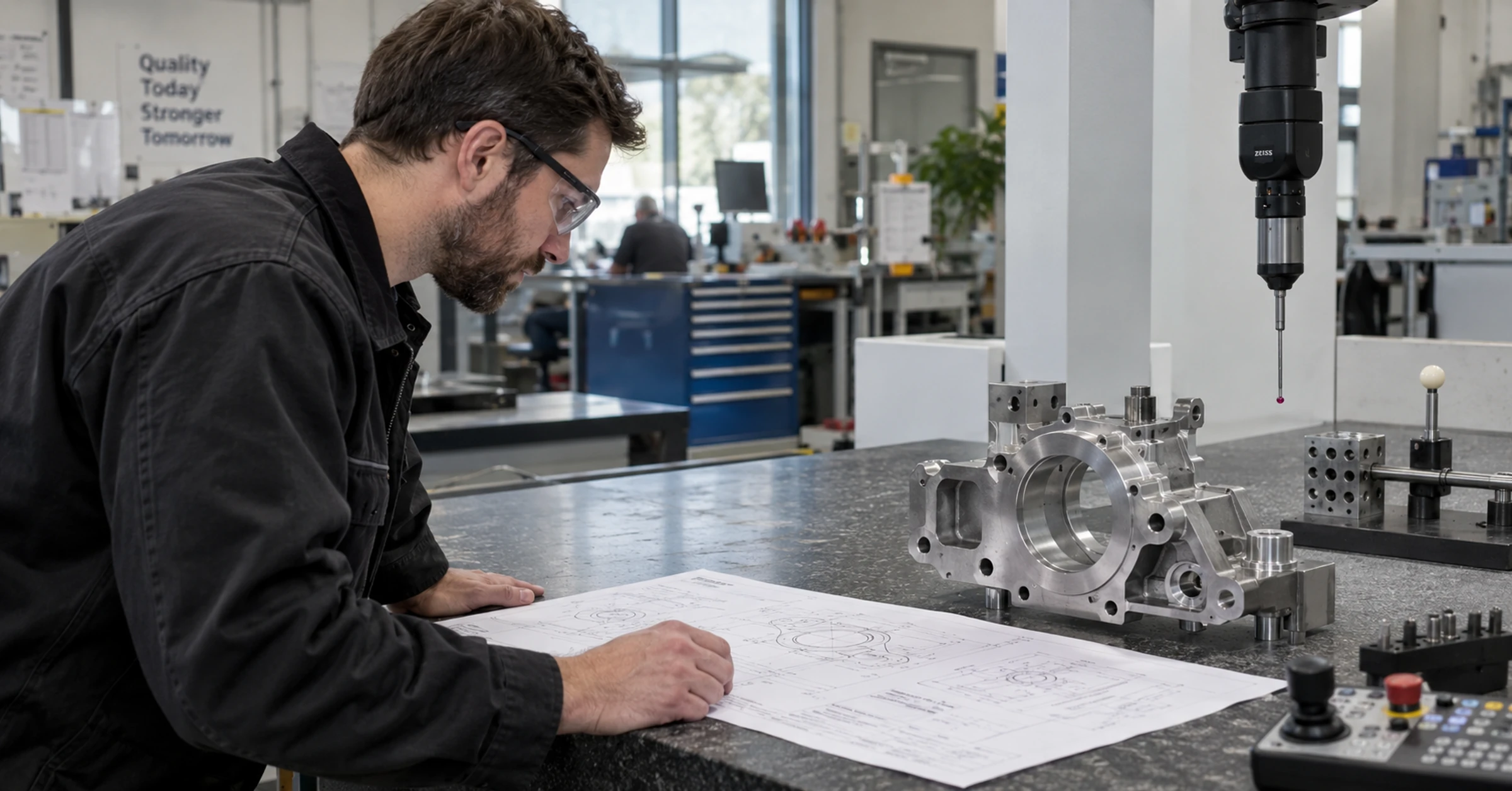
A precision engineering website has two audiences in the same visit. Procurement checks whether the supplier is credible and available. Engineering checks whether the part is feasible. The page structure must support both without turning the site into an uncontrolled specification database.
Which specifications do buyers need on a precision engineering website?
Buyers need process, part-size range, materials, achievable feature or tolerance context, surface and treatment options, inspection capability, traceability, certification scope, production volume and drawing-review route. Every number should carry a unit, condition and owner.
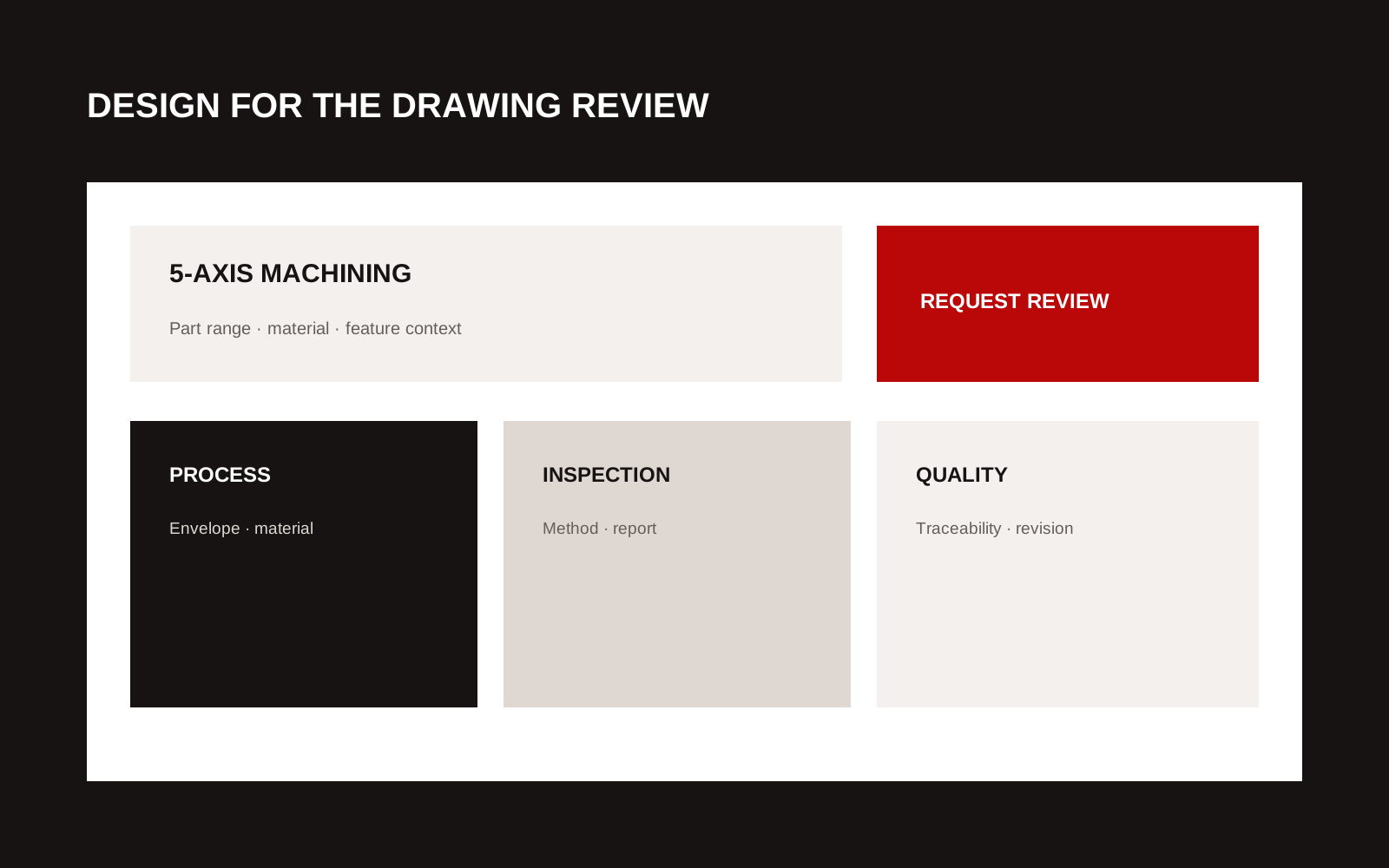
Annotated precision engineering website page with process specifications, inspection, materials and drawing review.
Build the site around the qualification path
| Buyer step | Page content | Next action |
|---|---|---|
| Identify process | Clear process and part-type pages | Open capability details |
| Check fit | Range, material and feature limits | Compare with drawing |
| Check quality | Inspection, traceability and certificates | Review evidence |
| Check delivery | Volume model and current capacity route | Request feasibility |
| Check experience | Comparable approved case | Ask a technical question |
| Share requirements | Secure drawing-review process | Submit controlled information |
This path is more useful than a homepage dominated by machine brands.
What belongs on a process page?
Use the same approved fields across machining, grinding, EDM, fabrication or assembly pages:
- process and equipment class;
- part envelope or diameter range;
- supported materials;
- feature and tolerance context;
- surface requirements;
- secondary and outside processes;
- inspection method;
- typical volume model;
- example part or application; and
- drawing-review condition.
Avoid a universal “up to” number that combines unrelated machines or features. Give buyers enough context to know when to ask.
Make material information practical
A long list of alloys looks broad but may hide limited experience. Group materials by real production control. State whether the company handles customer-supplied material, provides traceability and manages segregation.
Where clean handling, corrosion control or special packaging applies, explain the process and boundary. Do not add industry names to a material page without relevant evidence.
Connect quality badges to work
A certificate image should show standard, scope, legal entity, issuer, validity and current document link. Then explain how quality records reach the buyer:
- material certificates;
- first article or inspection report;
- in-process checks;
- nonconformance route;
- serial or batch traceability; and
- calibration evidence where required.
Do not publish client reports without permission. An anonymised sample with a field explanation can demonstrate the format.
Use case studies for production decisions
Show why a process or fixture was selected, which feature was critical, how it was measured and what the approved result was. A tray of finished parts gives little context.
Our machinery case-study structure provides a useful pattern: baseline, constraint, decision, integration and verification. Apply the same logic to a precision part.
Design the specification table for mobile
Large tables often become unreadable on a phone. Group fields by buyer decision and use accessible labels. Let users download the current controlled sheet where offline review is needed.
Do not hide essential specifications in images. Text content supports accessibility, search and maintenance. Google's Search Essentials also favour crawlable pages with useful information.
Protect drawing enquiries
State what the supplier needs to review and how confidential files are handled. The form should collect contact, part summary, material, quantity, key requirement and timing. Use an approved secure route for drawings and models.
Tell the prospect:
- who reviews the information;
- whether an NDA can be arranged;
- which formats are accepted;
- what happens after submission;
- when missing information will be requested; and
- that feasibility is confirmed only after review.
Keep specifications current
Assign technical ownership for each field. Record the source, approver and revision. When equipment, inspection or supplier capability changes, update every dependent page and document.
Review search logs and enquiry questions. If buyers repeatedly search a term that the company genuinely supports, improve the relevant page. Do not generate pages for terms with no distinct evidence.
The precision engineering capability guide gives the data model behind these pages. The engineering sector page shows how capability, projects and company proof connect.
Creatif Work designs engineering websites around the drawing-review and qualification decision. If the current site displays machines but cannot help a buyer assess a part, start with the problem.
Measure whether the site improves qualification
Do not judge the rebuild only by traffic. Compare the completeness and relevance of enquiries before and after the new structure. Track whether prospects provide process, material, quantity, critical features and timing without repeated follow-up.
Review failed searches and the terms used in site search. They may reveal an old machine name, common part description or material term that should map to an existing capability page. Add synonyms only when the underlying capability is real.
Ask estimators to tag enquiries that were clearly outside range, missing essential data or routed to the wrong team. Use the pattern to change page content and form questions. Do not add so many required fields that early-stage buyers abandon a valid discussion.
Every quarter, sample public specifications against the approved source and the current quotation template. Check old PDFs and distributor links as well as page content. The objective is a shorter route to a technically informed conversation, not a larger catalogue of claims.
Record who approved each sampled field and when. If the source cannot be found, pause the figure until engineering confirms it. A blank that triggers a technical question is safer than an unsupported number that enters a purchase specification.