

A Machinery Case Study That Shows the Process, Not Just the Machine

A machinery case study built around product photographs leaves the buyer to guess why the machine mattered. The useful story is the production constraint, the engineering choices, the integration work and the verified result.
The machine should appear as part of that process, not as the whole argument.
What should a machinery case study include?
Include the original production condition, the measurable target, material or part range, process constraints, engineering decision, integration boundary, acceptance method and observed result. Label confidential or modelled values clearly. State what the case does not prove.
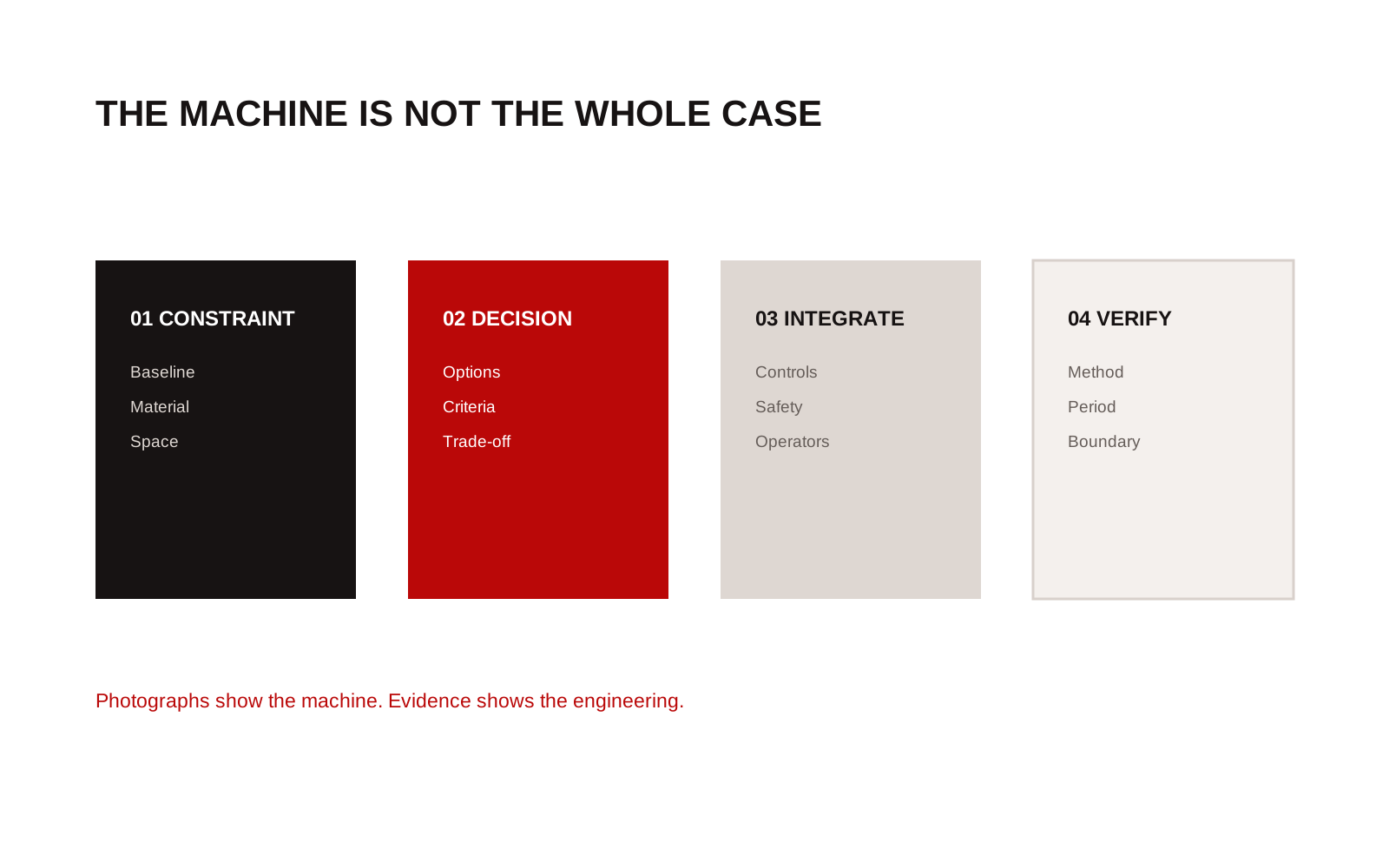
Machinery case study flow from production constraint through engineering decision to verified result.
Start with the line, not the product
Describe the condition that created the project. Useful facts can include cycle-time variation, changeover work, reject causes, operator exposure, space, utilities, upstream and downstream interfaces or a capacity limit.
Avoid claiming the customer “needed automation”. That is an answer. Explain the problem first.
| Case section | Evidence to collect | Weak substitute |
|---|---|---|
| Baseline | Time period, unit and measurement method | “Slow process” |
| Constraint | Space, material, safety or interface limit | “Complex requirements” |
| Decision | Options considered and selection reason | “Custom solution” |
| Delivery | Build, integration and commissioning steps | Installation photos only |
| Verification | Test method and acceptance boundary | “Passed all tests” |
| Result | Period, unit, baseline and exceptions | Percentage without context |
Explain the engineering decision
Buyers want to see judgement. State which options were considered and why one route was selected. The rejected option does not need criticism. It may simply have failed a space, throughput, maintenance or investment condition.
For example, the decision might compare a dedicated station, a flexible cell and a manual process improvement. Show the criteria. That makes the case useful to someone with a different plant.
Draw the integration boundary
Machinery rarely works alone. Include an annotated diagram showing:
- incoming and outgoing material;
- utilities;
- controls and data interfaces;
- safety boundary;
- operator tasks;
- upstream and downstream equipment; and
- responsibility at each interface.
Remove client-sensitive identifiers where necessary. A simplified boundary is still more useful than none.
Germany's official Manufacturing-X programme highlights interoperability and data sovereignty in industrial data exchange. If a case mentions data integration, state the actual interface, data purpose and ownership rather than adding an Industrie 4.0 label.
Show acceptance properly
State whether the result came from a factory acceptance test, site acceptance test, capability study, production trial or operating period. Name the product range and conditions included.
A clear acceptance record answers:
- What was tested?
- Who witnessed it?
- What was the pass criterion?
- How many cycles or parts were included?
- Which exceptions remained?
- When were they closed?
Do not turn a short acceptance run into a claim about annual production.
Use a result statement with boundaries
Compare these two sentences:
“The new cell increased productivity by 40 per cent.”
“During the four-week monitored ramp-up, median cycle time for the stated part family fell from the approved baseline to the recorded result, excluding planned maintenance and upstream stops.”
The second can be checked. If the customer will not approve the numbers, publish the method and directional outcome. Do not invent precision.
Add the operating view
The story should not stop at handover. Explain training, maintenance access, spare parts, changeover and the feedback collected after operation. If the supplier retained remote access, state the purpose and approval route without exposing security details.
A short “what changed after commissioning” section can cover parameter adjustments, operator feedback and modifications. This shows that the team managed a real installation rather than a showroom demonstration.
A publication checklist
- Confirm the company names and legal permissions.
- Check every number against the source record.
- Label measured, tested, modelled and estimated figures.
- State the supplier's contract role.
- Remove confidential drawings and personal data.
- Give photographs accurate captions.
- Name the result period and boundary.
- Include one limitation.
- Add a technical contact route.
- Record the page review date.
Our guide to engineering case studies provides a broader structure for technical firms. The engineering sector page shows how cases connect with capability and service information.
Creatif Work turns approved project records into case studies through our content service. We start with the decision and evidence before choosing the photographs or page layout. If the machine looks impressive but the buyer cannot see why it worked, start with the problem.
Interview the people who operated the result
The project manager remembers milestones. The operator remembers where the machine caused hesitation, which sequence changed and what had to be adjusted after handover. Interview both. Add maintenance and quality where their decisions affected the outcome.
Use the same factual prompts with each person: what was happening before, what could not change, which option was rejected, what was tested, what failed during ramp-up and what the team does differently now. Reconcile conflicting accounts against project records.
Do not manufacture a smooth story. A controlled modification during commissioning can make the case more credible when the problem and closure are approved for publication. State the issue without blaming individuals.
Keep a claim sheet beside the draft. For each number, record source, unit, period, approver and approved wording. For each photograph, record subject, date, permission and caption. That production record prevents later edits from turning a specific result into a broad product promise.