

FuelEU Data in France: What Marine Suppliers Need From Operators

FuelEU Maritime reporting belongs to the shipping company, but suppliers can determine whether the underlying record is usable. A fuel system, meter, shore-power interface or energy-saving device may create data the operator needs to explain, reconcile and retain.
The supplier should agree the data boundary before installation. Waiting until the annual report exposes missing identifiers, mismatched time periods and values that cannot be traced back to a primary record.
What FuelEU data should a supplier request from the operator?
Request the vessel and voyage identifiers, monitoring-plan boundary, fuel or energy method, required measurement frequency, time standard, verifier expectations, data owner and exception process. Confirm whether the supplier provides a primary measurement, a calculated value or supporting evidence only.
The FuelEU Maritime Regulation requires companies to monitor and record information including port departure and arrival, time at berth, shore-power use, fuel type and amount, well-to-tank and tank-to-wake emission factors, substitute energy and certain ice-navigation data. The company reports to its verifier. The supplier should not present itself as the compliance owner unless the contract explicitly assigns a defined task.
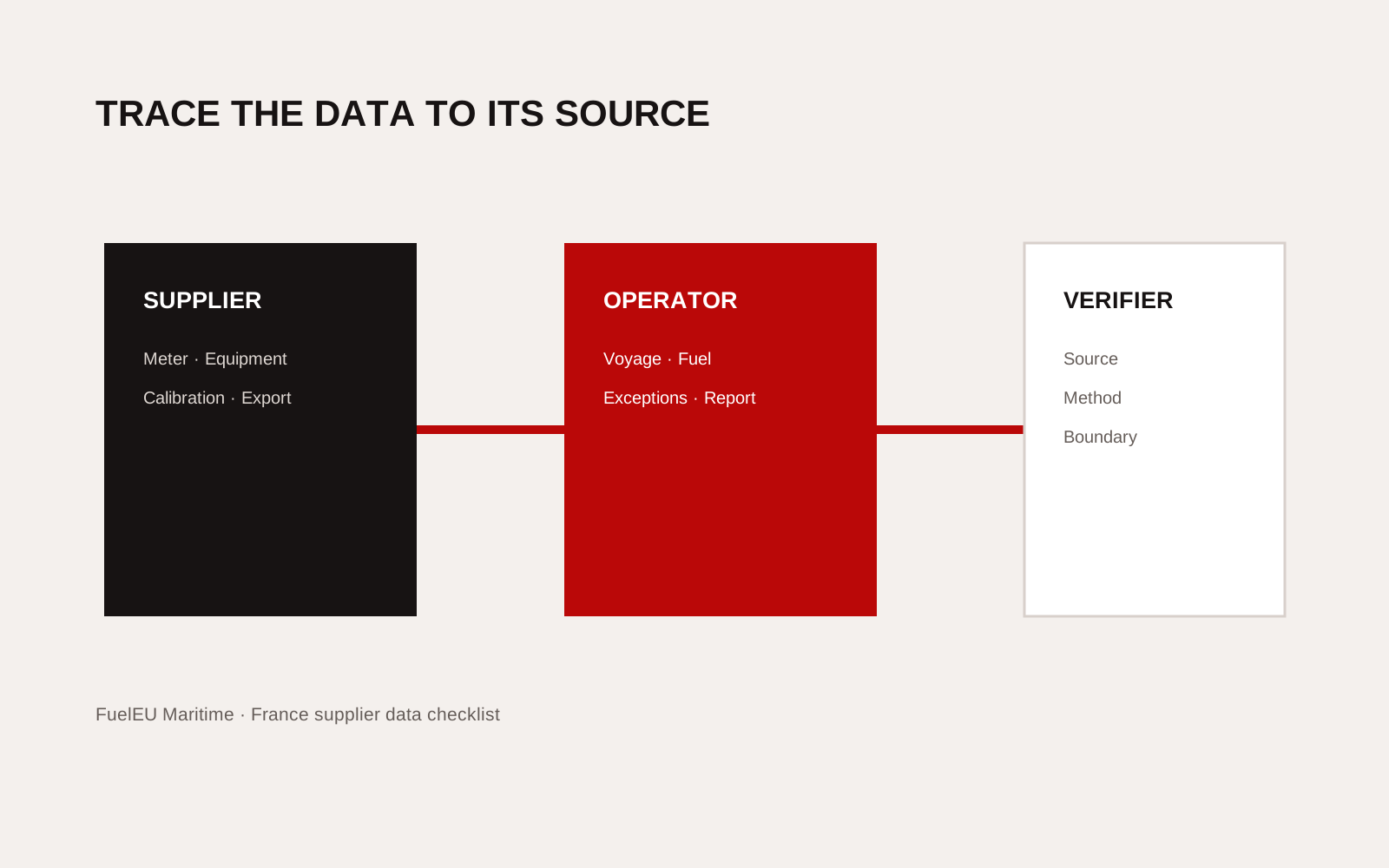
FuelEU Maritime data flow from vessel and supplier records through operator review to verifier submission.
Map each field to a source
| Required context | Operator input | Supplier contribution |
|---|---|---|
| Vessel identity | IMO number and company record | Equipment and meter identifier |
| Voyage period | Departure, arrival and berth time | Time-stamped operating record |
| Fuel or energy | Method and applicable factors | Measured quantity or device output |
| Shore power | Connection and use period | Interface event and energy record |
| Data quality | Approved monitoring method | Calibration, uncertainty and fault flags |
| Verification | Reporting and evidence request | Traceable export and supporting certificate |
Use the same identifier in the equipment record, export and service report. A serial number that disappears during data export creates unnecessary reconciliation work.
Confirm the monitoring-plan relationship
Article 9 of the regulation requires the monitoring plan to be revised when relevant company, system or method changes occur. An equipment change may therefore affect more than the installation drawing.
Before work begins, ask:
- Does this equipment replace a monitored source?
- Does it change the calculation method or data flow?
- Is the unit or sampling frequency different?
- Is a new calibration or uncertainty statement needed?
- Who assesses whether the monitoring plan must change?
- When must the verifier be informed?
The operator and verifier decide the formal response. The supplier should provide the technical change record promptly.
Make exports traceable
The EU's verification rules require the verifier to understand the data flow from primary source to report. A screenshot is weak evidence because it removes field definitions, time zone and audit history.
A useful export includes:
- vessel and equipment identifier;
- field name and unit;
- start and end time with time zone;
- sampling interval;
- raw or aggregated status;
- missing, estimated and corrected flags;
- software and configuration version; and
- export creation time.
Retain the mapping between proprietary fields and the agreed reporting fields. If the supplier changes the export schema, issue a revision note.
Handle missing data before year end
Define what happens when a sensor fails, communication is lost or a value falls outside range. The system should preserve the original status and any later correction. It should not silently replace a missing value with zero.
Create an exception record with event time, affected field, reason, action, person approving a correction and link to service evidence. Agree which party estimates missing data and under which approved method.
The European Commission's FuelEU Maritime page provides the current implementation overview. Review it and the legislation close to reporting dates because supporting requirements can change.
Publish capability without implying verification
A supplier website can state the data fields, export formats, calibration approach and integration boundary it supports. It can publish a sample data dictionary and anonymised workflow. It should not say “FuelEU compliant” without defining what that means and who has verified it.
Our guide to maritime emissions monitoring pages explains how to present measurement evidence. The marine sector page shows how technical capability can be connected to project proof.
Creatif Work helps marine firms turn approved data processes into clear website content. If the equipment records exist but annual reconciliation still depends on manual interpretation, start with the problem.
Run a month-end reconciliation before reporting season
Choose one vessel and reconcile a complete month while the people and source systems are available. Compare the operator's voyage log, bunker or energy record, supplier export, calibration status and exception register. Record every manual transformation between primary source and report field.
The exercise should answer whether time zones align, identifiers remain stable, duplicate records can be detected and corrected values keep an audit trail. It should also show whether a software or configuration version changed during the period.
Create an action record for every gap. Give it an owner, due date, temporary control and effect on reporting. Do not leave an unexplained spreadsheet adjustment as the long-term process.
After equipment service or software update, repeat a smaller reconciliation. Confirm that field names, units, frequency and quality flags remain consistent. Suppliers should issue change notes early enough for the operator to assess the monitoring plan and discuss the effect with its verifier. This routine makes year-end reporting a controlled aggregation task instead of a forensic exercise.