

How a Singapore Marine AI Pilot Becomes Credible Project Evidence
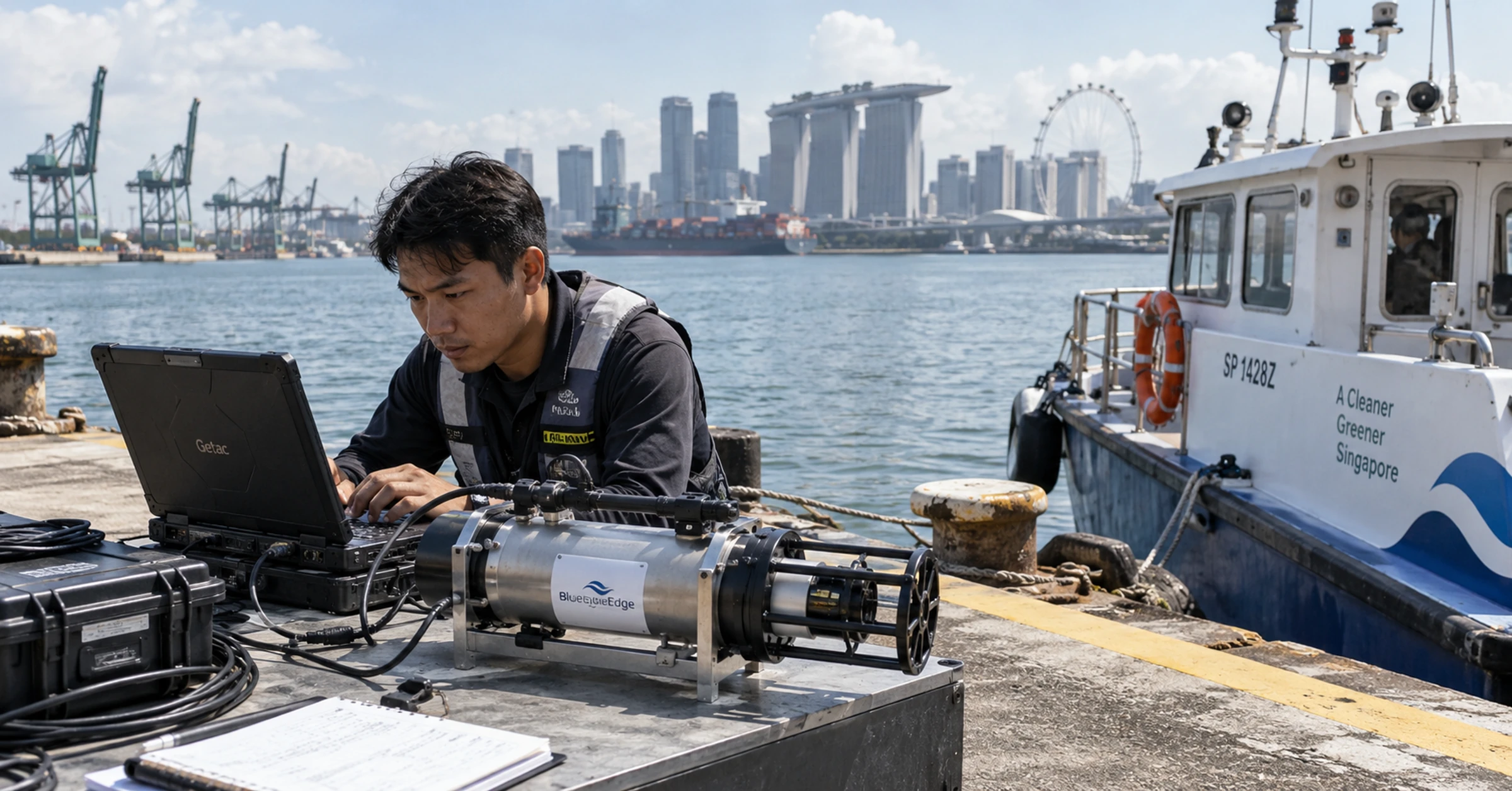
“AI-powered maritime platform successfully piloted” leaves a buyer with more questions than answers. What operating decision did it support? Which data did it see? What counted as success? How often was a person required to correct it? Is it still a pilot?
A credible project page answers those questions without exposing customer data, vessel security or proprietary model details.
What evidence makes a marine AI pilot credible?
Publish the operating problem, pre-pilot baseline, user and decision, data boundary, test conditions, acceptance criteria, result, failure cases, human oversight and current deployment status. State what the pilot did not prove. Label simulated, shadow-mode, onboard and live operational results separately, with dates and named project roles.
MPA and the Singapore Shipping Association’s 2026 AI partnership covers use cases across ship agency, management, chartering, shipping operations and bunkering. It specifically points to pilots in a company’s own operating environment. That phrase matters because a model that works on a prepared dataset has not yet proved it can support a live maritime decision.
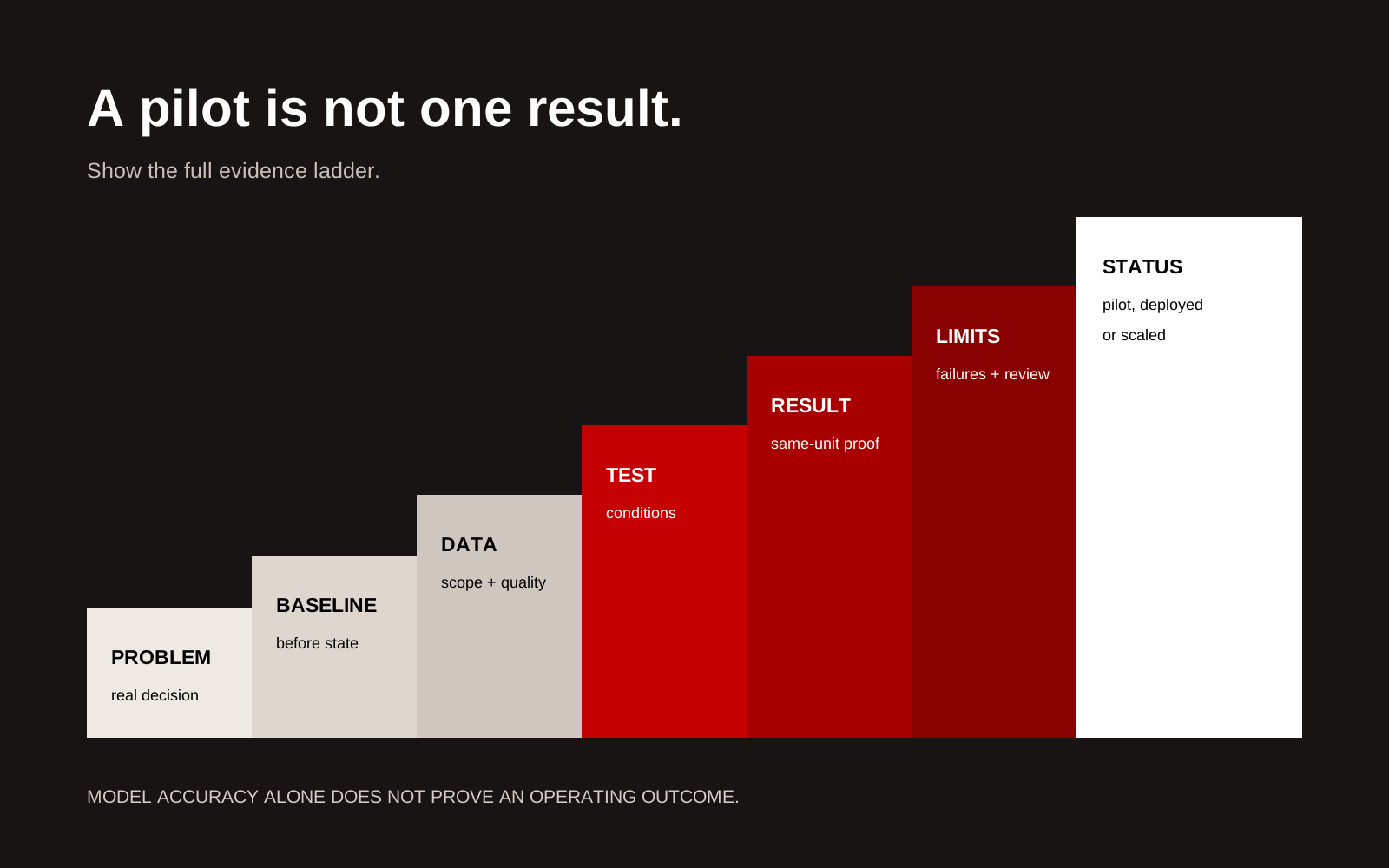
Evidence ladder for a Singapore maritime AI pilot from operating problem and baseline through test, result, limits and deployment status.
Start with the decision, not the model
Describe the job in operational terms:
- predict a failure early enough to plan maintenance;
- classify an incoming document for a human reviewer;
- identify an anomaly for an operator to investigate;
- suggest a berth, route or schedule option;
- retrieve the correct procedure for a crew or shore user;
- reduce time spent matching repeated commercial records.
Then name the person who acts on the output. “The system detects anomalies” is incomplete. A project record should say who receives the alert, what they inspect, what they can override and what happens if the model produces no answer.
Use an evidence ladder
| Stage | Question the case study must answer | Evidence to retain |
|---|---|---|
| Problem | What decision or task was failing? | Process map, incident pattern or time study |
| Baseline | What happened before the pilot? | Agreed period, volume, error, delay or cost measure |
| Data | What was available and excluded? | Source list, period, quality notes and permissions |
| Test | Where and how was the system used? | Protocol, users, conditions and acceptance criteria |
| Result | What changed against baseline? | Same-unit comparison, sample size and review record |
| Limits | Where did it fail or require help? | False results, missing cases and manual interventions |
| Status | What is in use now? | Prototype, pilot, limited deployment or scaled service |
The ladder prevents a polished product screenshot from outrunning the project evidence.
Report more than model accuracy
Accuracy can be useful, but it may hide the operational result. A maintenance team may care about warning time, false alarms and missed failures. A document team may care about review time, exception rate and whether the extracted field was accepted without correction.
Use measures that match the decision:
- time from data arrival to usable answer;
- percentage of cases requiring manual review;
- false-positive and false-negative rates;
- time gained before an intervention;
- tasks completed per shift;
- repeat submissions or corrections;
- system availability in the test environment;
- user overrides and reasons;
- outcome after the recommendation was acted upon.
Give the numerator, denominator and period where disclosure is permitted. “92% accuracy” is hard to assess without the number and type of cases.
State the data boundary
A public case study does not need raw voyage, crew or customer data. It should explain enough for the buyer to understand transferability.
State:
- the kind of source data used;
- whether it was historical, simulated or live;
- the period and operating context;
- known missing or low-quality fields;
- whether personal or commercially sensitive data was excluded;
- whether data from the customer can train a shared model;
- the retention and deletion approach at a high level.
If the model relies on one customer’s coding conventions or equipment type, say so. That is a useful limit, not an admission of failure.
Show human oversight and failure behaviour
For safety-related or consequential decisions, the interesting design question is what happens when confidence is low, data is absent or the output conflicts with an experienced operator.
A useful case study names:
- the decision the AI can support;
- the decision it cannot make;
- the confidence or condition that triggers review;
- the person with override authority;
- the record retained after an override;
- the fallback when the system is unavailable.
Do not use “human in the loop” as a complete explanation. Name the human task.
Label the present status honestly
MPA’s Smart Port Challenge 2026 announcement distinguishes market validation, proof of concept, pilot projects, product development and deployed technologies. A supplier case study should maintain the same discipline.
Use a dated status line such as:
Status at 30 September 2026: pilot completed on two assets. Results reviewed with the operating partner. Integration and support arrangements for a wider deployment remain under evaluation.
That sentence gives a buyer more confidence than calling the product “proven”.
Creatif Work builds marine websites and case-study systems that make technical work inspectable without publishing sensitive operations. When the AI pilot is part of a larger workflow, our custom software service can map data, human review and exception handling before the interface is designed.