

How to Tell If Your SEO Agency Is Actually Working

An SEO agency is doing useful work when you can inspect what changed, understand why it changed, and judge whether the resulting discovery is relevant to your business. Rankings alone do not answer that question. Neither does a long activity report. Ask for evidence of implementation, a consistent measurement basis, commercial interpretation and the next decision.
Your monthly report arrives. It contains green arrows, several pages of rankings and a list of published articles. The agency says the campaign is progressing. Your sales team says suitable enquiries have not changed. Both statements might be accurate. The missing part is the explanation connecting them.
This guide helps founders and managers examine that connection without becoming search specialists. It covers account access, baselines, technical changes, content, enquiries, AI reporting and provider handover. It also explains why a competent agency may report uncertainty instead of promising a result it cannot control.
The scorecard, diagrams and business scenarios are original teaching examples. They are not findings about a named provider or claims about Creatif Work's client results. Use the agency evaluation workbook or editable CSV pack to record your own evidence.
Begin with the question the contract should answer
Before judging performance, write down what you hired the agency to improve. “Do SEO” is not a useful objective. A marine supplier may need more relevant enquiries for a particular repair capability. An engineering firm may need buyers to understand its actual appointment. A construction business may need its project evidence found during supplier assessment.
Those aims can involve different pages and different measures. If the agency is working mainly on broad informational articles, it may deliver precisely what the contract requested while missing the commercial need. Fix that mismatch before arguing about whether publishing was completed.
Ask the commercial team what a suitable enquiry contains. Record the work type, location, technical requirements and exclusions. Do not call every submitted form a lead. A recruitment message, supplier offer and request outside your service area should not inflate a report about prospective clients.
Then agree what the agency can influence. It can inspect pages, recommend changes, implement approved work and evaluate observations. It cannot manufacture service capacity, force procurement approval or guarantee a search platform's ranking. Your team still owns business facts, responses and sales decisions.
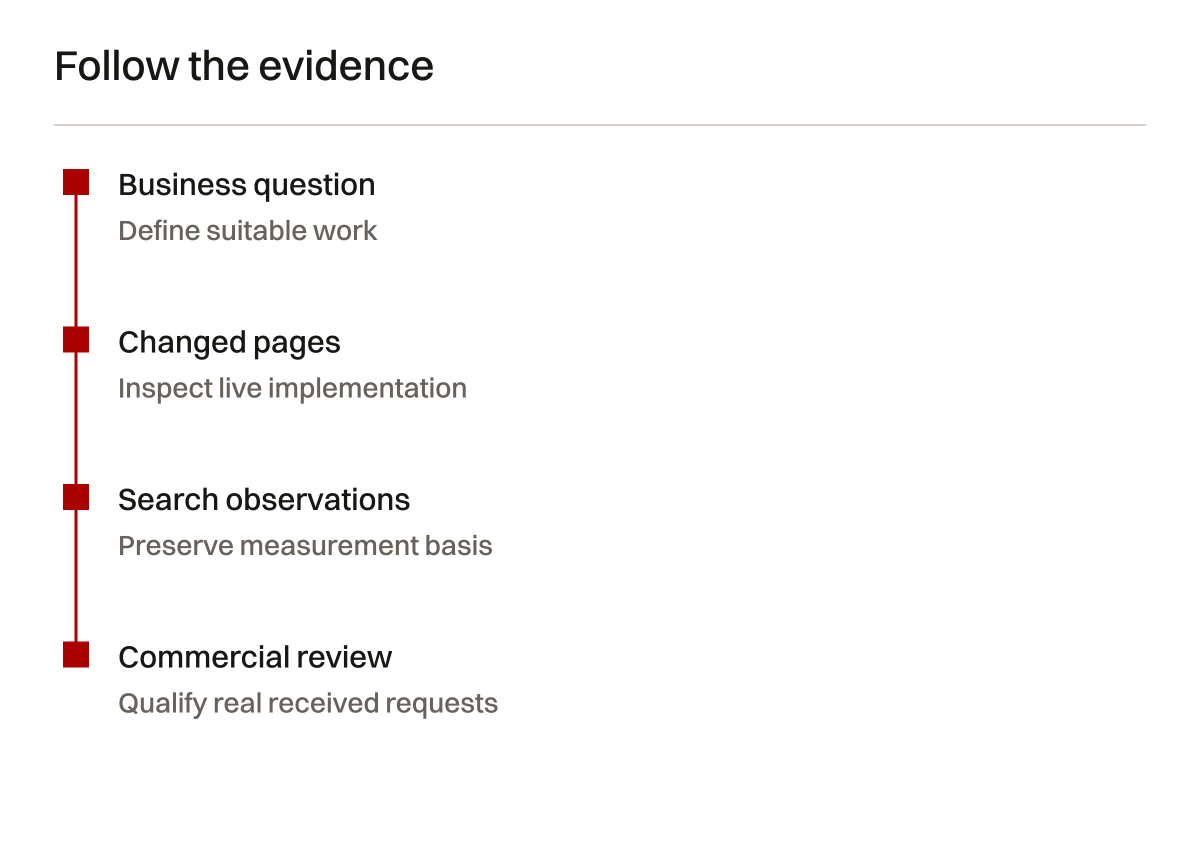
Separate an unclear brief from poor delivery
Suppose you requested more visibility for an engineering consultancy. The agency improved educational pages about engineering careers. Those pages might receive legitimate visits. They do not necessarily help a developer appoint a consultant. The problem is the target, not proof that those visits are fake.
A reasonable correction is to identify appointment questions, review service pages and agree a relevant query group. It is not to demand that the agency retrospectively label every new visitor as a purchasing manager. Evidence should narrow the claim, not stretch the definition of success.
Also check dependencies. A draft awaiting your technical approval is not a published improvement. An approved fix waiting on another developer is not a completed implementation. A report should name those states and their owners. Otherwise unfinished work disappears inside a reassuring monthly summary.
Check whether you own the evidence
Your business should retain control of its domain, website, analytics and Search Console properties. Access arrangements differ, but the agency should not be the only party able to see the underlying records. Ask who has administrative control and how another authorised provider would receive access.
Google's guidance on hiring an SEO recommends asking how the provider intends to work and checking recommendations against official documentation. It warns against guaranteed first-place results. Use that as a reference for questions, not as a badge claiming Google has approved an agency.
At an initial review, give only the access required. Read access may be enough for investigation. Implementation permissions should follow an agreed scope. Keep a named internal owner who can approve changes and remove access when an appointment ends.
Ask for exports with the date range and filters preserved. A screenshot can help a meeting, but it is a weak handover format. If you cannot reconstruct how a headline figure was produced, you cannot reliably compare it with next month's figure.
| Record | What to request | What it lets you inspect | Important limit |
|---|---|---|---|
| Search Console | Property, period, filters and export | Search clicks, impressions and query groups | Not a complete buyer identity record |
| Analytics | Authorised reports and event definitions | Recorded website activity | Consent and implementation affect collection |
| Change log | URLs, dates, approvals and checks | Actual work completed | Completion does not establish business impact |
| Enquiry register | Deduplicated requests and qualification | Commercial suitability | Source may be missing or mixed |
| Content inventory | Live URLs, purpose and evidence owner | Published answers and maintenance | Word count does not establish usefulness |
| Access register | Account owners and permissions | Continuity and control | Access alone does not prove correct setup |
This is an evidence-request checklist, not a contractual entitlement in every arrangement. Confirm your actual agreement and access obligations. If a provider cannot share client-sensitive material, ask for a proportionate record that still permits evaluation.
Test one number all the way back
Choose a headline metric such as non-branded search clicks. Ask the agency to show the property, dates, search type and query classification. Check whether the branded exclusion catches company-name variations. Check whether a filter was changed between reports.
You do not need to rebuild every dashboard. One traceable example tells you whether the report has a defined method. If the agency discovers a mistake and corrects it openly, that is more useful than defending a figure nobody can reproduce.
Record the corrected definition for future reports. A comparison that changes its denominator halfway through the year needs an annotation. Do not compare an old “all forms” total with a new “qualified enquiries” total and present the difference as performance growth.
Understand the baseline before reading the arrows
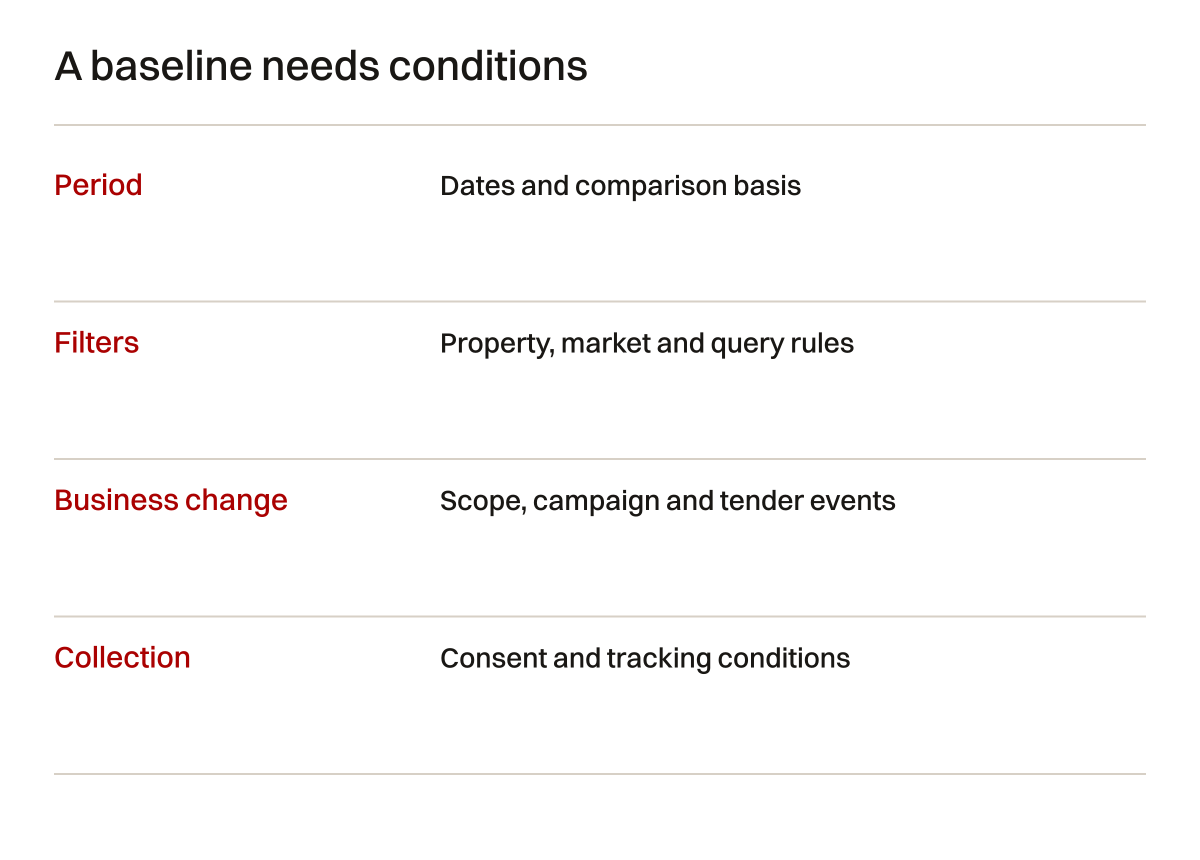
A baseline is a defined observation period, not simply the first month the agency chose. It should state the site's condition, available data, major business changes and collection limits. A recently relaunched website needs a different interpretation from a mature site with years of consistent measurement.
The Search Console performance overview explains the available metrics and dimensions. A report can be split by page, query, country or device. Use those views to ask whether the apparent change comes from the work you actually want.
Compare like with like where possible. An equal-length period is a useful start. A year-on-year view can help inspect recurring demand, but last year may include a different service mix or a one-off event. Neither comparison automatically removes every confounding factor.
For a construction firm, tender cycles may shape demand. For a marine supplier, a project announcement may create branded searches. For an engineering practice, new geographic coverage may change which visitors are relevant. Write those events into the review rather than treating them as noise to ignore.
Require absolute counts as well as percentages
A change from two suitable enquiries to four is a 100% increase. It is also two additional enquiries. Both statements matter. The percentage alone makes a small sample sound more settled than it is.
Ask whether the enquiries are unique and whether their qualification is complete. An unresolved request should not be quietly counted as suitable. An agency may be unable to access your sales system, but it can still identify that limitation instead of claiming revenue from form events.
Inspect the period after the change as well. A page published yesterday cannot have a mature commercial outcome today. That does not excuse indefinite waiting. It means the early check should be implementation and discoverability, followed by observations appropriate to the time available.
Read rankings as observations, not as the verdict
Rankings can show where a page appears under a specified measurement method. They can help diagnose visibility. They cannot tell you whether a query is relevant, whether someone clicked or whether the visit produced a suitable requirement.
Google's metric definitions explain that average position is an aggregated measure and that search appearance affects interpretation. A lower number in the site-wide average does not mean every commercially important page improved.
Ask to see a maintained query group rather than a handful of winning terms. Include phrases linked to actual services and explain the selection method. If the list changes, preserve the previous list so you can distinguish improved performance from more favourable reporting.
Be wary of a chart that mixes markets. A Singapore service may appear for a question in a country where it cannot deliver the work. That observation could inform international planning. It should not count as an immediate local commercial gain without further assessment.
| Measure | Useful question | Weak interpretation | Better interpretation |
|---|---|---|---|
| Average position | Which page and query group moved? | All rankings are better | Defined group's observed position changed |
| Impressions | For which questions and markets? | More potential clients saw us | Search exposure rose under stated conditions |
| Clicks | Where did visitors land? | Every click is a lead | Inspect relevance and recorded next actions |
| Form events | Did submission actually succeed? | Sales enquiries increased | Verified unique requests reached the receiver |
| Qualified enquiries | What qualifies a request? | Every message is valuable | Apply agreed suitability rules consistently |
| Revenue attribution | Which model and records were used? | SEO caused all credited revenue | Revenue received model-based credit |
The table is a reading aid. It does not prescribe a universal target for every business. Choose measures that match your appointment, data quality and decision period.
Distinguish ranking trackers from actual search records
A tracker runs defined searches under its own conditions. Search Console aggregates recorded search interactions. They are not identical datasets. Differences do not automatically mean either system is broken.
Ask why the agency uses each source. A tracker might help monitor a stable query panel. Search Console might reveal queries the panel missed. Combining the two can be useful, provided the report does not blend their metrics into a single unexplained number.
Do not buy a promise based on a proprietary score alone. Request the underlying definition, what changes it, and which business decision it supports. A score may summarise checks. It is not automatically evidence of authority, buyer trust or future revenue.
Inspect the work, not only its volume
Choose three changes from the last reporting period. Open the live URLs. Ask what was wrong, what changed and how the team verified the result. A task labelled “optimised metadata” should identify the pages and the reason, not merely repeat the label.
For technical work, the evidence should include the observed fault and the intended state. For content, it should include the reader's question and factual inputs. For measurement, it should include the event definition and a test. The format can be simple if the record is specific.
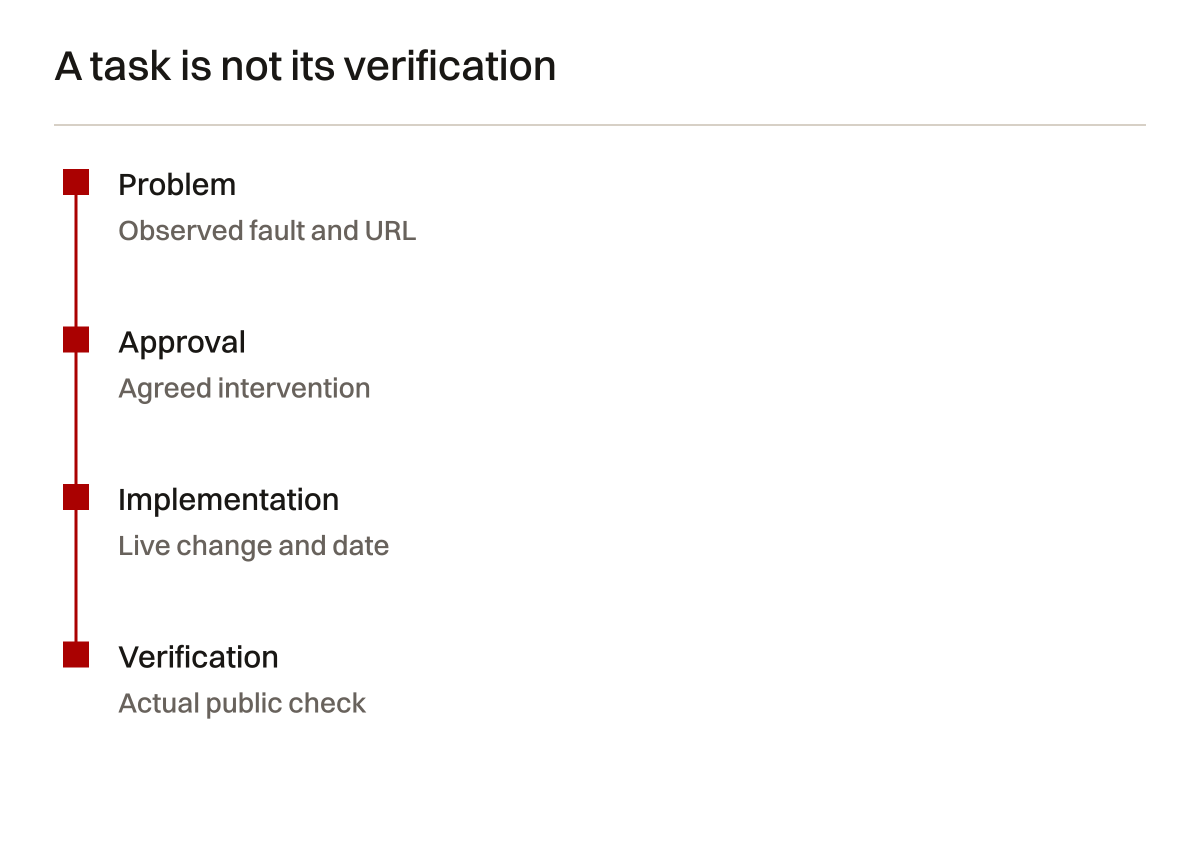
Google's noindex documentation explains an actual indexing control. If an important public page was accidentally excluded and the team corrected it, that is an inspectable intervention. Whether it later receives useful traffic is a separate question.
For internal links, Google's link guidance describes crawlable links and useful anchor text. The agency should also explain why the destination helps the reader. Adding links mechanically across unrelated articles is not the same as creating a useful route to assessment.
Use a proportionate verification sample
You may not have time to inspect every edited page. Start with the most commercially important pages and a sample of routine changes. Check desktop and mobile. Follow the contact route. Confirm documents and relevant images load.
For a marine capability page, compare the public scope with an approved technical record. For a construction case study, check that the firm's responsibility is clear. For an engineering service, ensure the page does not imply an appointment or approval the business cannot support.
If several sample changes fail, widen the review. If they pass, retain the log and inspect again after major template changes. This is a practical quality-control approach, not proof that the entire website is error-free.
Judge content by the decision it helps
A useful article answers a real question with enough context to act sensibly. It need not be long. A long article earns its length through distinct questions, evidence and examples. Repeated paragraphs do not become valuable because a tool recommends a word count.
Google's people-first content guidance encourages useful, reliable content rather than writing primarily for search traffic. For evaluation, ask what the page contributes that the reader could not obtain from generic summaries.
An engineering article could explain which project information is needed for an initial assessment. A construction article could show how to distinguish a firm's role from the overall project outcome. A marine article could clarify service limitations and the documents needed to assess compatibility.
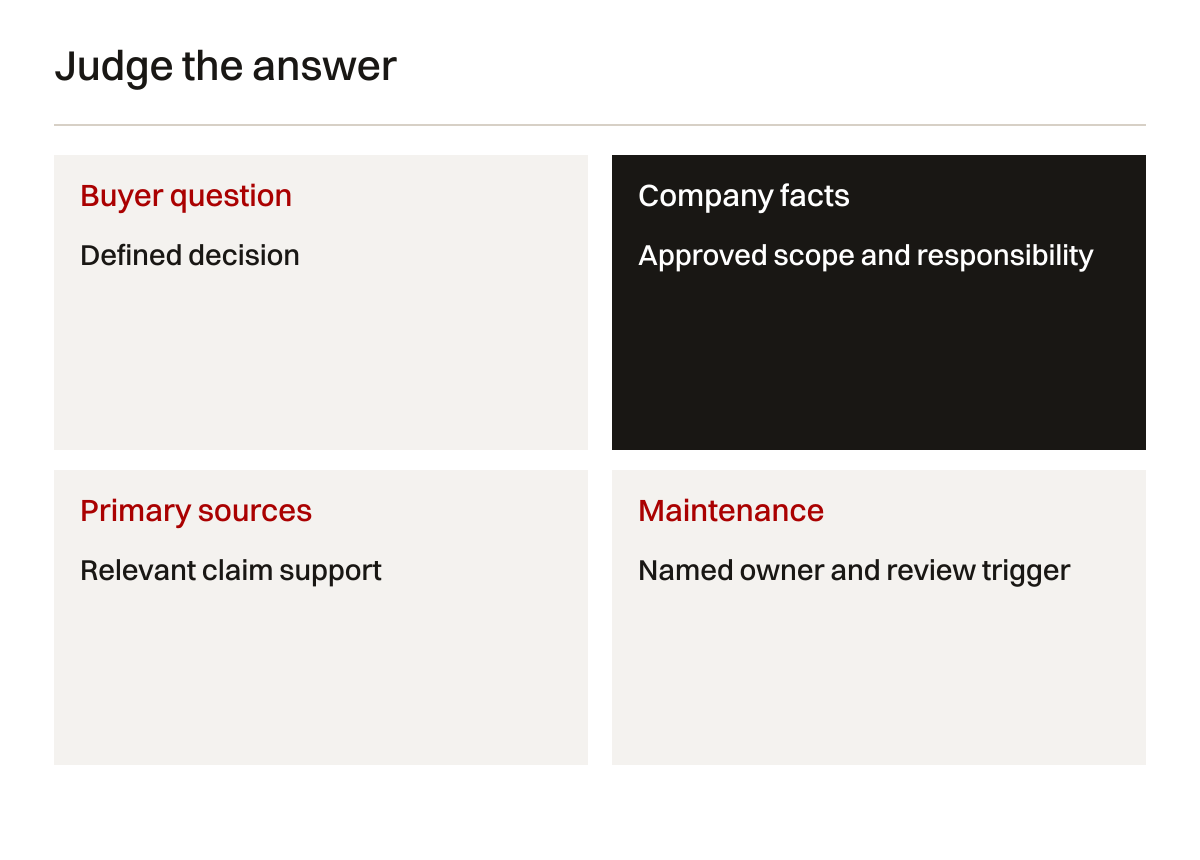
Ask who checked the facts. “AI generated it” explains production, not approval. “The agency reviewed it” is incomplete if the reviewer lacked the business knowledge required to verify a capability claim. Assign technical facts to someone able to approve them.
Look for the cost of maintenance
Every published service claim needs an owner. If the agency proposes many new pages, ask how outdated facts will be found and corrected. A larger content library can become a liability if specifications, coverage or contact instructions change without review.
Choose a sample of older articles as well as new ones. Do they point to retired offers? Do they contain dates that have lost their meaning? Are downloadable files still consistent with the visible page? Publication is not the final quality check.
Use our existing refresh or rebuild discussion when the evaluation reveals a website problem. A search issue does not always require a new site. Sometimes the important repair is an accurate service explanation, an editable template or a reliable enquiry route.
Check whether AI is assisting analysis or impersonating it
AI can help organise records, draft explanations and flag possible patterns. It cannot make an unsupported conclusion true. A polished paragraph saying a content campaign “drove” growth still needs a defined dataset and a credible causal basis.
Google's generative AI guidance does not ban useful AI assistance. It calls for accuracy and review. Evaluate the provider's checking process rather than treating either “AI-powered” or “human-written” as sufficient evidence.
Ask the agency to explain one recommendation without reading the generated summary. What observation prompted it? Which alternative explanations were examined? Which records are missing? What would change the recommendation? A person responsible for the work should be able to answer.
Never upload confidential project files or identifiable enquiry records into a tool merely to make a report faster. The provider needs an approved data-handling arrangement. An anonymised sample should still be checked for details that identify a project, client or individual.
| AI-assisted task | Acceptable starting point | Required checking | What must not be claimed |
|---|---|---|---|
| Summarise metrics | Defined, authorised export | Recalculate totals and preserve filters | Narrative proves the cause |
| Draft content | Approved facts and useful brief | Source and technical review | Model output proves capability |
| Suggest queries | Clearly labelled hypotheses | Relevance and demand investigation | Suggestions are measured volume |
| Classify enquiries | Agreed definitions and protected data | Human sample review and exceptions | Automated labels are unquestionably correct |
| Review AI mentions | Recorded prompt panel | Repeat method and citation checks | Screenshots establish market share |
These are proposed supervision rules. They are not a claim about how every provider operates. Apply them to your actual tools, permissions and appointment.
Keep AI visibility separate from sales evidence
A company can be mentioned in an AI answer without being recommended. Its page can be cited without someone visiting it. A recorded visit can occur without a suitable enquiry. A report should preserve those distinctions.
Google's AI search guidance says there is no special schema or additional technical requirement for its AI features. It also explains how their traffic is included in Search Console reporting. Do not assume a standard search export isolates every AI exposure.
If the agency sells AI visibility measurement, ask for the prompts, platforms, dates, repeats and inclusion criteria. Ask whether the test questions name your company. Branded prompts can test factual understanding, but they are not evidence that unprompted buyers discover you.
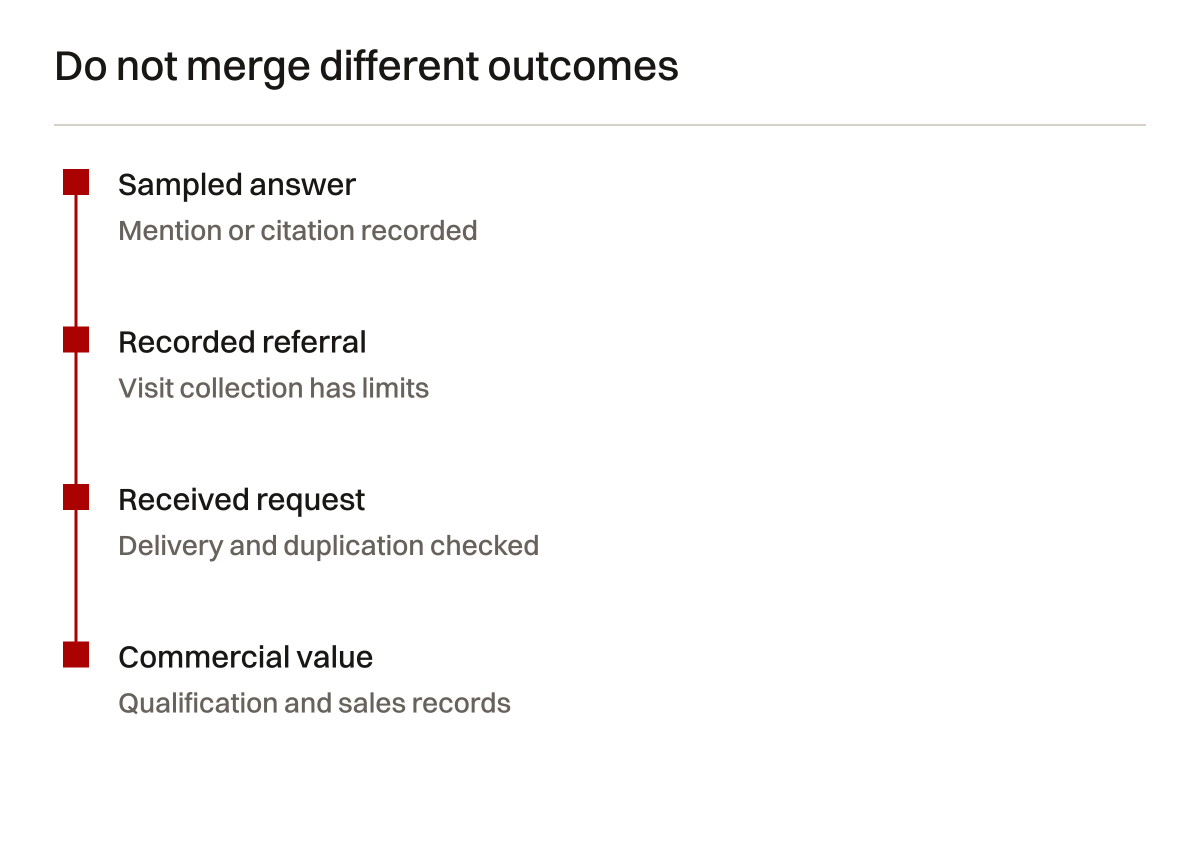
An honest report might say a service page was cited in a defined sample but no associated enquiries were observed. That is a useful boundary. It does not make the citation worthless. It prevents the buyer from purchasing a revenue claim the data cannot support.
Connect search observations to the receiving team
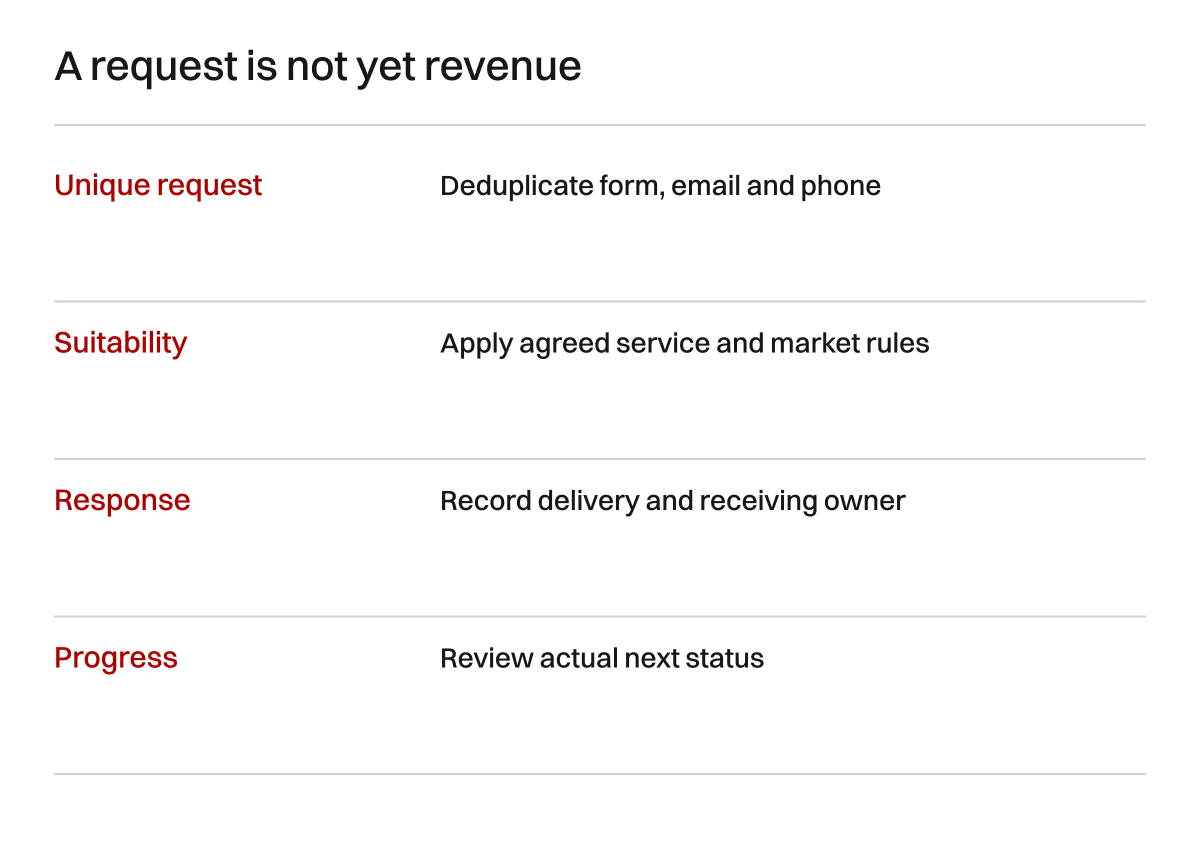
The website is only one part of enquiry handling. Ask whether forms deliver, attachments arrive and the correct person responds. A provider may improve relevant discovery while the business loses requests in a shared inbox.
Create an enquiry register with a unique record for each real request. Include source where known, landing page where recorded, suitability, response timing and next status. Avoid storing unnecessary personal or confidential details in a general marketing spreadsheet.
Check duplicates. The same prospect may submit twice or use email after a form. Counting both as independent leads makes channel performance look stronger than it is. Conversely, a useful phone enquiry should not disappear because the website event system did not record it.
Google Analytics attribution documentation explains model-based allocation of credit. A credited outcome is not a controlled experiment showing that the channel caused the outcome. Keep that distinction when discussing revenue with the board.
Read suitable enquiries with sales context
An increase in unsuitable requests can indicate poor targeting or unclear scope. It can also arise from a new market or a change in classification. Inspect a sample before deciding. A low enquiry count with strong fit can still be commercially useful, but do not assume value without the sales records.
Ask why suitable opportunities did not proceed. Was the request outside capacity? Was procurement timing wrong? Did the prospect misunderstand the appointment? These findings can improve content. They can also reveal issues SEO cannot resolve.
Do not punish a provider for refusing to call every request a success. The purpose of qualification is to make the programme more useful. It should be consistently applied, including when the resulting number is less flattering.
Use a scorecard without pretending it is scientific
A scorecard can make a review less emotional. It should not become another unexplained agency score. Assess each area as evidenced, incomplete, unknown or not applicable. Attach the record supporting your judgment.
Avoid a fixed passing percentage. Missing account control may be more serious than a delayed routine article. Unsupported public capability claims may need urgent correction even if most other work is good. Weight the consequences, not only the number of completed boxes.
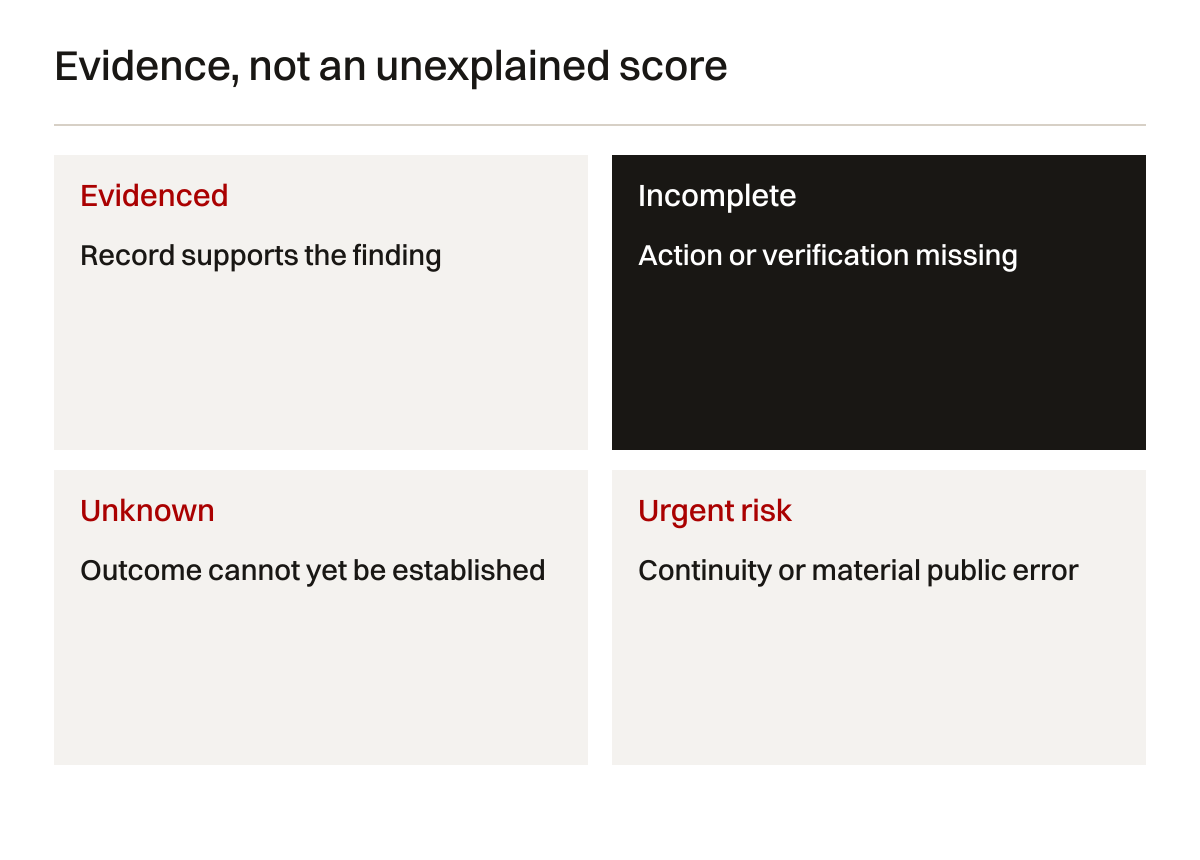
| Area | Evidence of useful practice | Concern to investigate | Decision it supports |
|---|---|---|---|
| Commercial target | Defined suitable buyer and work type | Traffic target disconnected from services | Repair the brief |
| Access and ownership | Company retains records and permissions | Provider is sole administrator | Restore continuity |
| Implementation | Dated live changes and checks | Tasks repeated without live evidence | Inspect delivery |
| Measurement | Stable definitions and limitations | Filters or denominators omitted | Rebuild the baseline |
| Interpretation | Alternatives and uncertainty explained | Every change credited to SEO | Challenge conclusions |
| Content quality | Approved facts and distinct purpose | Repeated unsupported articles | Review publishing scope |
| Enquiry route | Delivery and qualification checked | Events treated as sales | Repair commercial measurement |
This scorecard is an original review tool, not a certification scheme. Its purpose is to identify the next investigation and make the discussion specific.
Ask questions that produce records
Instead of “Are we doing well?”, ask which suitable query group changed and where those visitors landed. Instead of “How much content did you create?”, ask which unanswered buying question each live page resolves. Instead of “Why are leads down?”, ask what the enquiry register and collection checks show.
Give the provider room to answer with evidence. Some questions require an export, developer inspection or sales review. Agree when that record will be available. A quick confident answer is not necessarily better than a careful answer delivered after checking.
Record unresolved questions and owners at the end of the meeting. If the same questions remain unresolved month after month, that pattern matters. One incomplete review is different from a continuing refusal to explain the work.
Decide whether to continue, correct or change provider
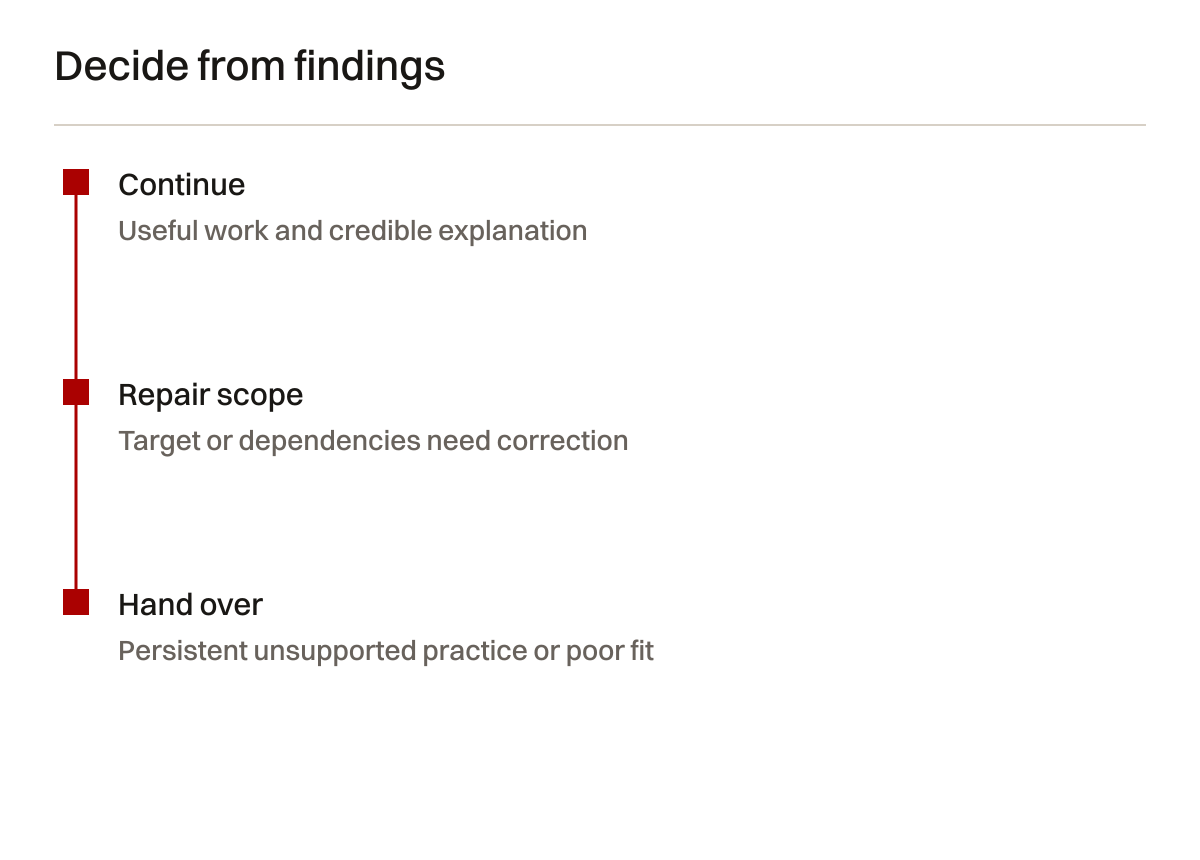
Continue when the work is inspectable, the target is appropriate and the interpretation is credible. Results can still be uncertain. Your decision should account for the period available, business conditions and whether the current plan addresses a real gap.
Correct the appointment when the provider is capable but the brief or dependencies are wrong. That may mean fewer generic articles, more service-page work, better enquiry classification or a clear approval arrangement. Write the revised scope instead of relying on a verbal promise.
Change provider when explanations remain unsupported, account control is obstructed, material errors persist or the relationship no longer fits the work. Follow the agreement and obtain appropriate advice for disputes. A marketing article cannot determine your contractual position.
Prepare a handover before removing access
Collect the current content inventory, exports, change log, access register and unresolved issues. Confirm who controls domains and essential accounts. Preserve rollback information for recent technical work. Avoid a rushed change that leaves nobody responsible for the site.
Ask the incoming team to review the records before rewriting everything. Some existing work may be sound. A new provider should not need to disparage every previous decision to justify its appointment. The task is to identify what still fits and what needs investigation.
Retain an internal decision log. Why did you change the query group? Why was an article removed? Why did qualification rules change? These records help the next review distinguish a genuine performance change from a reporting change.
A practical review over the next month
Start by agreeing the commercial question and obtaining the underlying records. In the first review, reconcile one headline metric and inspect several live changes. Then follow actual enquiries through the receiving process. Finish by deciding what evidence is still missing and who will obtain it.
Do not spend the entire month rebuilding a dashboard if a contact form is visibly failing. Equally, do not rewrite service pages merely because one weekly ranking fluctuated. Match the response to the severity and evidence of the problem.
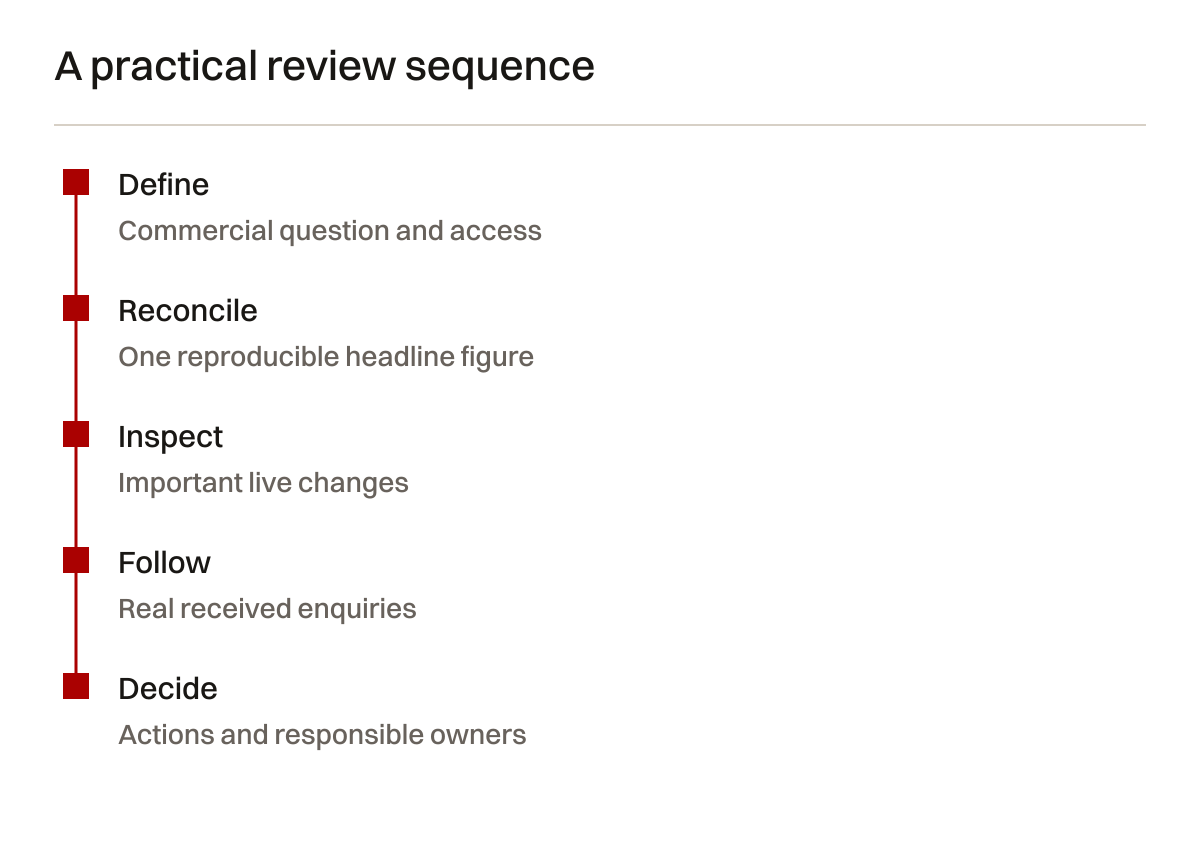
| Review stage | Concrete task | Record to retain | Question before moving on |
|---|---|---|---|
| Define | Agree suitable work and measurement | Objective and qualification rules | Are we judging the right outcome? |
| Reconcile | Trace a headline number | Export, filters and calculation | Can another person reproduce it? |
| Inspect | Review important live changes | URL, observation and dated check | Did the intended repair happen? |
| Follow | Check received enquiries | Protected, deduplicated register | Did suitable requests reach the team? |
| Decide | Continue, adjust or hand over | Named actions and owners | What evidence changes our decision? |
The sequence is suggested, not a fixed project duration. Serious delivery or public-information faults should be addressed promptly. Longer commercial cycles need observation beyond a single reporting month.
Use a marine-supplier example to test the review
Consider a fictional supplier that wants enquiries for planned vessel maintenance. Its agency report shows more visits to general articles about shipping. The service page still omits the information needed to assess a request. The shared inbox receives messages, but nobody consistently distinguishes maintenance enquiries from recruitment applications.
The first decision is not whether the traffic increase is impressive. It is whether the programme is observing the right work. Agree a maintenance-enquiry definition with the operations team. Record actual coverage and exclusions. Inspect the service page against those facts. Check the form, attachment handling and receiving instructions.
Next, examine the relevant search observations. Keep educational article traffic visible, but do not present it as proof of maintenance demand. Review the service-page queries and the markets where the business can actually support a request. A buyer from an unsupported port needs an accurate explanation, not an unsupported promise inserted to increase clicks.
The revised monthly report can now show three different things. It can show the approved page repairs. It can show observed search activity for the defined service group. It can show the number and suitability of received requests. Those records may move differently. That is a reason to investigate, not a reason to hide one of them.
If suitable requests remain scarce, examine the query group and buying questions. If suitable requests arrive but fail to progress, ask the sales and operations teams why. If the form fails, fix it before celebrating visibility. The agency evaluation becomes clearer because each recommendation corresponds to a specific observed gap.
This scenario describes a method, not a documented client outcome. Use the same approach for an engineering appointment or construction capability. Replace the invented situation with your actual records, responsibilities and limitations. The method is useful precisely because it does not require accepting the provider's success claim in advance.
Keep the decision record useful for the next provider
An evaluation should leave more than a verdict. Retain the definitions, affected URLs, approved business facts and unresolved questions. Those records let another authorised team continue the investigation without repeating every conversation or inventing the context.
Keep factual corrections separate from preferences. A wrong service claim requires correction. A different visual treatment may be a design preference. A disputed causal explanation needs evidence. Combining them into a general complaint makes it harder to decide what deserves immediate work.
Finally, record the person responsible for the next check. A review with no owner can produce a detailed document and no improvement. You do not need a large committee. You need a clear route from the identified gap to a checked decision.
Bring the report, not just the disappointment
An SEO provider should leave you better able to understand your search programme. You should know what changed, why it was prioritised, what was observed and what remains uncertain. A report that cannot answer those questions is not sufficient merely because it looks polished.
Our SEO and AI-search service is a place to discuss those gaps. Bring your current report, the affected pages and the commercial problem. We can identify which records need checking before recommending more content, technical work or a different site structure.
If you are not yet sure whether search is the problem, Start with the problem. The first useful decision may be a better measurement definition or an enquiry-route repair. It should not automatically be another publishing quota.