

Rankings Improved. Why Are Enquiries Still Flat?

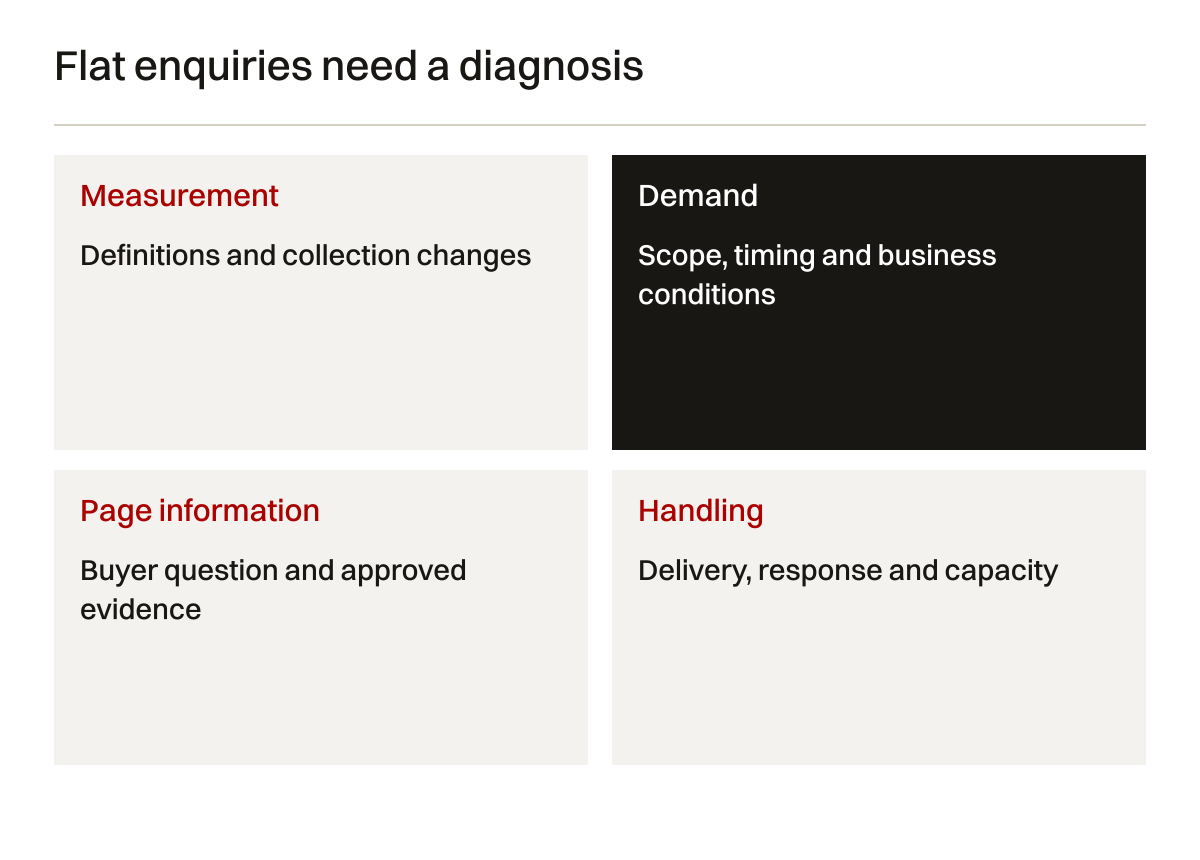
Improved rankings do not automatically produce more enquiries. The queries may be unsuitable, the search result may attract fewer clicks, the page may fail to answer the buyer, or the contact route may lose requests. Start by checking the measurement and the commercial relevance of the affected pages. Diagnose the break before buying more traffic or rebuilding the website.
Your agency says the rankings have improved. The sales team still receives roughly the same number of useful requests. You are being asked to wait, publish more or change the site. None of those responses is necessarily wrong. None is justified by the ranking chart alone.
This guide follows the route from search observation to received request. It separates demand, relevance, website information, interaction and commercial handling. It gives founders a method for deciding which investigation comes first and which responsibility belongs outside SEO.
The scenarios and diagrams are original teaching examples. They are not results from a named business or a claim that Creatif Work has inspected your account. Use the search-to-enquiry diagnostic workbook or editable CSV pack to record actual findings.
First establish what “rankings improved” means
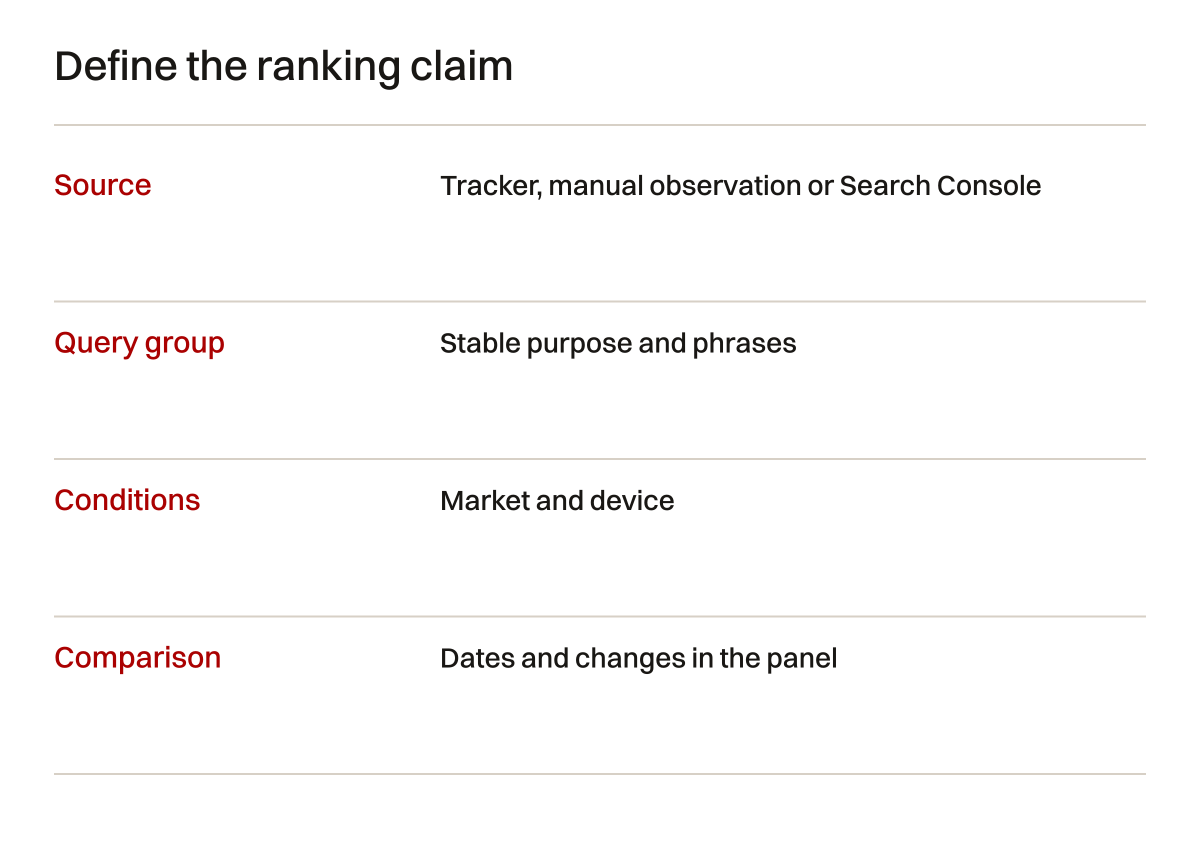
Ask which measure improved. Was it a third-party tracker, Search Console average position or a manual search? Record the query group, market, device and comparison period. These conditions determine what the statement actually describes.
Google's Search Console metric definitions explain average position and how different search appearances are counted. A site-wide average can change because the mix of observed queries changes. It does not prove that every buying query moved higher.
A tracker can observe a defined panel under its own conditions. A manual search shows an answer for one situation. Search Console aggregates recorded search observations. Use each source for a defined question rather than blending their numbers into a single ranking claim.
Retain the original query list. If the list has expanded or shifted, compare the stable group separately. Otherwise the chart can improve because easier or more favourable phrases entered the report. That is a reporting change, not necessarily a change in the original target's visibility.
Inspect absolute opportunity as well as position
A page can rank well for a question few people currently ask. A service can have a small but valuable buying audience. Neither situation is resolved by a position number alone. Inspect impressions, clicks and commercial relevance together.
If the company only needs a small number of suitable appointments, a broad traffic target can be misleading. If a relevant query group has substantial exposure but little interaction, inspect the result and page fit. Different observations lead to different actions.
Do not assume a keyword tool perfectly measures niche demand. Its estimate can be one input. Pair it with actual search records, enquiries and service-owner knowledge. Label manually proposed buyer questions as hypotheses rather than researched search-volume facts.
Define the enquiry before diagnosing its absence
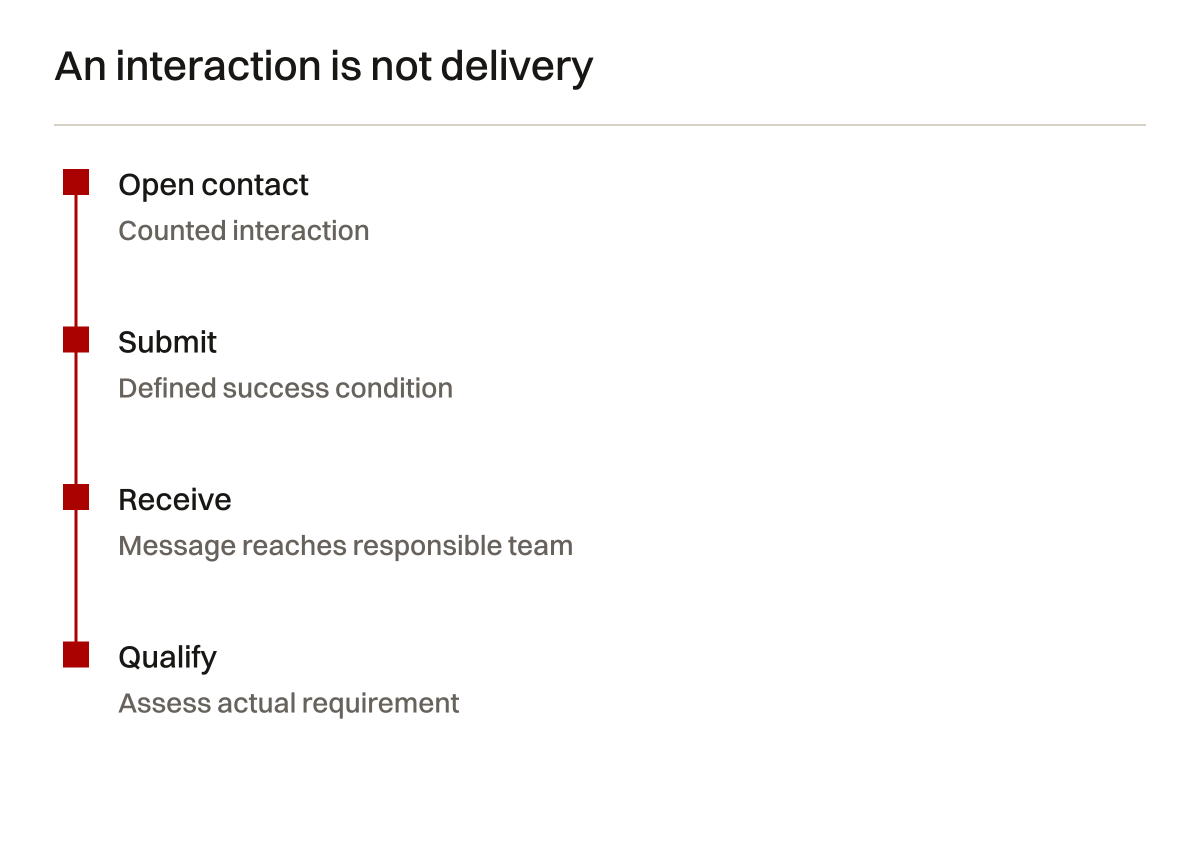
A contact-button click is an interaction. A completed form event is a recorded event under an implementation rule. A received request is a message reaching the business. A qualified enquiry meets an agreed commercial definition. A sale is another state entirely.
Choose which state you mean by “flat”. The website may record more interactions while the team receives no additional suitable work. The inbox may receive more messages, but most may be recruitment or supplier approaches. That distinction changes the investigation.
Ask the commercial owner to define a suitable request. Include the service, delivery area, relevant conditions and exclusions. Keep unresolved qualification separate from confirmed unsuitability. A request should not become a success because nobody has assessed it yet.
Deduplicate repeat messages. A buyer may submit twice, email later and phone the next day. That is not necessarily four opportunities. Conversely, a suitable phone request should not disappear from the commercial review because the website analytics system did not record it.
| State | Practical definition | Evidence to inspect | Misleading substitute |
|---|---|---|---|
| Search exposure | Recorded appearance under defined conditions | Search report and filters | Ranking alone |
| Visit | Recorded arrival at a page | Authorised activity report | Every search click equals a session |
| Interaction | Defined action such as opening contact | Event definition and test | Every button click is a lead |
| Received request | Unique message reaches the business | Receiver record and delivery check | Success message alone |
| Qualified enquiry | Request matches agreed suitability rules | Commercial review | Every form is a prospective client |
| Sale | Actual accepted commercial outcome | Protected sales record | Marketing attribution credit alone |
These definitions are a proposed working model. Adapt them to your business. Preserve the distinction even if one person manages several steps.
Check measurement before treating the chart as demand
Compare the current collection setup with the earlier period. Did consent behaviour, tagging, event names or form handling change? Did the analytics property or reporting filter change? Did the sales team adopt stricter qualification rules?
Search Console's performance overview describes metrics and report dimensions. Analytics collects website activity through a different system. Its session totals should not be assumed to match search clicks exactly.
Inspect one enquiry journey with permission. Start at the relevant live page. Open the form, enter a clearly marked test and confirm delivery to the receiver. Check the recorded event only after inspecting what actually happened. Avoid tests that trigger an unnecessary customer or operational process.
If your dashboard counts button clicks but the business means received project requests, repair the definition. Keep a record of the change. Historical and new totals may no longer be directly comparable. Annotate that break rather than presenting it as performance movement.
Record what cannot be measured
Some prospects use several devices, decline analytics collection or arrive through an unclear referral. A person may read a guide and later send a direct email. An account-level report cannot reliably identify every such journey.
Ask how the business can collect proportionate context without pretending to know more than it does. A receiving team can ask how a prospect found the company. The answer may be broad or incomplete. Preserve that uncertainty rather than turning “online” into a precise search attribution.
Do not add intrusive tracking merely to close a reporting gap. Work within your approved privacy and measurement arrangements. Better reporting starts with meaningful definitions, not with collecting every possible personal detail.
Trace the affected queries to their intended pages
Build a page-and-intent register. For each important service, identify the buying question, relevant public page and expected next decision. Then inspect which queries are actually bringing visitors to that page.
An engineering company may rank for training explanations while wanting consultancy appointments. A construction business may attract project-history interest while seeking current clients. A marine supplier may receive product-research visits for equipment it no longer supports.
Those visitors are not necessarily bad. They may serve another purpose. The report should simply stop calling all of them current service buyers. Keep informational, recruitment, branded and service-selection groups distinct where the data supports that separation.
Use a manageable classification method. Review important phrases manually. Record ambiguous cases. Automated labels can assist, but inspect their errors before relying on them. A technical phrase can belong to both research and purchase contexts; do not pretend the query reveals the searcher's job title.
| Query situation | Possible reader purpose | Page to inspect | Useful question |
|---|---|---|---|
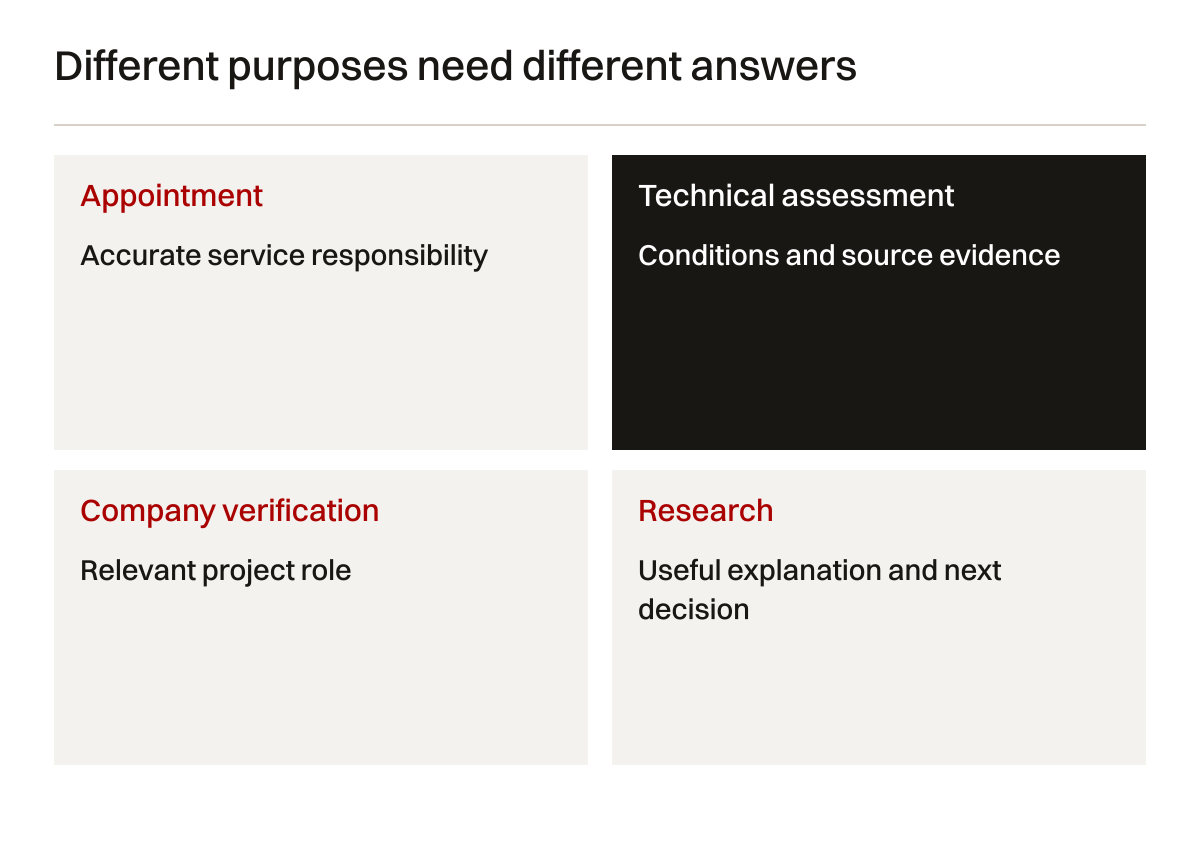
| Service appointment | Assess a supplier | Accurate service page | Are responsibility and exclusions clear? |
| Technical explanation | Understand a method | Relevant guide or technical record | Is a suitable next step available? |
| Project or company name | Verify an organisation | Company or project evidence | Is actual responsibility identifiable? |
| Recruitment phrase | Find employment | Appropriate recruitment information | Are these visits wrongly counted as buyers? |
| Retired product or service | Seek historical support | Maintained explanation or successor | Does the page promise unavailable work? |
| Local provider search | Assess deliverability | Verified coverage information | Can the company actually support this market? |
This table supplies hypotheses for inspection. It is not an assertion about the intent of every person using a phrase. Use actual page and commercial records before drawing conclusions.
Inspect the landing page, not the homepage by habit
A prospect searching a technical question may enter through an article. A buyer searching a capability may land on a service page. Improving the homepage does not automatically repair either journey.
Open the landing URLs identified in the report. Follow their visible links. Ask whether a reader can understand the company's relevant role and reach an assessment route without navigating through unrelated marketing copy.
Keep the page's primary answer intact. A useful article should not become a disguised sales page that refuses to explain the topic. The service connection should help a reader with a relevant requirement, not interrupt everyone with the same demand.
Investigate clicks separately from ranking position
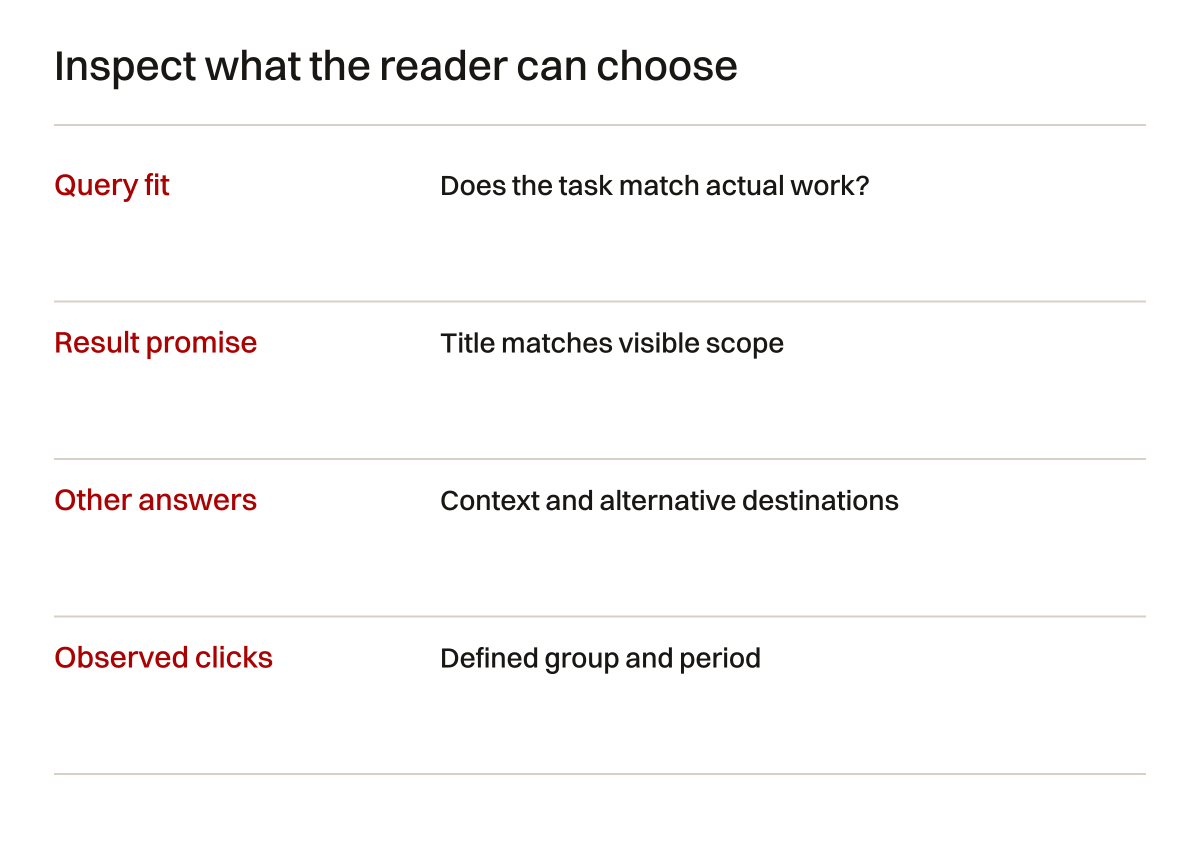
The result may be more visible but still less attractive or less necessary to click. Inspect the actual search appearance where permitted. Titles, snippets, competing results and answer features can change the choice a reader sees.
Do not diagnose this from a single personalised search. Preserve query, time, market and device conditions. Compare the relevant group's clicks and impressions. A stable position with a changed click-through rate is an observation requiring further explanation.
Pew's study of Google AI summaries observed traditional-result clicks on 8% of visits with AI summaries and 15% without, in a sample of 900 US adults' March 2025 browsing. This is context for changing interaction, not a causal diagnosis of your site or a Singapore B2B forecast.
Google's AI-features documentation explains eligibility and how traffic is included in Search Console. Do not claim that every flat enquiry trend is caused by AI answers. Inspect what your actual records can support.
Check whether the promise matches the destination
A title promising a local service should lead to a page accurately explaining local delivery. A title promising a practical checklist should contain one. A vague superlative may win a click and still leave the buyer unable to assess the company.
Check that the snippet does not imply a certification, location or appointment the company cannot support. Correct metadata and visible content together. The point is not to increase clicks through a stronger claim that the business cannot substantiate.
If the answer can be completed in the search interface, consider what further decision your page genuinely helps. That might be detailed conditions, an approved specification, a worked method or a route to assess a real requirement. Do not hide basic information simply to force a click.
Examine the page as a buyer, not as a designer
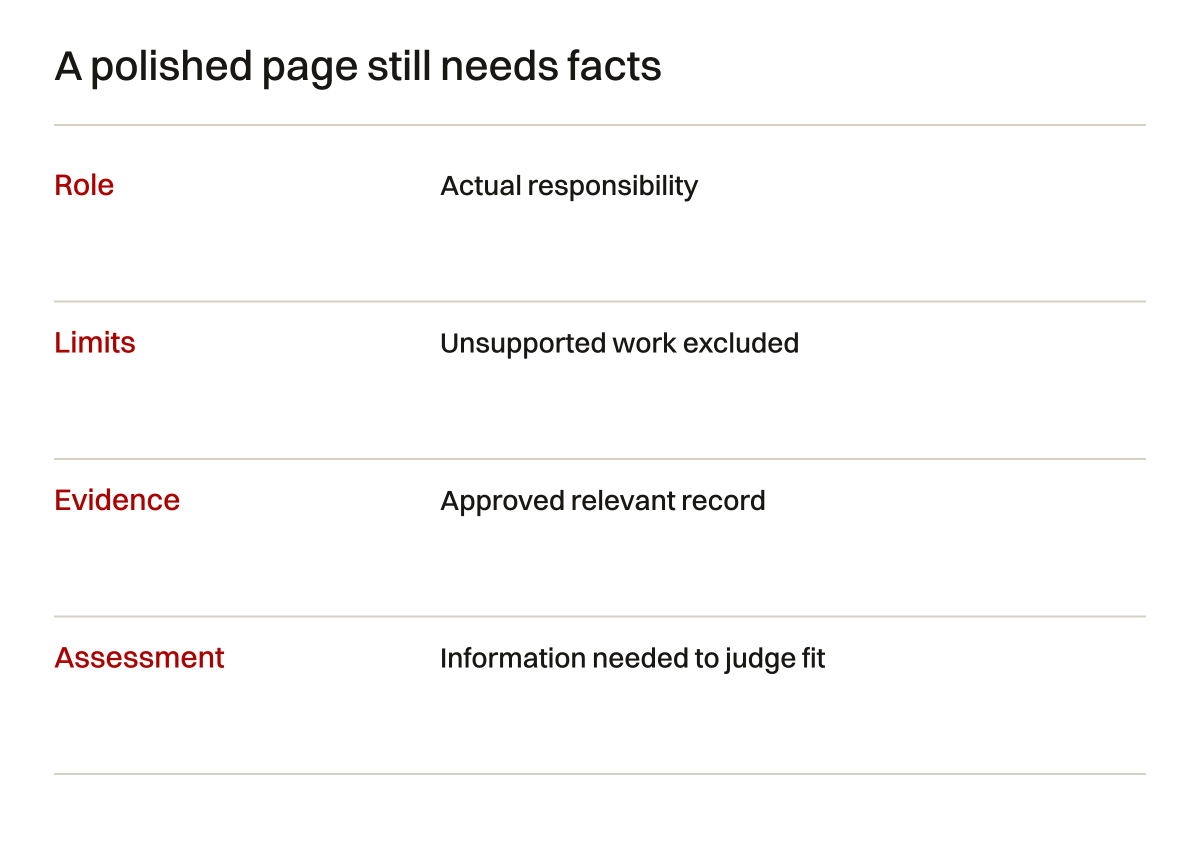
A website can look polished while omitting the information needed to shortlist the business. Read the page against the appointment. What does the company do? What does it not do? What evidence supports its role? What information is needed for an initial assessment?
For an engineering firm, explain service responsibility and important conditions. For a contractor, show the actual role in relevant projects. For marine services, clarify supported scope and where compatibility must be assessed rather than assumed.
Use approved facts. An editor cannot create missing capability evidence by writing more confidently. A design change should make the relevant information easier to understand, not disguise its absence with stock imagery and broad claims.
Google's people-first content guidance is useful context for evaluating the page's answer. The practical buyer test remains specific: does this page help someone decide whether the company may fit the requirement?
Use enquiry objections to find information gaps
Review a permitted sample of unsuitable or stalled requests. Are people asking whether the company provides a service it does not offer? Are they surprised by a delivery condition? Are they unable to identify the documents needed for assessment?
Those patterns can suggest page repairs. They do not automatically establish that a specific sentence caused every unsuitable enquiry. Validate the business facts and inspect how the current page could be misunderstood.
Retain objections without exposing personal or project-sensitive details. A public article can explain a general assessment question. It should not reproduce a private buyer's brief merely to appear authoritative.
Check mobile use and the contact route
Follow the page on a representative mobile screen. Important facts may be hidden behind an awkward accordion. A contact link may lead to an oversized form. A file attachment may fail. A floating header may obscure the action the reader needs.
Do not infer usability from a performance score alone. A score can identify technical conditions. Actual task review shows whether the visitor can complete the intended route. Inspect readability, keyboard operation where relevant, errors and confirmation.
Test the route from several important landing pages. An article CTA may point somewhere different from the service page. An old document may use a retired email address. A menu redesign may leave the main contact route intact while breaking a contextual link.
For supporting navigation, Google's crawlable-link guidance explains relevant implementation principles. Also check the reader's route. A technically valid link can still send the visitor to an unhelpful or unavailable destination.
| Visitor task | What to inspect | Failure to record | Appropriate repair |
|---|---|---|---|
| Understand service | Scope visible on the actual landing page | Important limits missing | Approved content revision |
| Check evidence | Project role and relevant records | General portfolio with unclear responsibility | Specific evidence explanation |
| Reach assessment | Contextual link and destination | Broken or irrelevant route | Correct the link and receiving instructions |
| Send details | Form, attachment and error states | Submission fails or demands unusable input | Fix and verify the actual task |
| Confirm delivery | Confirmation and receiver check | Success shown but message missing | Repair delivery and monitoring |
| Use on mobile | Readability and interaction | Obscured controls or overflow | Responsive layout correction |
The repairs should follow inspected failures. Do not rebuild a whole site because one link is wrong. Do not dismiss a material delivery failure as a minor design detail.
Avoid shortening the form without knowing its purpose
A short form can reduce effort. It can also omit information the team needs to assess a technical request. The answer is not always “fewer fields”. Ask which details are necessary at first contact and which can follow later.
For a marine service, equipment identification may matter. For an engineering appointment, project type and required responsibility may matter. For a construction capability, scope and location may matter. Explain why the information is requested.
Offer a practical route when the buyer lacks details. Do not force invented answers into mandatory fields. Keep contact requirements proportionate and confirm that the receiving team can act on the submitted information.
Investigate demand and business conditions
Search demand can change even when your page's position improves. The relevant project cycle may slow. A service may have moved from active procurement to maintenance. A public event may increase branded interest without producing new appointments.
Google's traffic-drop investigation guidance describes examining different explanations and affected groups. Use that method rather than assuming a single platform change explains every movement.
Compare appropriate periods and note events. Equal-length comparisons help, but do not eliminate seasonality or business changes. Year-on-year comparisons add context, but the previous year may have included unusual projects or a different service mix.
Speak with the receiving and commercial teams. If all acquisition channels show reduced suitable demand, the investigation differs from an isolated website-route failure. If demand exists but the company's offer has changed, update the public scope before increasing visibility for obsolete work.
Check availability and response before blaming targeting
Suitable requests may not become opportunities because the business lacks capacity, cannot support the schedule or responds too late. These are real commercial conditions. They should not automatically be counted as poor search targeting.
Record the reason at the appropriate level. “Outside scope” is different from “suitable work, no capacity”. “Unreachable prospect” is different from “message never delivered”. More useful categories make the content recommendation more accurate.
If capacity is limited, decide whether the search programme should focus on a different service, maintain accurate demand or improve qualification. SEO cannot resolve capacity by changing a headline. It can help the public explanation match the business decision.
Verify technical changes around the affected pages
Better rankings in one group can coexist with technical problems elsewhere. An important page may have changed address. A template may omit content. An indexing directive may have been copied from staging. A contact route may have broken during a release.
Check actual public URLs and release records. Google’s noindex guidance explains an indexing control. Inspect the implemented directive and intended state; do not confuse the existence of a page in the editor with its public availability.
Choose checks that match the evidence. If a particular service group's impressions fall after a migration, inspect those URLs and redirects. If visits arrive but submission fails, focus on the contact route. A generic audit list can distract from the break you are investigating.
Structured data needs the same discipline. Google's structured-data introduction describes how markup supports understanding and eligibility. Valid markup is not a guarantee of displayed features, enquiries or AI recommendations.
Do not implement every automated warning
Tool warnings can help identify candidates for inspection. They need interpretation. A page intentionally excluded from indexing is not necessarily faulty. An unsupported rich-result type should not be added simply to improve a score.
For each proposed repair, record the observed condition, intended state and likely consequence. Ask whether the action requires business approval. Avoid changing service claims or removing useful content purely because an automated report marks it unfavourably.
The provider should explain its priorities. Google's advice on hiring an SEO encourages checking recommendations and questioning guarantees. An agency's confidence should survive those questions without claiming privileged access to ranking decisions.
Turn findings into a prioritised plan
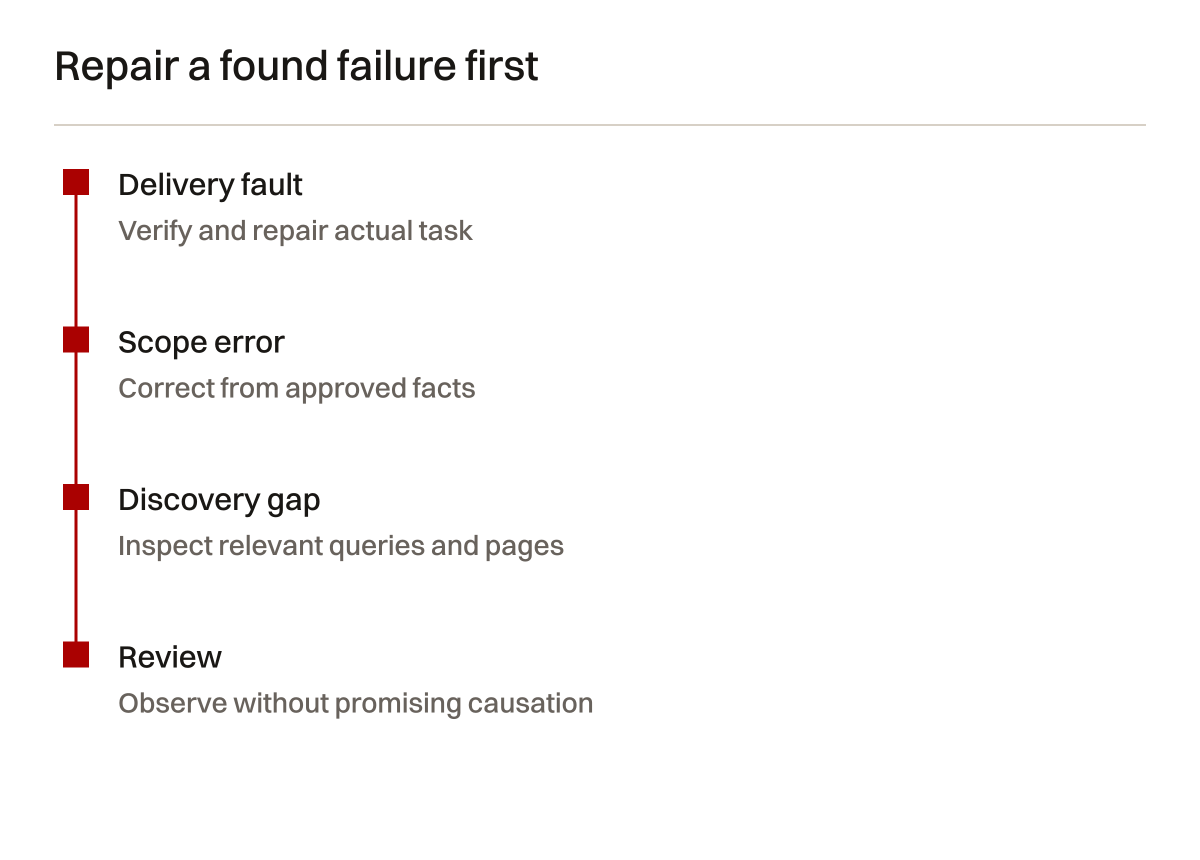
Start with confirmed operational faults. A broken enquiry route needs a different response from an untested theory about wording. Next address inaccurate scope and important missing information. Then evaluate demand and discovery work with a stable measurement basis.
Write the action, owner and verification before approval. “Improve conversions” is not an implementation instruction. “Repair attachment delivery, verify permitted test submission and exclude the test from reports” is specific enough to check.
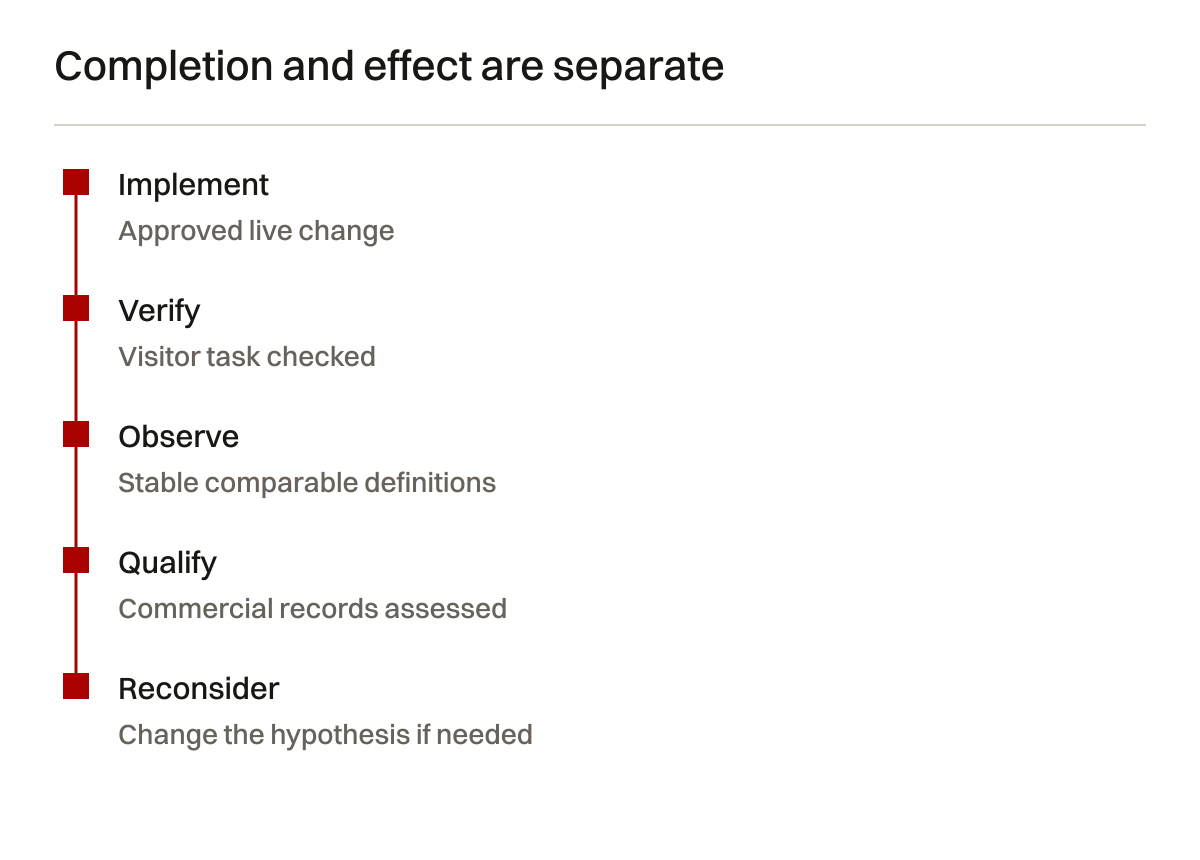
Do not promise an enquiry increase before observation. You can state that a known failure was repaired. You can state that a page now contains approved scope. The later commercial effect remains a separate question requiring records and time.
| Finding | First action | Owner | Verification | Outcome not yet established |
|---|---|---|---|---|
| Submission does not deliver | Repair the actual route | Developer and receiver | Marked test arrives correctly | Additional genuine enquiries |
| Unsupported service claim | Correct from approved facts | Service owner and editor | Public page matches scope | Change in qualification rate |
| Wrong query emphasis | Revisit commercial target | Search and commercial owners | Stable intent register approved | Improved relevant discovery |
| Useful page lacks evidence | Obtain responsible records | Project or technical owner | Evidence approved and published | Buyer response |
| Collection definition changed | Reconcile and annotate | Analytics owner | Test matches documented event | Like-for-like historical comparison |
| Demand explanation uncertain | Investigate affected groups | Analyst and business owner | Supporting records reviewed | Exclusive causal attribution |
This is a proposed priority framework, not an audit of your site. Your actual risks and responsibilities may change the order.
Work through three practical situations
Engineering: visible for the wrong appointment
A fictional practice ranks for a broad service phrase. Its actual appointment is narrower. The page uses broad wording, so buyers submit requests outside the supported responsibility. The agency celebrates visibility while the commercial team rejects much of the inbox.
Begin by obtaining the approved appointment scope. Explain exclusions and the information needed to assess fit. Review relevant query themes without claiming that every searcher has a known intent. Keep the existing page if it can accurately answer the decision; do not create another page only to repeat the same offer.
Then review requests using an unchanged qualification rule. Some unsuitable enquiries may disappear, reducing the total count. That can be useful if the page now represents the business more accurately. Report suitable counts and classification, not only the total forms the agency prefers to maximise.
The scenario does not establish how much a revision would improve performance. It shows why the initial problem needs scope diagnosis rather than a larger traffic target. A factual correction can be justified even without promising a numerical gain.
Construction: the evidence is hard to assess
A fictional contractor has relevant projects, but the website presents photographs with little explanation of its role. Buyers cannot distinguish the contractor's appointment from the overall development. The rankings report does not reveal that information gap.
Ask the project owner to approve the work type, responsibility and relevant conditions. Make those facts readable beside the evidence. Do not claim that the contractor delivered every aspect visible in a photograph. A clear project record can do more assessment work than another generic capability paragraph.
Inspect the route from the landing page to those records. If the buyer must search through a gallery to find a relevant appointment, repair the connection. Keep confidential details out of public material and obtain permission before publishing client-specific evidence.
Observe the subsequent enquiries without declaring the copy change solely responsible. The business may also change its proposals, referrals or response process. A useful report records those conditions rather than giving the website exclusive credit.
Marine: a successful-looking interaction hides failure
A fictional supplier's mobile contact button records an event. The attachment field fails on a common visitor device. Buyers retry by email or leave. The dashboard counts activity, but the receiving team sees no corresponding increase in completed requirements.
Reproduce the task with permission, using a clearly marked test. Verify the error, repair it and confirm delivery. Record the deployment date and event-definition boundary. Do not quietly relabel the earlier button events as completed leads.
Once the route works, inspect relevant discovery and received requests. The business may still need clearer scope or more useful content. The first repair has removed a found operational fault. It has not automatically proved an increase in revenue.
All three scenarios are invented. They are ways to organise an investigation, not client case studies. Replace their assumptions with your approved facts and actual records before deciding what applies.
Review the next period without moving the goalposts
After implementation, retain the same query group, enquiry definition and reporting basis where possible. Annotate necessary changes. Check that the repair remains live before discussing its effect. A release may later overwrite a form fix or content field.
Review suitable counts as well as rates. A percentage can change because the denominator changed. A small sample can fluctuate substantially. Give the receiving team time to qualify open requests and separate unresolved records from confirmed results.
Use the change log to ask what was expected and what actually happened. If the result differs, reconsider the explanation. Do not automatically request another round of the same work. An investigation should be able to change the plan.
| Review stage | Check | Record to retain | Decision supported |
|---|---|---|---|
| Implementation | Approved repair is deployed | URL and release date | Work completed |
| Verification | Intended visitor task works | Dated authorised check | Operational fault addressed |
| Observation | Comparable search and website records | Period, filters and definitions | Relevant trend inspection |
| Qualification | Requests assessed consistently | Protected commercial register | Suitability review |
| Reassessment | Findings compared with the hypothesis | Decision log and alternatives | Continue, revise or investigate |
No fixed observation period guarantees a mature result. Match the review to collection quality, request volume and the actual buying cycle. Do not use a short period to make a claim the data cannot support.
Give AI a bounded role in the diagnosis
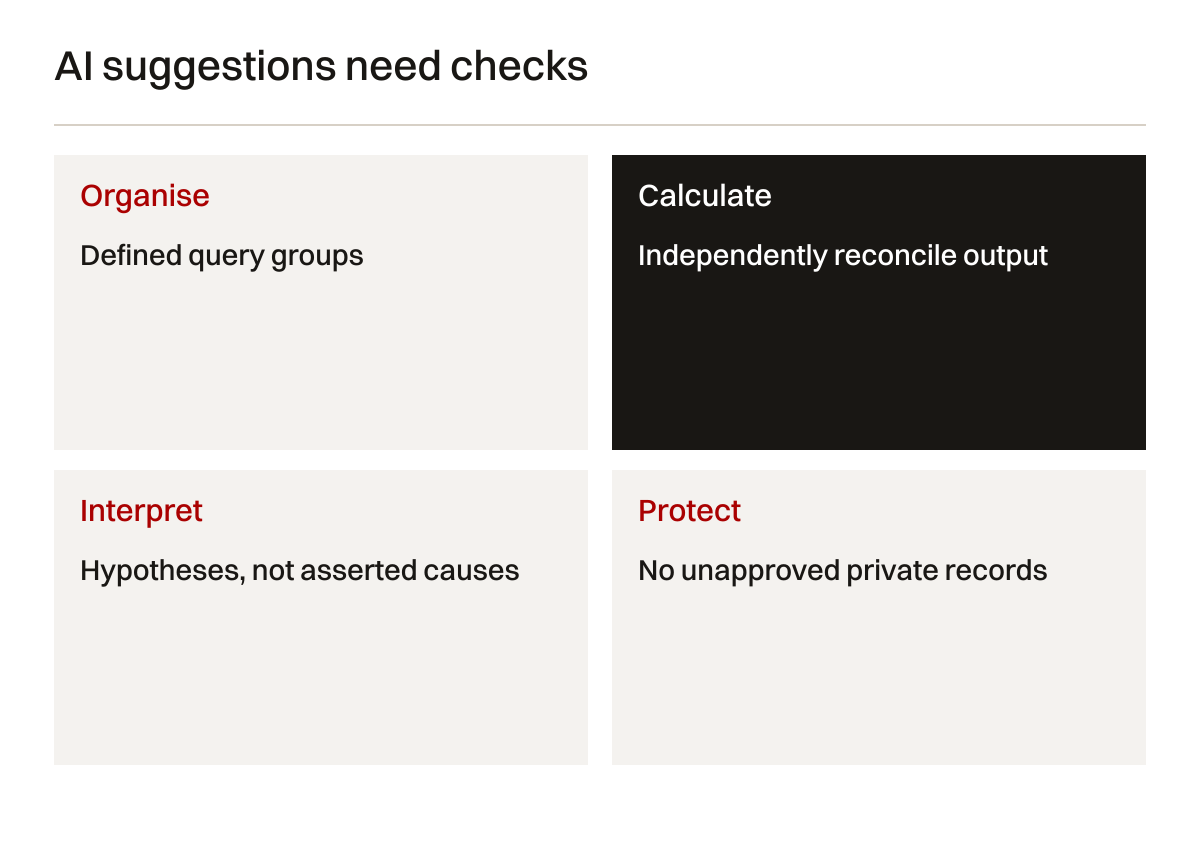
AI can help organise query groups, draft a checklist or suggest alternative explanations. It should not infer a prospect's identity from a phrase or describe a chart movement as a proven cause. Recalculate any totals it produces and inspect classification errors.
Google's generative AI guidance calls for accuracy and review. Our objection is to unverified output being sold as an answer, not to useful assistance. The analyst still needs to understand the website and commercial process.
Keep confidential enquiries out of unapproved tools. Use protected, proportionate records and an agreed data-handling arrangement. A generated summary should not become public evidence until its facts and permissions have been checked.
Ask for an explanation that changes the next action
Before accepting the next recommendation, ask the provider to describe the finding that makes it appropriate. If the finding is a failed form, the next action should include delivery repair. If the finding is inaccurate appointment scope, it should include approved factual correction. If the finding is a relevant discovery gap, it should identify the unanswered buyer question or technical condition.
Then ask what would make the recommendation inappropriate. A provider proposing a rebuild should explain why narrower repairs are insufficient. A provider proposing more articles should explain why existing pages cannot answer the question after revision. A provider proposing to wait should identify the observation that will inform the next review.
The answer does not need to be complicated. It needs to connect the work with an inspected condition and a responsible decision. That connection is what distinguishes diagnosis from a services menu.
Record the recommendation before implementation. Keep the approval, live verification and later observations beside it. If the change fails to address the found problem, revisit the approach. If it solves the operational fault but enquiries remain flat, continue investigating the remaining parts of the path. Do not erase the completed repair, and do not mistake it for a commercial outcome it has not yet produced.
Find the break before buying another remedy
Better rankings are useful only when they are relevant to the question you hired search work to address. Flat enquiries do not prove SEO is pointless. They mean the path needs investigation: measurement, demand, query fit, page information, contact delivery and commercial handling.
Our SEO and AI-search service can help you examine that path. Bring the affected pages, current report and enquiry question. We can discuss what needs checking before recommending more content or another website build.
If a site change is being proposed, read our refresh or rebuild discussion. If you do not yet know where the break sits, Start with the problem. The first decision should follow the evidence, not the easiest deliverable to sell.