

How to Measure AI Search Visibility Honestly

Measure AI search visibility with a defined panel of questions, recorded platform conditions and a consistent scoring method. Report mentions, recommendations and citations separately. Keep them separate from referral visits, qualified enquiries and revenue. A screenshot can document one answer. It cannot establish your share of the market.
An agency searches for your company in an AI assistant. Your name appears. It sends you a screenshot and describes the result as increased AI visibility. The observation may be genuine. The interpretation depends on what was asked, how the conversation was prepared, and whether less favourable answers were excluded.
This guide provides a practical measurement design for founders and marketing managers. It includes a prompt register, scoring rules, denominators, repeat observations, uncertainty and a reporting method. It also explains why a useful measurement programme should sometimes report a factual error rather than celebrate a mention.
The examples are invented teaching records, not results from a live prompt study. The AI-search measurement workbook and CSV template pack are designed for your own authorised observations. No market-share estimate is claimed.
Start by naming what you want to observe
“AI visibility” can mean several different things. The answer may name your company, recommend it, cite a page, describe a service accurately or contain a wrong claim. Those outcomes should not be collapsed into one score without showing their definitions.
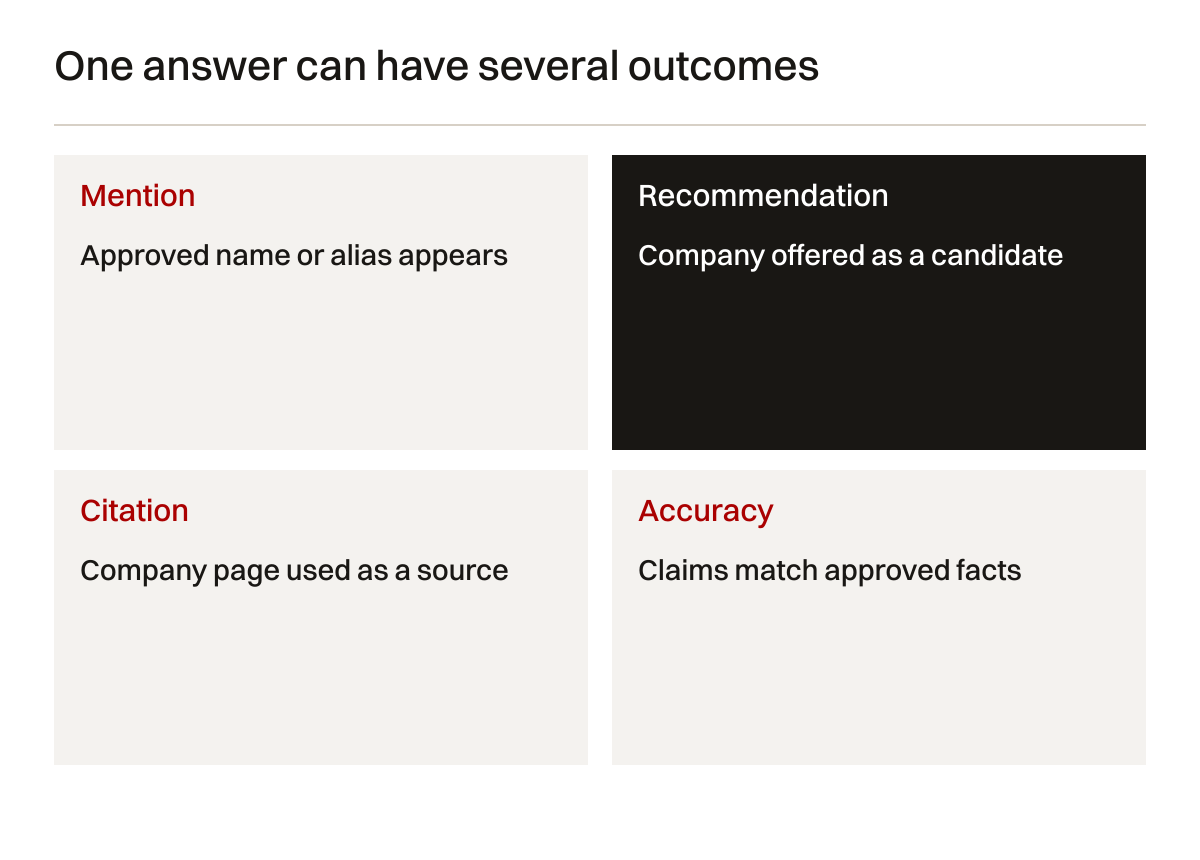
A mention is the presence of a defined company name or accepted alias. A recommendation explicitly presents the company as a candidate for the request. A citation is a source link to the company's page. Accuracy is whether relevant claims agree with approved facts. These are proposed coding definitions, not universal platform metrics.
The same answer can satisfy some definitions and fail others. An assistant might cite an engineering article while recommending a different supplier. It might mention a construction company because it is explaining a project history. It might recommend a marine service using an incorrect geographic assumption.
Record each outcome independently. This makes the report more informative and prevents the attractive number from hiding a problem. A recommendation containing an unsupported capability claim should trigger review, not an uncomplicated success badge.
| Outcome | Proposed coding rule | Example to inspect | What it cannot establish |
|---|---|---|---|
| Mention | Name or approved alias appears | Company named in the answer | Recommendation or buyer intent |
| Recommendation | Company presented as a candidate | Suggested supplier for the defined task | Suitability or endorsement |
| Citation | Link points to the company's page | Article used as an answer source | Click or commercial enquiry |
| Accurate description | Relevant claims match approved facts | Correct service scope and coverage | Accuracy of every sentence |
| Recorded referral | Analytics records an attributable visit | Observed source and landing page | All visits or causation |
| Qualified enquiry | Request meets agreed commercial rules | Verified received requirement | Sale or incremental revenue |
The rules should be written before collection. If they change later, preserve the old definition and explain the break. A coding decision should not be altered simply to improve a report's appearance.
Build a prompt panel from real decisions
Begin with questions that people ask while assessing the work you actually do. Use sales conversations, approved enquiry themes and service-owner knowledge where available. Do not invent a claim that you interviewed decision-makers if no interviews were conducted.
An engineering buyer may ask which information a consultant needs before evaluating an appointment. A construction manager may ask how to assess a contractor's project responsibility. A marine operations team may ask which service conditions need confirmation before sending equipment details.
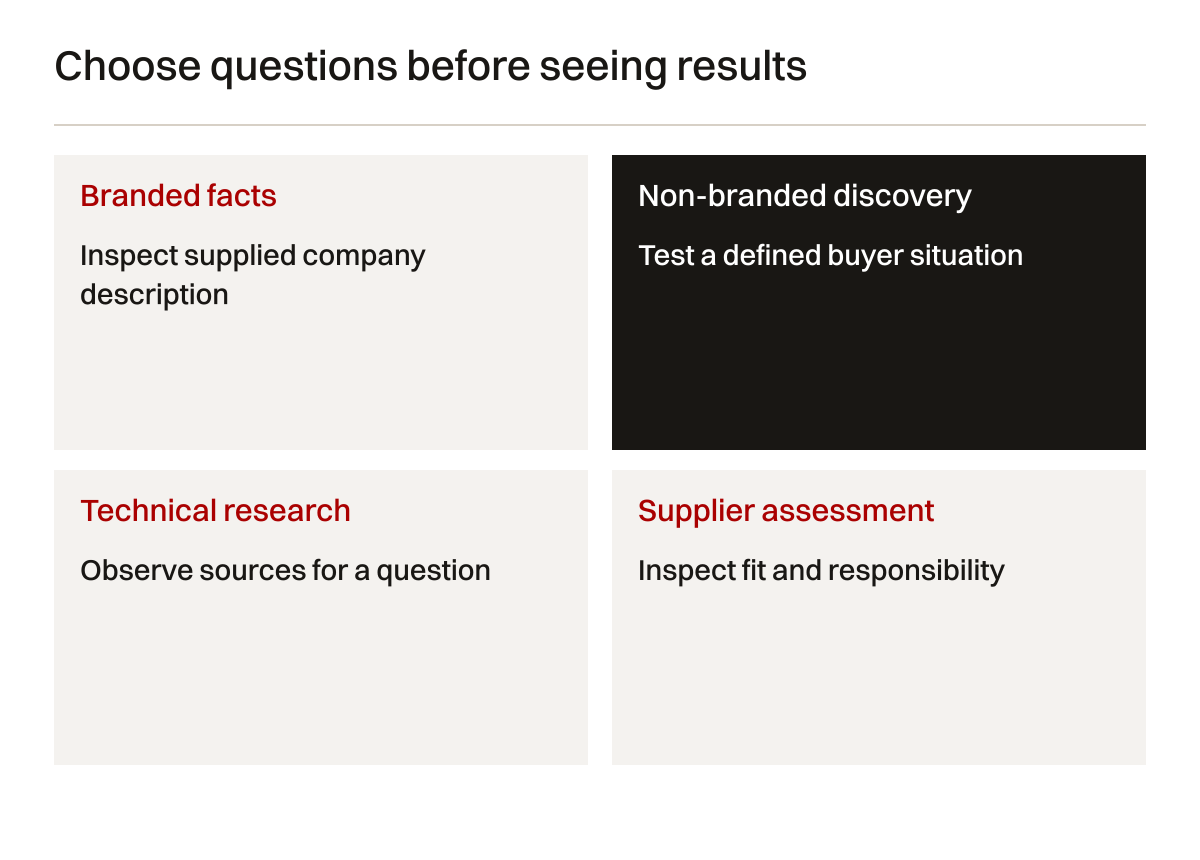
Include different decision stages. Problem research, service comparison and supplier assessment are not interchangeable. Keep their outcomes separated. A general explanation prompt may legitimately cite public guidance without naming any supplier.
Select questions before inspecting how often your company appears. Otherwise the panel can become a collection of prompts that happen to produce favourable answers. That may be useful as a demonstration, but it is not a stable evaluation sample.
Separate branded from non-branded prompts
A branded prompt names your company. It can help inspect whether the platform describes your business correctly. It does not test whether an unknown buyer would discover you without supplying your name.
A non-branded prompt describes the task without naming the company. It can support a discovery observation for that chosen question. It still does not represent all buyer searches unless the sampling method supports that broader inference.
Keep both if they have useful purposes. Do not merge them into a discovery rate. A factual audit might contain mostly branded prompts. A supplier-discovery panel should make that emphasis clear and retain the actual wording.
Handle country and language deliberately
The same question can mean different things in Singapore, Malaysia, Australia, Germany, France and the UK. A local operating arrangement matters. A translation can also alter the intended appointment or technical language.
Use approved service coverage rather than adding every market to the panel automatically. If a company cannot deliver locally, its appearance in a local recommendation may be a factual problem. Search exposure does not create that capability.
For multilingual questions, ask a competent language reviewer to check the wording. Preserve the original and translated forms as separate records. Do not imply native review occurred when the question was only machine-translated. Context quality belongs in the methodology.
Record the conditions of every observation
For each run, record the platform, visible model or mode, date, language, location context, account condition and prompt wording. Note whether search was enabled or observed. Preserve the output and available citations under your organisation's permission and retention rules.
OpenAI's ChatGPT search documentation explains that web search can use location information and that results and citations need checking. Those conditions are reasons to record context. They are not evidence that any particular result was influenced by one specific factor.
OpenAI's memory documentation describes personal context that can be used in responses. Inspect the actual settings available in your account. Do not assume that starting a new chat removes every form of personalisation or supplied context.
A baseline collection should avoid introducing your company through earlier messages unless that is explicitly part of the test. Keep context-assisted runs separate. Record platform conditions honestly when they cannot be fully controlled.
| Field | Why it matters | Example entry | Rule for missing information |
|---|---|---|---|
| Prompt identifier | Connects repeats to the same question | SG-MAR-004 | Do not reuse for changed wording |
| Exact prompt | Defines the tested request | Approved question text | Retain wording before scoring |
| Platform and mode | Different products can behave differently | Record visible service and mode | Mark unavailable version as unknown |
| Date and repeat | Allows comparison and variability checks | Actual timestamp and repeat number | Do not manufacture missing runs |
| Context | Supplied facts can affect the answer | New conversation, stated location | Record control limits |
| Search observation | Distinguishes answer conditions | Search seen, not seen or unknown | Do not infer from confident wording |
| Output record | Supports later coding inspection | Controlled file or permitted link | Mark unretained output explicitly |
The example entries are template instructions, not observations. Store only the information needed for the study. Do not include confidential buyer briefs or personal enquiry data in a public prompt panel.
Choose a repeat method you can maintain
One answer per prompt provides a snapshot. Repeated observations help show whether that answer is consistent under your stated conditions. Decide the repeat count and collection window in advance. Keep the effort proportionate to the business question.
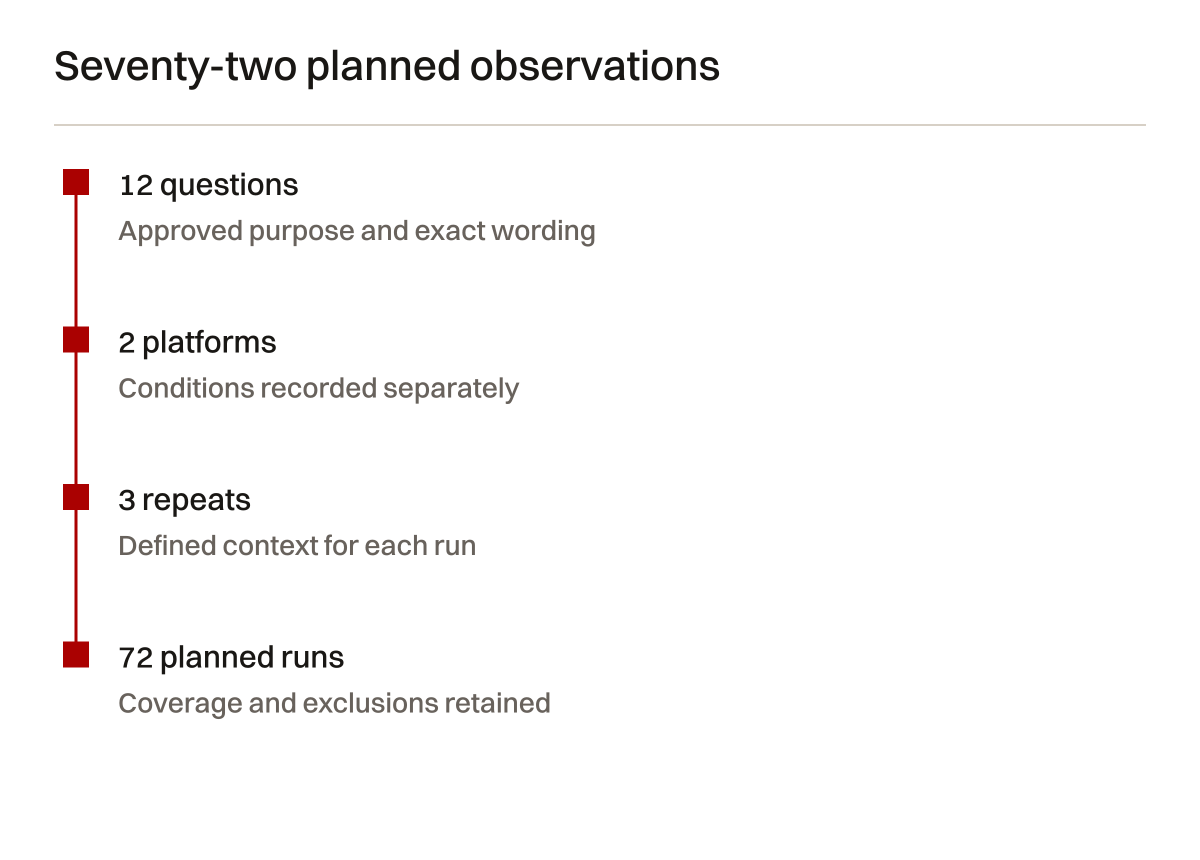
For a pilot, you might choose 12 approved questions, two platforms and three repeats per platform in each collection round. That produces 72 planned observations. This is an illustrative design, not a statistically validated minimum or a guarantee of representative measurement.
Repeats should not simply be follow-up questions inside a conversation that teaches the assistant the preferred answer. If the intended unit is an independent fresh-context response, implement that condition and record any exceptions. If you are studying an ongoing conversation, define a different unit.
Platform updates and availability may interrupt the plan. Record the interruption. A missing response is not a zero mention unless your defined metric explicitly treats it that way. Publish coverage alongside outcome rates so readers know what was actually collected.
Keep invalid and unavailable runs visible
An invalid run might use the wrong prompt, wrong context or a failed output capture. An unavailable run might occur when the platform cannot answer. Define those categories before collection. Keep the original run record with the reason for exclusion.
If you rerun an invalid observation, assign a replacement identifier. Do not delete the failed run and imply collection went perfectly. This is not bureaucratic detail. It prevents selective replacement of inconvenient answers.
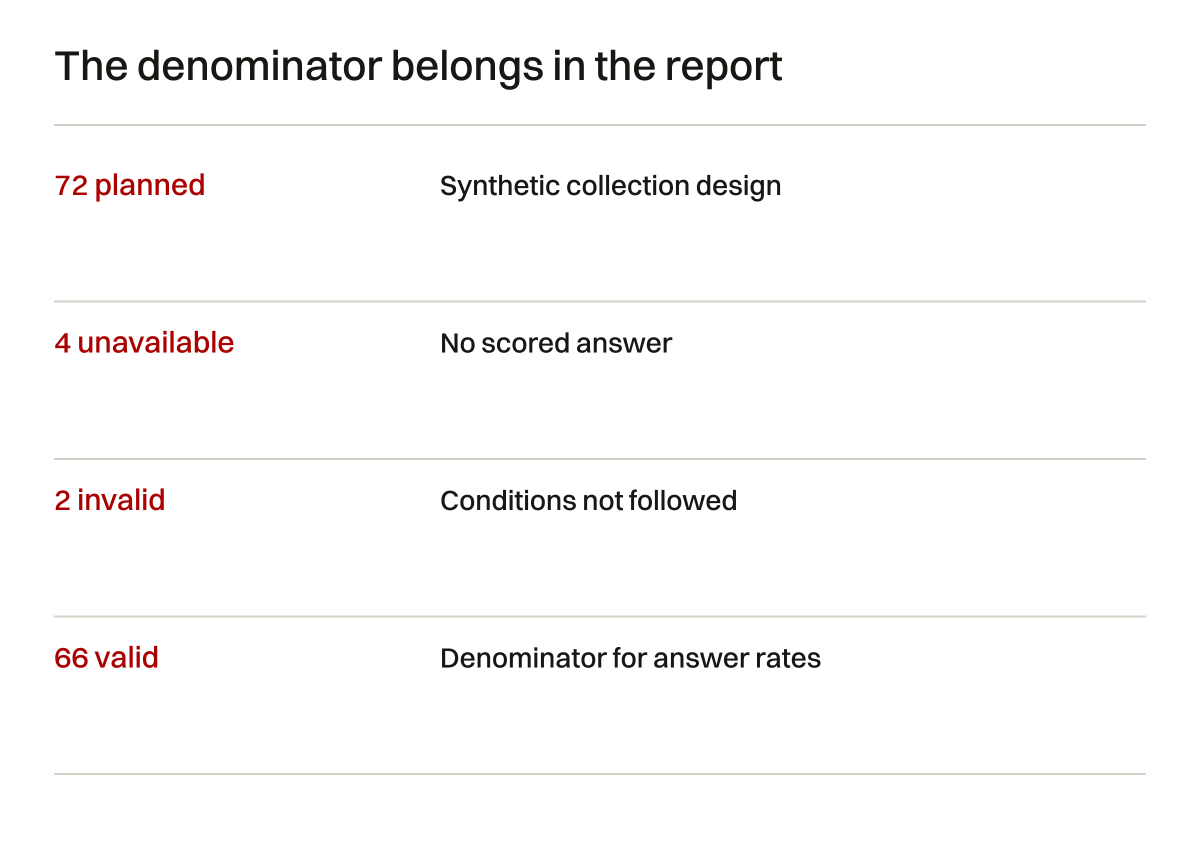
Report the planned count, completed count and valid scored count. If one platform has substantially lower collection coverage, avoid comparing its outcome rate as if both platforms were observed equally under identical conditions.
Make the denominator explicit
A sample mention rate is the number of valid scored observations containing a mention divided by the number of valid scored observations in that defined group. It is not the number of people who saw the company. The unit is an answer observation.
In a synthetic round with 72 planned observations, suppose four are unavailable and two are invalid. There are 66 valid scored observations. If 22 contain a mention, the sample mention rate is 22 divided by 66, or 33.3%. Collection coverage is 66 divided by 72, or 91.7%.
If 12 of those 66 answers cite the company's pages, the sample citation rate is 18.2%. If eight explicitly recommend it, the sample recommendation rate is 12.1%. Those figures can overlap because a single answer may satisfy several definitions. Do not sum them into a total visibility percentage.
The synthetic example includes six branded questions and six non-branded questions, equally repeated across the two platforms. Each half has 36 planned observations. The overall rate should not be presented as non-branded discovery because half the prompts already name the company.
| Synthetic measure | Numerator | Denominator | Calculated result | Interpretation |
|---|---|---|---|---|
| Collection coverage | 66 valid scored runs | 72 planned runs | 91.7% | Completion under the example method |
| Mention rate | 22 mentioning answers | 66 valid scored runs | 33.3% | Defined panel observations only |
| Citation rate | 12 citing answers | 66 valid scored runs | 18.2% | Citation presence, not visits |
| Recommendation rate | 8 recommending answers | 66 valid scored runs | 12.1% | Coding outcome, not endorsement |
| Missing or invalid | 6 unscored runs | 72 planned runs | 8.3% | Retain reasons and replacement records |
Every count in this table is invented for teaching. The rates are not observed Creatif Work results and cannot estimate platform-wide exposure. The workbook retains the denominator fields for your own study.
Report prompt-level consistency as another view
An answer-level rate weights prompts according to their number of valid repeats. A prompt-level summary can instead show how many questions produced at least one citation or produced citations in every valid repeat. These are different measures.
A prompt cited in one of three repeats is not the same as a prompt cited in all three. “Appears for this question” can hide that difference. Keep the repeat pattern so the reader can judge consistency.
If a question has only one valid run, do not compare its consistency directly with one that has three. Report the observed count. A simple row showing three outcomes can be more informative than a proprietary score with no visible denominator.
Score citations and factual claims by inspection
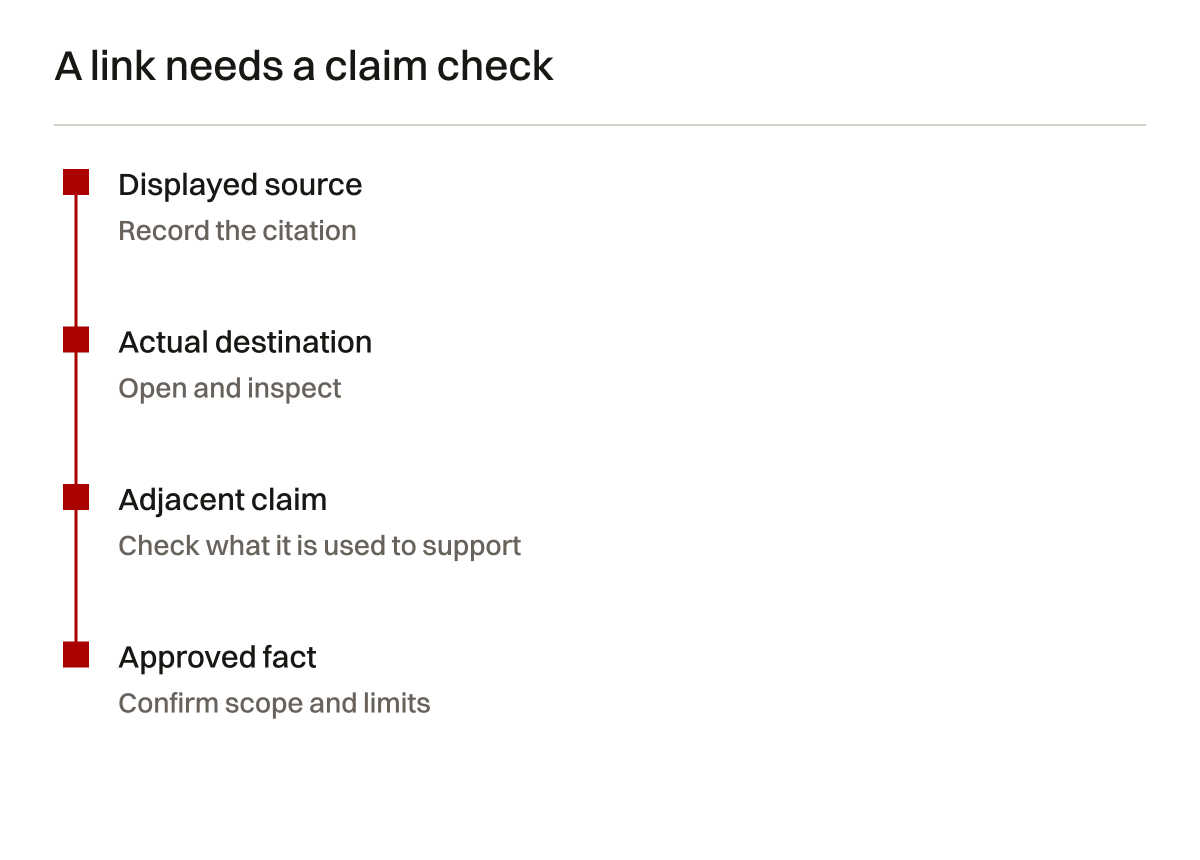
Open each cited URL. Check whether it resolves to the intended company and whether it supports the adjacent claim. A citation can be relevant to a topic while failing to support the exact service assertion made in the answer.
Record canonical destinations and redirects when relevant. A citation to an old page may still lead to current information, or it may land on an unrelated homepage. The actual visitor route matters more than whether the displayed domain looks familiar.
Use an approved fact sheet to check company descriptions. Include actual identity, service scope, coverage and important exclusions. Do not score a flattering but inaccurate description as successful because it sounds commercially useful.
Use two reviewers where interpretation is difficult
A small coding pilot can reveal ambiguous rules. Two authorised reviewers can independently score a sample, compare disagreements and clarify the definitions. This is a proposed quality check, not a claim that this guide underwent formal independent review.
Preserve disagreement notes. A company named as an example might be coded as a mention but not a recommendation. A source linked in a footnote might be a citation without contributing to the supplier list. Clear examples reduce inconsistent decisions later.
Do not let the person responsible for improving the score quietly change coding rules. Agree changes with the business owner and annotate the series. Otherwise apparent improvement can reflect a more generous definition rather than changed answers.
Describe uncertainty without dressing it as precision
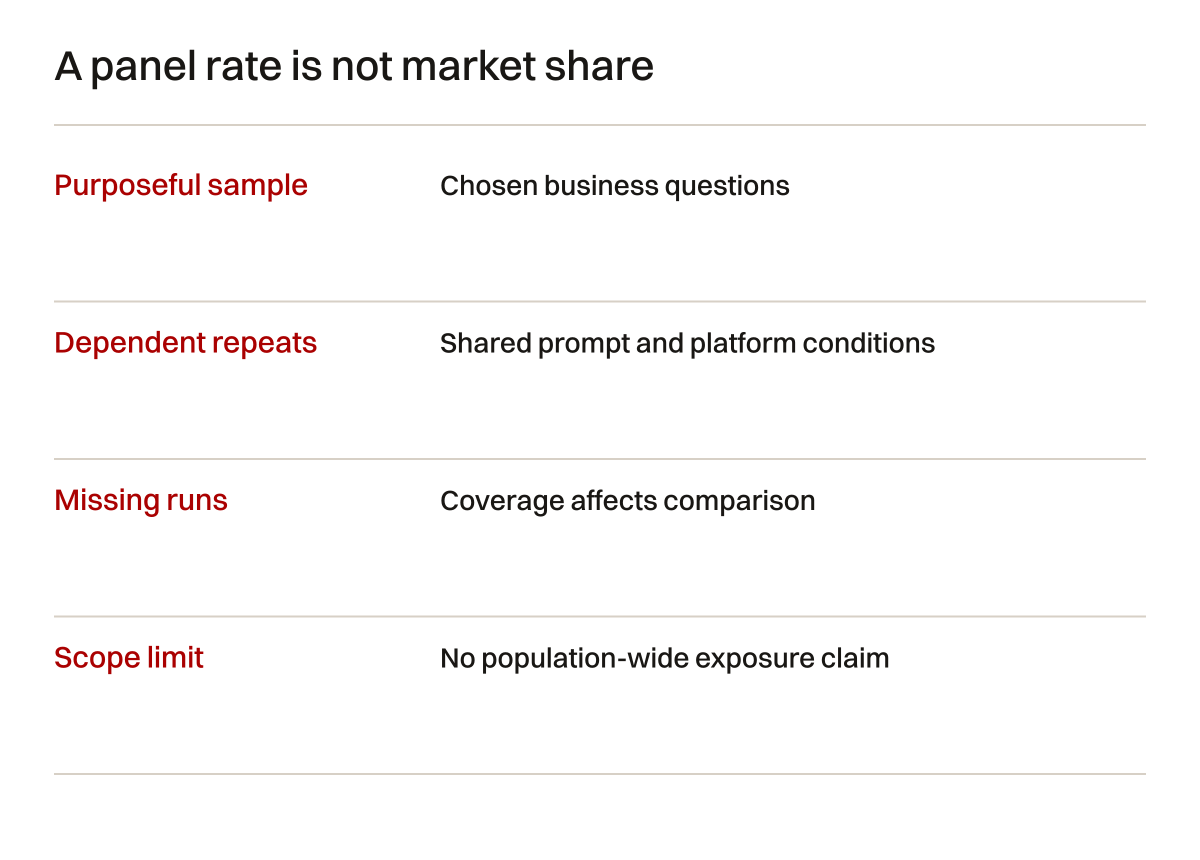
The prompt panel is usually a purposive sample. You choose questions because they relate to the business. That makes it useful for diagnosis. It does not make it a random sample of every user request on the platform.
Repeated answers may also be dependent on shared prompts, collection windows and platform conditions. A conventional confidence interval calculated as if every run were an independent random draw can overstate what the study supports.
Report variability plainly: the number of valid repeats, differing outcomes, missing runs and platform changes. A rate of 33.3% in the example is a panel result, not an estimate that one third of potential customers saw the business.
NIST's AI Risk Management Framework provides broader guidance on managing and measuring AI risks. It is not a GEO ranking standard. Use it as context for accountable evaluation, not as a claim that a visibility score has been certified.
Do not claim market share from a competitor list
An answer mentioning three companies does not reveal their shares of buyer attention. A supplier may appear often in your chosen panel and rarely in other contexts. A platform may cite a source for information without recommending its commercial service.
You can report comparative presence in the defined panel. State which companies were coded, how aliases were handled, and whether the same rules were applied. Call it panel presence, not market share or industry dominance.
Avoid inventing competitor outcomes from assumptions. If a company's scope is unclear, record that fact. Do not infer its conversion rate, revenue or reputation from public AI answers. Those records are not available in a simple prompt study.
Keep consumer products separate from API experiments
An automated API experiment can make collection repeatable. It can also study a different system from the consumer interface your customers use. Name the actual product and configuration instead of calling every answer “ChatGPT visibility”.
OpenAI's web-search tool documentation describes tool configuration and available source records. Those controls are useful for a defined API study. They should not be assumed to reproduce every consumer answer or platform's default behaviour.
Record search configuration, available model identifier and any supplied instructions. If the tool filters allowed domains, the resulting citation rate is a constrained experiment. It cannot be compared directly with an unrestricted consumer search as evidence of organic discovery.
The decision may be to run two programmes: a small manual panel for consumer observations and a separate API test for controlled content questions. Report them separately. Consistency of collection is valuable, but it does not erase product differences.
Connect the sample to website and commercial records
Recorded AI referrals can help evaluate whether visitors arrive from identifiable sources. Collection may miss some visits or classify them differently. Do not assume every answer click carries a clear referral signal into analytics.
Google's Search Console overview describes search-report dimensions. Its AI-features guidance says AI-feature traffic is included in overall Search Console web reporting. A standard export should not be sold as a complete separate census of Google AI-answer exposures.
When visitors do arrive, inspect the landing page and actual requests. A source citation to a technical guide may attract research rather than purchasing. Keep suitable enquiry definitions stable and deduplicate repeat messages.
Google Analytics attribution documentation explains allocation of credit. A channel receiving credit does not prove the provider created the entire outcome. Sales cycles can contain referrals, direct visits, procurement checks and offline conversations.
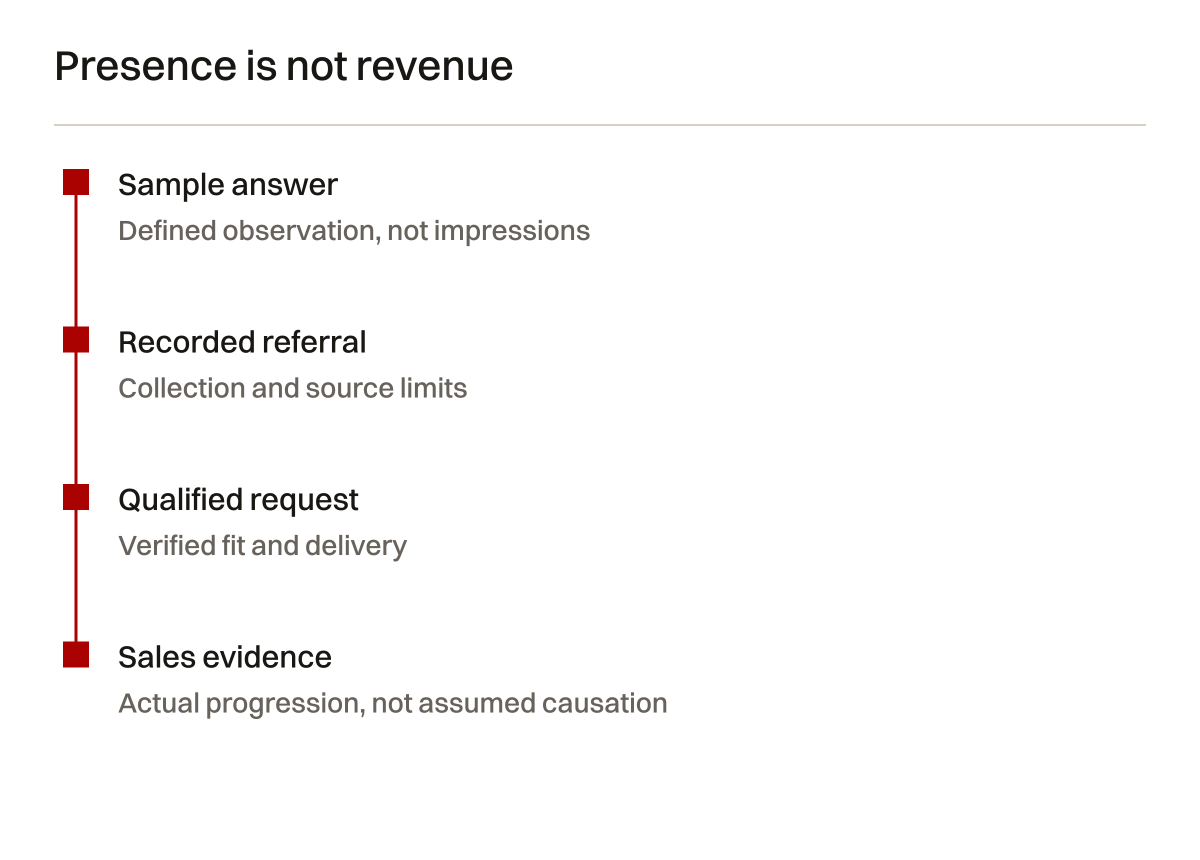
| Layer | Evidence source | Responsible interpretation | What remains uncertain |
|---|---|---|---|
| Sample answers | Preserved prompt runs | Presence under defined conditions | Platform-wide reach |
| Source accuracy | Opened sources and approved facts | Supported or unsupported claims | Other unseen answers |
| Website referrals | Authorised analytics reports | Recorded arrivals and landing pages | Unrecorded or unclear sources |
| Qualified requests | Receiving-team register | Fit under agreed rules | Missing qualification and mixed discovery |
| Sales outcome | Protected commercial records | Actual progression and value | Incremental effect without causal study |
The layers are connected conceptually, not assumed to be individually joined. Record what can actually be linked and label the remainder as unknown.
Check native Microsoft reporting separately
Manual panels are not the only evidence source. Microsoft's AI Performance reports cover supported Copilot, Bing AI-summary and selected partner surfaces. They report citations, cited pages and sampled grounding queries. Keep these platform records separate from your own prompt panel and from Google reporting.
Microsoft's June 2026 reporting update adds intent, topic, citation-share and period-comparison views. Citation share uses citations attributed to your site divided by all sites' citations for the same grounding query within the report's scope. It is not global AI market share, traffic share or a ranking score. Grounding-query samples are not a complete list of user questions, and automated topic labels can be imperfect.
Save the report scope, export date and definitions alongside each comparison. A change after a page edit is an observation, not proof that the edit caused it. Native reporting can complement a panel, but combining their incompatible denominators into one percentage would hide the limits of both.
Use external research without importing its conclusions
Pew's Google AI-summary study observed traditional-result clicks in 8% of visits with AI summaries and 15% without. Links inside summaries were clicked in 1% of visits with a summary. Its browsing sample involved 900 US adults in March 2025.
Those observations demonstrate why presence and clicks should be distinguished. They do not establish a click forecast for a Singapore marine supplier. The questions, audience and collection method differ from your prompt panel. The study is observational, not proof of a universal causal reduction.
Use the source to explain the measurement question. Do not multiply your sample citations by its click percentage to estimate future sales. That would combine unrelated populations and pretend the resulting number was measured.
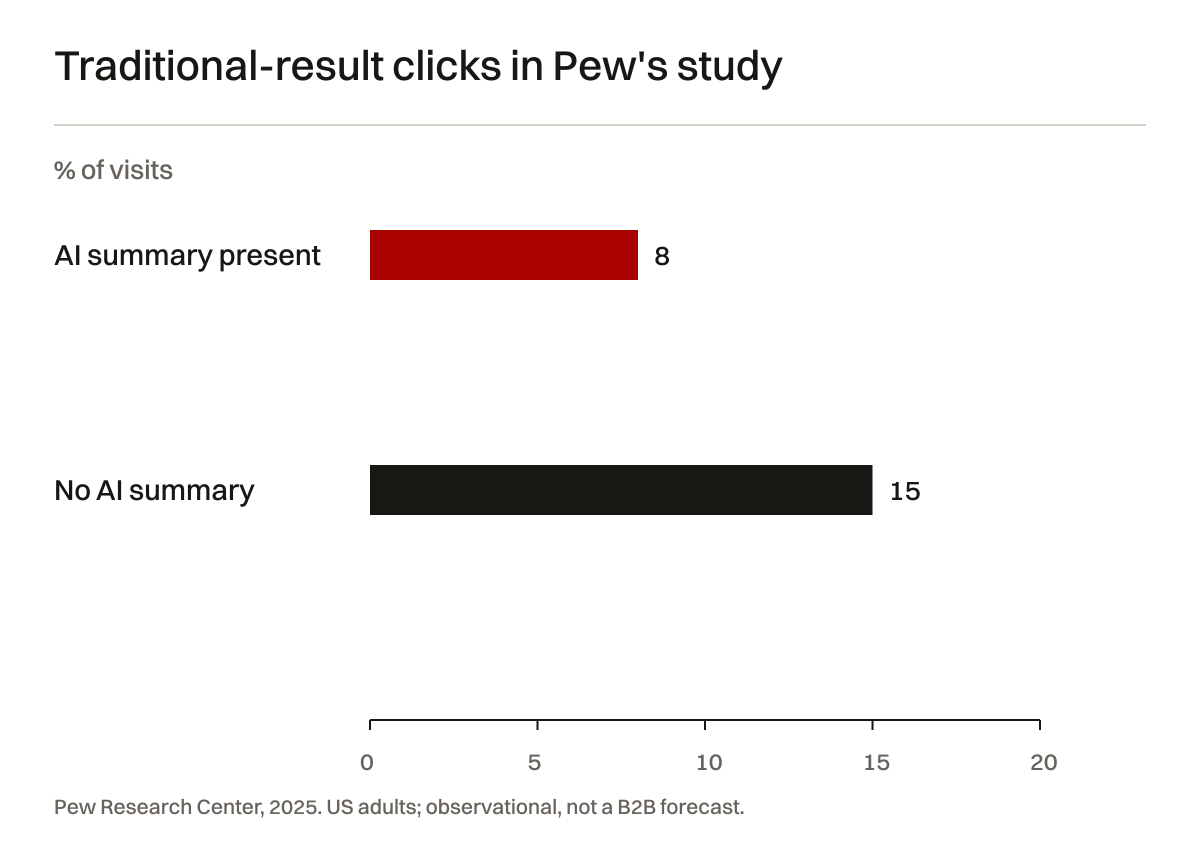
The chart is based on Pew's published observations, not our research. Its caption retains the audience, period and observational limitation. The one-percent source-link observation is a different measure and should not be added to a forecast without explaining its definition.
Turn findings into proportionate improvements
An incorrect company description points towards a factual-information investigation. Inspect the website, maintained profiles and cited material. Correct approved public records where necessary. Do not promise that one edit will change every future answer.
A missing citation for a useful question may indicate a content gap, access issue or simply a platform choice. Inspect the actual page and source requirements before proposing another article. Lack of inclusion in your panel is an observation, not a complete diagnosis.
Google's structured-data introduction distinguishes markup from guaranteed display. Accurate structured data can describe visible content. It should not be sold as a guarantee of AI citations or recommendations.
For useful page connections, Google's link guidance provides a technical reference. The editorial task is to connect the answer to a distinct relevant service or evidence page. Add a link because it helps the reader, not because the prompt study gives permission to repeat a keyword everywhere.
Prioritise factual harm before score growth
If an answer implies an engineering approval that the company does not hold, record the exact claim and sources. Correct public facts within your control and investigate the source of the error. Do not treat the mention as a win while leaving the misleading claim unexamined.
If an assistant recommends a construction service outside the firm's actual coverage, investigate that mismatch. A broad recommendation can produce unsuitable enquiries and create confusion. It is not necessarily commercially preferable to a narrower accurate description.
For a marine supplier, an unsupported compatibility claim can matter more than whether its name appears first. Search-facing content must be approved by the relevant service or technical owner. Visibility does not reduce that responsibility.
Run the programme without turning it into theatre
Keep a stable core panel for comparison. Add new questions in a separate exploratory group. Review whether the original questions still reflect the business before continuing indefinitely. A stable method can still become irrelevant if the service changes.
At each review, show the core counts, missing observations, changed conditions, factual errors and resulting actions. Include several examples with their context, not only the most favourable screenshot. Let the reader inspect how coding decisions were made.
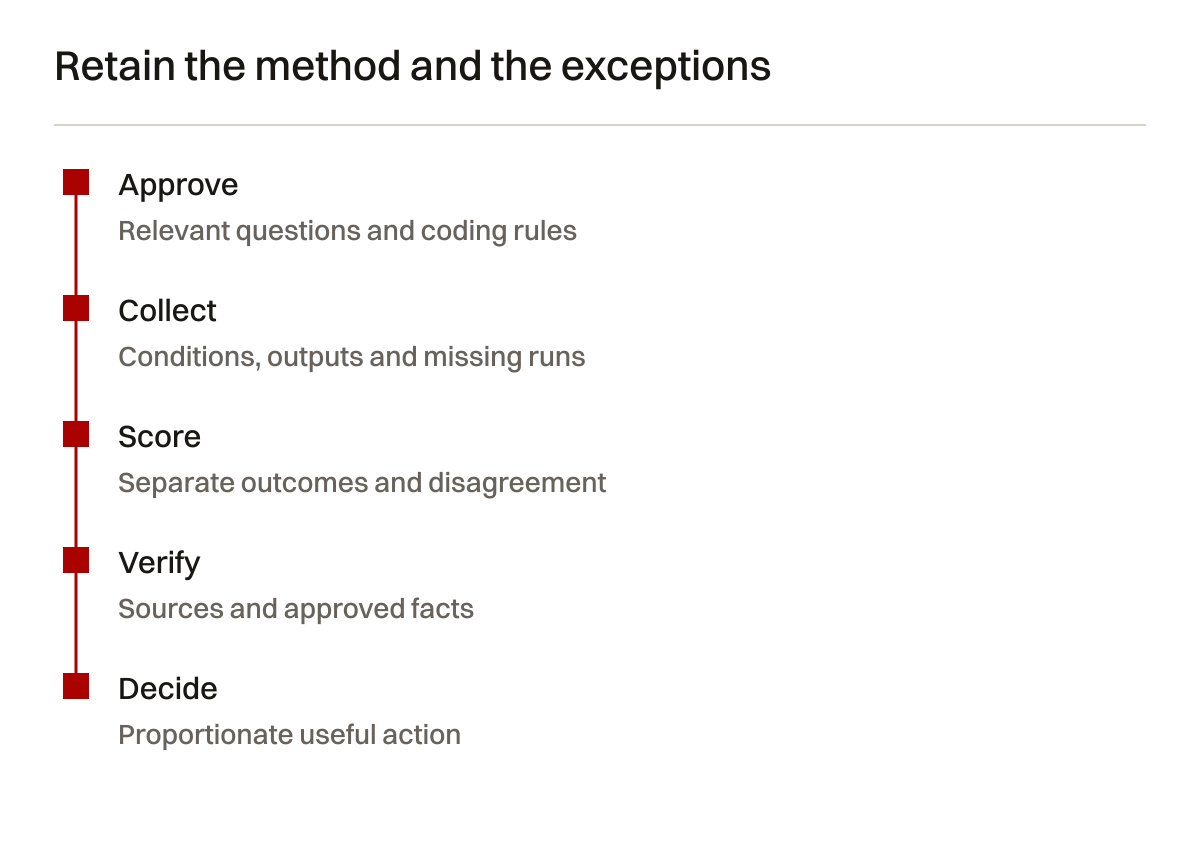
| Review stage | Required record | Decision question | Common mistake to avoid |
|---|---|---|---|
| Approve questions | Prompt panel and business purpose | Are we testing a relevant decision? | Selecting only winning prompts |
| Collect | Conditions, repeats and retained outputs | Was the method followed? | Deleting failed or unfavourable runs |
| Score | Independent fields and coding notes | Are rules applied consistently? | Counting every mention as recommendation |
| Verify | Sources and approved facts | Does the answer describe us correctly? | Celebrating inaccurate claims |
| Report | Denominators, coverage and limits | What does the sample actually support? | Calling panel presence market share |
| Act | Specific changes and verification | What useful repair follows? | Buying volume without an identified gap |
This is an original programme structure. It can be simplified for a smaller team. Keep the definitions and evidence even if the spreadsheet has fewer columns.
Work through a small panel before buying a large study
Choose questions whose answers need different evidence
Consider a fictional Singapore engineering practice. One proposed question asks for a general explanation of an appointment. Another asks what documents are needed to assess the work. A third asks for suitable local providers. A fourth names the fictional practice and asks whether it performs that appointment.
These questions should not be scored as if they have identical purposes. The general explanation can be useful without recommending any company. The document question may cite a detailed guide. The provider question tests a chosen discovery situation. The branded question tests the description of a supplied company name.
Write those purposes into the panel before collection. Identify which approved website record could support an accurate answer. If the practice has no public page explaining its appointment, the team has found a content gap even before observing an assistant. That finding rests on the page inspection, not on a guaranteed route to inclusion.
Keep prompts ordinary. Do not write a long instruction describing the practice's strengths and then report that the assistant recommended it. Such a run can test whether supplied information is understood. It cannot fairly represent an unknown buyer searching without that information.
Preserve disagreement between repeats
Suppose an invented provider question produces three valid answers. The company is mentioned in the first, absent from the second and mentioned with an incorrect location in the third. There are two mentions from three answers. There is also a factual concern in one answer.
A screenshot of the first answer hides most of the observation. A combined score that counts both mentions as favourable also hides the accuracy issue. The useful record preserves all three outcomes, the actual wording and the source links where available.
The next review should distinguish appearance from description. If the website states coverage accurately, investigate the cited information. If the website itself is unclear, obtain approved coverage facts and repair the public explanation. Do not assume a correction will make all subsequent answers consistent.
Now suppose a later round contains three mentions, all with accurate coverage. That is an improved pattern in this invented panel. It is not evidence of increased impressions among all users. If the platform changed between rounds, record that condition as well as the website intervention. The report should not assign exclusive credit without supporting evidence.
Decide what deserves a commercial action
The panel may reveal a question the website cannot answer. A construction buyer asks who owns design coordination in a particular appointment. The company's page contains a broad capability list but no responsibility explanation. That gap needs commercial and project-owner input before an editor writes a new answer.
The panel may instead reveal a problem with the prompt. A marine question uses a broad equipment term that covers unrelated services. The resulting answers may be accurate for that broader term but irrelevant to the company's work. Revise the exploratory question, retain the original record and avoid pretending the new prompt is directly comparable.
The panel may reveal no meaningful action. One assistant cites a different accurate source for a general explanation. That is not necessarily a fault in your website. A provider should be able to say that more investigation or no immediate change is appropriate. Every missing citation does not justify another article.
Write the management summary with its limits intact
A useful summary might say that the defined supplier panel produced mentions in two of three valid repeats, with one inaccurate coverage statement. It would identify the approved company record used for checking and the next investigation. It would not claim the business now controls two thirds of the market.
Another summary might say that a newly corrected page was cited in a later round, while referral and enquiry records did not yet show an associated outcome. That is a clear observation. The missing commercial effect belongs in the report, not in a footnote intended to be overlooked.
Circulate the method alongside the summary. Keep a route to the preserved observations for authorised reviewers. The board does not need every transcript in its main pack, but someone should be able to inspect how the headline was produced.
All of these situations are teaching examples. No observations were collected for the fictional practice. Their purpose is to show how the measurement design changes the business decision. Use actual approved records before applying the reasoning to your company or a competitor.
Bring a measurement question we can answer
AI-search work deserves better than a screenshot dressed up as a sales forecast. You should know which questions were tested, under what conditions, what appeared, what was accurate and what changed in the business records. You should also know what the study cannot tell you.
Our SEO and AI-search service can help you discuss a defensible measurement plan alongside useful website content. The priority is the business question and the evidence required to answer it, not a score invented to make the report look impressive.
For wider website decisions, read our refresh or rebuild guide. If the problem is still unclear, Start with the problem. We can identify which records and public pages need checking before recommending the next piece of work.