

SEO or Google Ads: What Should a Small B2B Firm Do First?

SEO and Google Ads solve different timing problems. Ads can test active search demand quickly. SEO can build useful pages that remain discoverable, but it needs time and continued work. A small B2B firm should choose based on the next decision it needs to make, not which channel sounds cheaper.
Should a small B2B firm start with SEO or Google Ads?
Start with Google Ads when demand already exists, the offer is clear and the business needs a controlled test quickly. Start with SEO when buyers need education or technical proof and the firm can maintain useful content over time. In many cases, fix the landing page and measurement first, then run a small ad test while building organic pages.
Neither route guarantees leads. Google states that meeting its requirements does not guarantee indexing or serving, and advertising performance depends on the auction, targeting, offer and page.
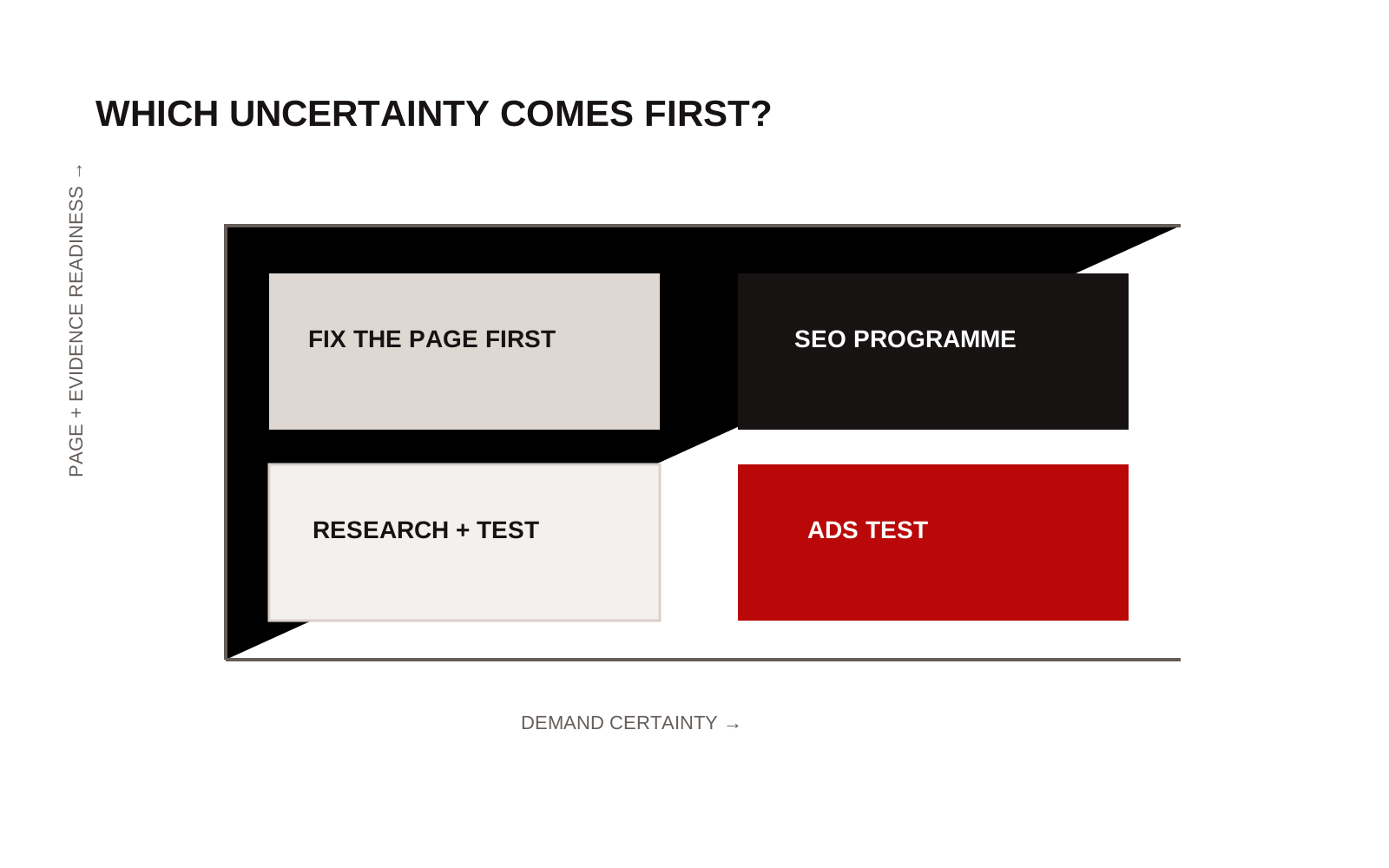
Decision matrix comparing SEO and Google Ads by speed, evidence, demand and measurement readiness.
Use the decision matrix
| Situation | Better first move | Reason |
|---|---|---|
| Buyers search a clear service now | Ads test | Fast signal on query and offer |
| Buyers ask complex technical questions | SEO content | Space to answer and prove |
| Website cannot explain the service | Fix page first | Traffic will not repair clarity |
| No conversion tracking | Measurement first | Spend cannot be judged |
| New market with uncertain language | Small ad test plus interviews | Tests terms without building many pages |
| Strong expertise but weak discovery | SEO programme | Turns evidence into durable pages |
| Short event or deadline | Ads | Organic timing is uncertain |
Fix the page before buying traffic
An ad can place the page in front of a searcher. It cannot make an unclear service credible. Before launch, the landing page should state:
- who the service is for;
- the problem it addresses;
- the scope and important exclusions;
- relevant project or technical evidence;
- geography or service coverage;
- the next action; and
- what happens after the enquiry.
Use a dedicated page only when it gives the visitor a better answer. Do not create thin near-duplicate pages for every keyword.
What an ad test can tell you
A controlled search campaign can test whether the selected queries produce relevant visits and enquiries. Separate brand, service and research terms. Use negative keywords to reduce obviously unsuitable traffic. Review the actual search terms, not only the keyword list.
Google's official Ads guidance explains campaign settings and measurement. Interface options change, so check current documentation before launch.
Define the test before spending:
- target buyer and location;
- query groups;
- landing page;
- conversion action;
- lead-quality review;
- test period; and
- stop or change rule.
Clicks are not the business result. Review qualified enquiries, sales conversations and reasons leads were rejected.
What SEO needs to work
SEO is not a one-time metadata task. It needs crawlable pages, clear site structure, original evidence, internal links and maintenance. Google's Search Essentials sets the technical baseline.
For a small B2B firm, start with a narrow set:
- one clear service page;
- one industry or application page where it changes the decision;
- two or three technical questions buyers repeatedly ask;
- one evidence-led case study; and
- a contact route connected to the page topic.
Measure impressions, relevant queries, engaged visits and qualified enquiries. Rankings for a broad vanity term are not enough.
Run both without confusing the evidence
Ads can reveal language and objections while SEO pages are being built. Organic pages can improve the landing experience for paid visitors. Keep reporting separate so the team knows which channel introduced the enquiry.
A useful 90-day sequence is:
| Period | Work | Decision |
|---|---|---|
| Weeks 1 to 2 | Fix page and conversion tracking | Is the offer understandable? |
| Weeks 3 to 6 | Run a narrow ad test | Which searches produce relevant visits? |
| Weeks 3 to 10 | Build evidence-led organic pages | Which questions deserve durable answers? |
| Weeks 11 to 13 | Compare lead quality and effort | Continue, adjust or stop each route |
The dates are an example, not a promise. Low-volume B2B markets may need a longer observation period.
Ask one commercial question
Which uncertainty costs more right now: not knowing whether demand exists, or not having enough proof when buyers search? Ads are useful for the first. SEO and content are useful for the second.
Our guide to AI search visibility for engineering firms shows how clear company information supports discovery. Our SEO service combines technical access, page structure and ongoing content rather than treating setup as a permanent fix.
Creatif Work starts with the buyer decision and available evidence. If the next step is unclear, start with the problem before choosing a channel.
Agree how a lead will be judged
Marketing cannot compare channels if sales does not record why an enquiry was useful or unsuitable. Define a qualified lead in practical terms: buyer role, service need, geography, timing and ability to proceed. Use a short rejection list rather than free-text notes alone.
Review the first enquiries together. Ads may reveal that a high-volume phrase attracts job seekers or consumers. Organic content may bring fewer contacts but stronger technical questions. That difference matters more than cost per click.
Keep a simple channel record:
- first known source;
- landing page and query theme;
- enquiry type;
- qualification result;
- sales stage;
- outcome; and
- reason lost or rejected.
At the review, decide which page, keyword group or article deserves another cycle. Stop work that produces irrelevant demand even if its traffic graph looks good. Preserve useful learning from a failed test, such as the phrase buyers did not use or the condition the landing page failed to state. A small firm needs a repeatable decision process more than a large report.