

Website Redesign or Continuous Improvement: Which Costs Less?
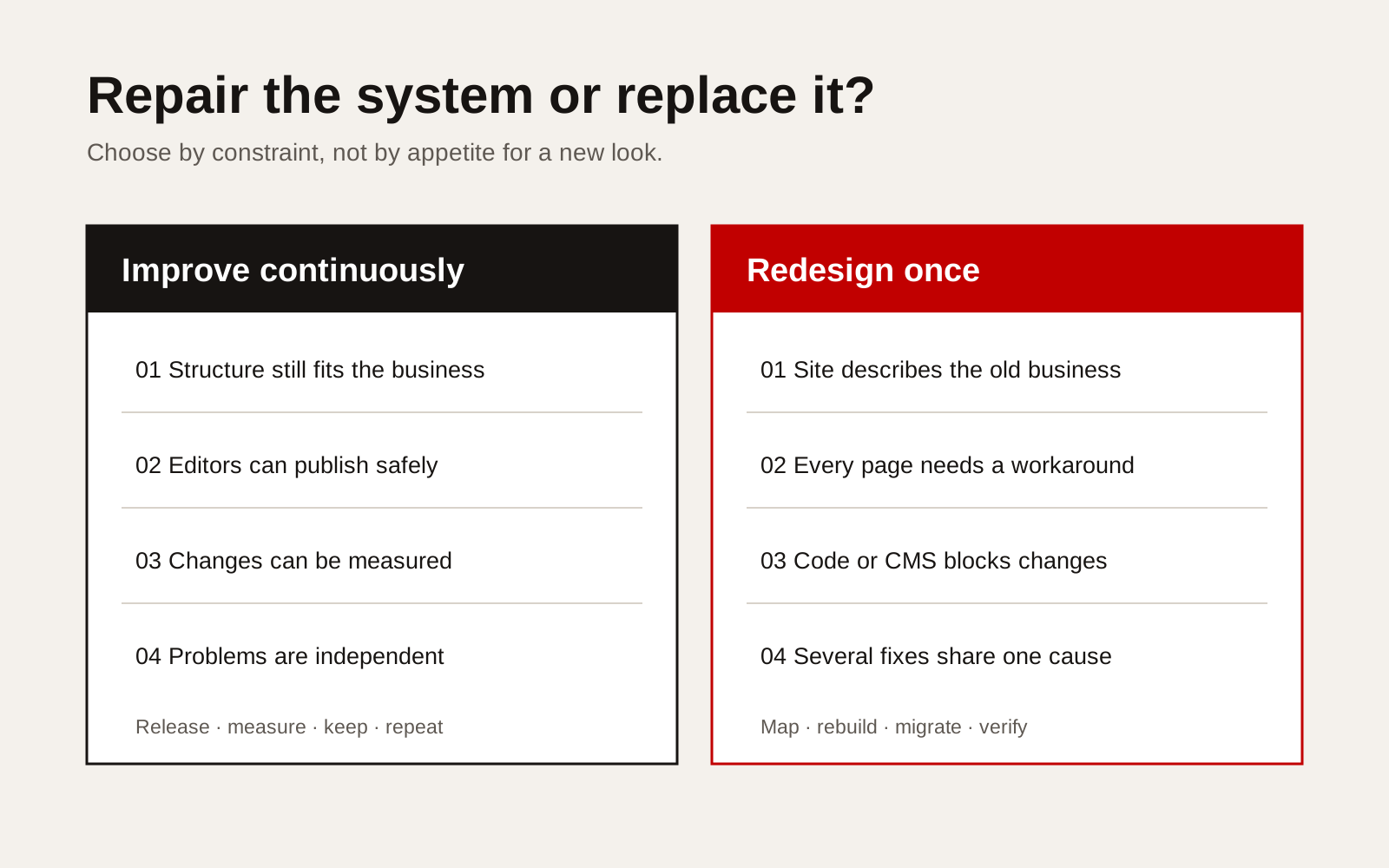
A website redesign concentrates cost and risk into one project. Continuous improvement spreads work across smaller releases. Neither is automatically cheaper.
The cheaper route is the one that fixes the actual constraint without paying twice. If the structure, content system and code are sound, rebuilding them wastes money. If those foundations block every useful change, monthly adjustments become rent paid on a problem that never disappears.
Use the current website as evidence. Do not choose from a preference for a fresh look or a wish to avoid a larger decision.
Is a redesign or continuous improvement cheaper?
Continuous improvement usually costs less when the current site has a workable structure, maintainable code and reliable measurement. A redesign costs less when the content model, navigation, platform or technical foundation blocks several important changes at once. Compare the cost of the decision over two to three years, not only the first invoice.
The key question is whether each change leaves the website easier or harder to improve next time.
Use this decision table before requesting quotes
| Condition | Continuous improvement is likely to fit | A redesign is likely to fit |
|---|---|---|
| Business positioning | Offer is stable and understood | Business has changed and the site describes the old company |
| Navigation | Most pages have a clear home | New audiences or services do not fit the current structure |
| Content system | Staff can update important content | Routine edits require a developer or break layouts |
| Technical condition | Core templates are maintainable | Unsupported code, plugins or themes create repeated failures |
| Search performance | Valuable URLs can be improved in place | Duplicate or fragmented architecture needs planned consolidation |
| Measurement | Enquiries and key actions are tracked | The team cannot tell which pages or journeys work |
| Brand | The identity works in current interfaces | The identity fails across web, mobile and real content |
| Change queue | Small, independent improvements | Several changes depend on the same structural repair |
Count the right-hand answers. One does not force a redesign. Four or five connected problems usually mean the team is already redesigning the site in slow motion.
When continuous improvement costs less
Continuous improvement fits a website that has good bones. Pages load reliably. The content system can support new case studies, services and team changes. The navigation still matches the business. Analytics and enquiry tracking give the team a baseline.
In that situation, smaller releases reduce waste. You can improve one service route, measure it and use the result to shape the next change. A six-week content and navigation project may solve the problem without replacing the design system or platform.
Good candidates include:
- rewriting a weak service section
- adding missing project evidence
- repairing mobile forms
- improving page speed within the existing system
- building a reusable case-study format
- clarifying calls to action
- consolidating a small set of overlapping articles
The work still needs a backlog, named owners and measurement. "We will update the site regularly" is not a plan. Each change needs a problem, a baseline, a release date and a review date.
When a redesign costs less
A redesign is justified when several business problems share one structural cause. An engineering firm may have expanded from one service into three sectors, but the old site still has a five-page brochure structure. Adding pages one by one creates duplicate navigation and vague category labels. The content system may not support projects, technical data or regional variations.
Rebuilding once can be cheaper than repeatedly working around those limits.
Warning signs include:
- every new page needs a custom layout
- the CMS editor cannot safely change common content
- important pages have no stable URL plan
- the site uses unsupported dependencies
- forms and analytics are unreliable
- the company cannot explain who owns the domain, hosting or source files
- the business model has changed enough that the current navigation misrepresents it
A redesign should still preserve useful assets. Rebuilding does not mean deleting every URL and starting from a blank sitemap.
Google's site move guidance recommends preparing a mapping from old URLs to their new destinations, updating internal links and using permanent server-side redirects. It also advises changing one major thing at a time where practical. That is one reason a redesign with a careless migration can cost more than the design itself.
Compare total cost, not project cost
Create a 24-month comparison with five lines:
| Cost line | Questions to answer |
|---|---|
| Initial work | What must be paid before the first useful release? |
| Rework | Which temporary fixes will be thrown away later? |
| Internal time | Who supplies content, approvals, testing and training? |
| Operational risk | What happens if the current site fails or cannot be updated? |
| Opportunity cost | Which enquiries, tenders or hires remain unsupported while work continues? |
Avoid inventing a return figure from traffic alone. Define the business event that matters, such as a qualified enquiry, tender invitation, application from a hard-to-hire role or successful document request.
Google Analytics supports comparison between date ranges, but the comparison is useful only when tracking is consistent. Google's GA4 date comparison guidance explains how to compare a selected range with a previous period or year. Record major site changes so the team knows what may have affected the result.
Run a two-week diagnosis before choosing
Use this sequence before asking agencies for a redesign price:
- List the three business decisions the website should support.
- Identify the pages and journeys involved in each decision.
- Review search, analytics, enquiries and user feedback for those routes.
- Test whether the current CMS can make the likely changes cleanly.
- Inspect ownership, hosting, plugins, code and integrations.
- Map important URLs and inbound links.
- Separate structural problems from content problems.
- Price both routes over 24 months, including internal time and rework.
If the evidence points to a redesign, write the brief around the constraints that must change. Our website redesign guide explains what to audit before replacing the site.
If the evidence points to ongoing work, define a quarterly release plan with measurable outcomes. Our hosting and support service covers maintenance, while content and journey changes should have their own priorities and review.
Creatif Work's website work starts by finding which route the current site needs. Sometimes the right answer is a new structure. Sometimes it is a smaller set of repairs. The diagnosis should decide which bill you pay.