

Singapore Port Service Buyers: Response Time, Coverage and Escalation
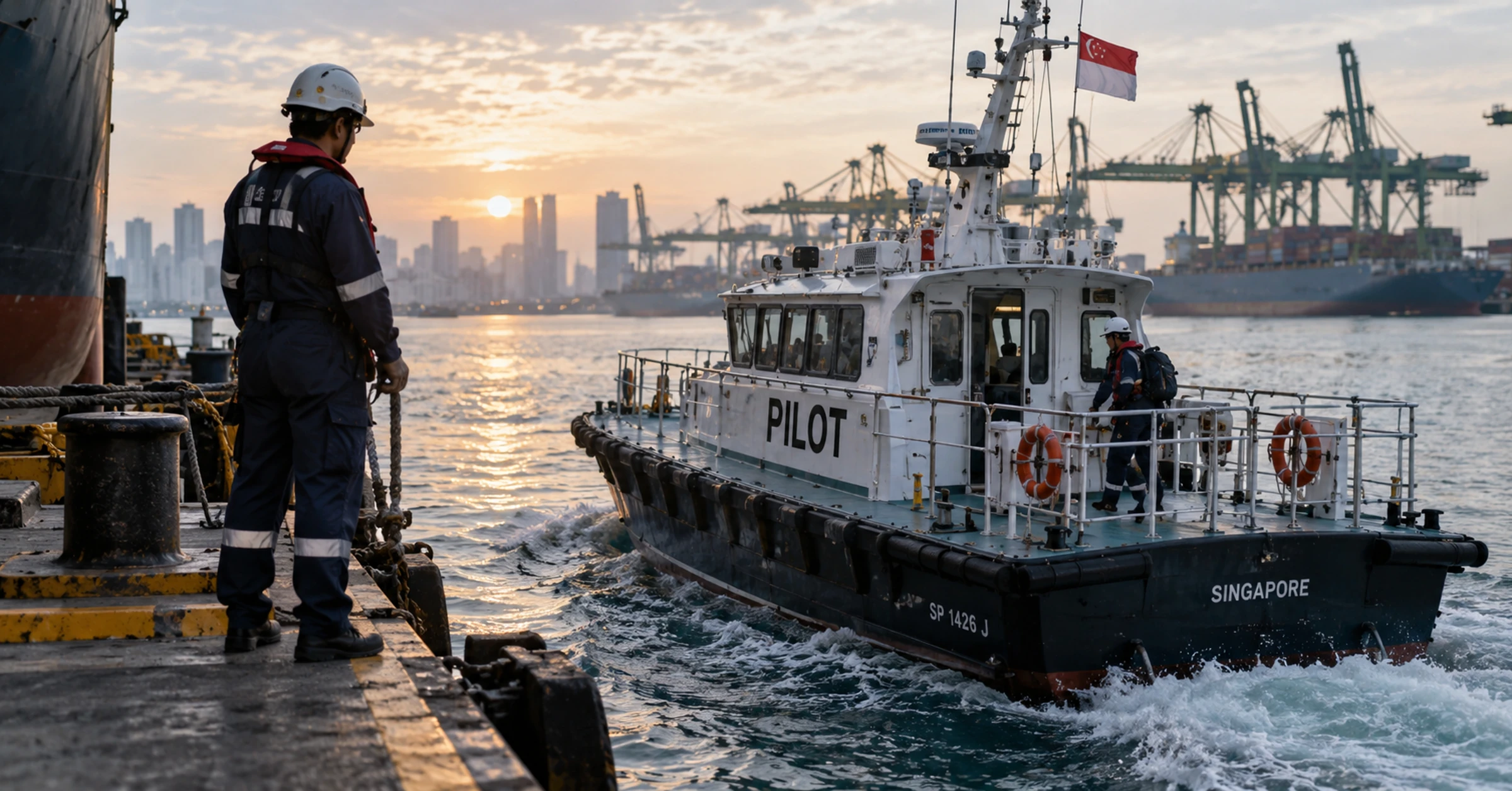
"24/7 service" does not tell a Singapore port buyer when the supplier will acknowledge, triage, mobilise, reach the vessel and complete the work. Buyers should compare each stage, the operating coverage and the escalation route when the first plan fails.
Response promises must match people, access, spares, launches, workshops and approvals.
What should port service buyers compare?
Compare acknowledgement time, technical triage, mobilisation, operating area, access and launch arrangements, workforce and spares availability, escalation, status communication, completion criteria and evidence from comparable calls.
The Maritime and Port Authority of Singapore provides current port, marine and operational information through its official website. Suppliers and buyers should check applicable port marine circulars, procedures and approvals for the actual work.
| Response stage | Question | Evidence |
|---|---|---|
| Acknowledge | When will a person confirm receipt? | Monitored contact and recorded time |
| Triage | When will a competent person assess the need? | Duty roster and escalation tree |
| Mobilise | What must be arranged before departure? | People, permits, spares, launch and access |
| Arrive | Which location and access point define arrival? | Coverage map and previous call records |
| Make safe | What temporary outcome is possible? | Procedure, authority and parts limits |
| Complete | What defines finished and accepted work? | Test, report and handover record |
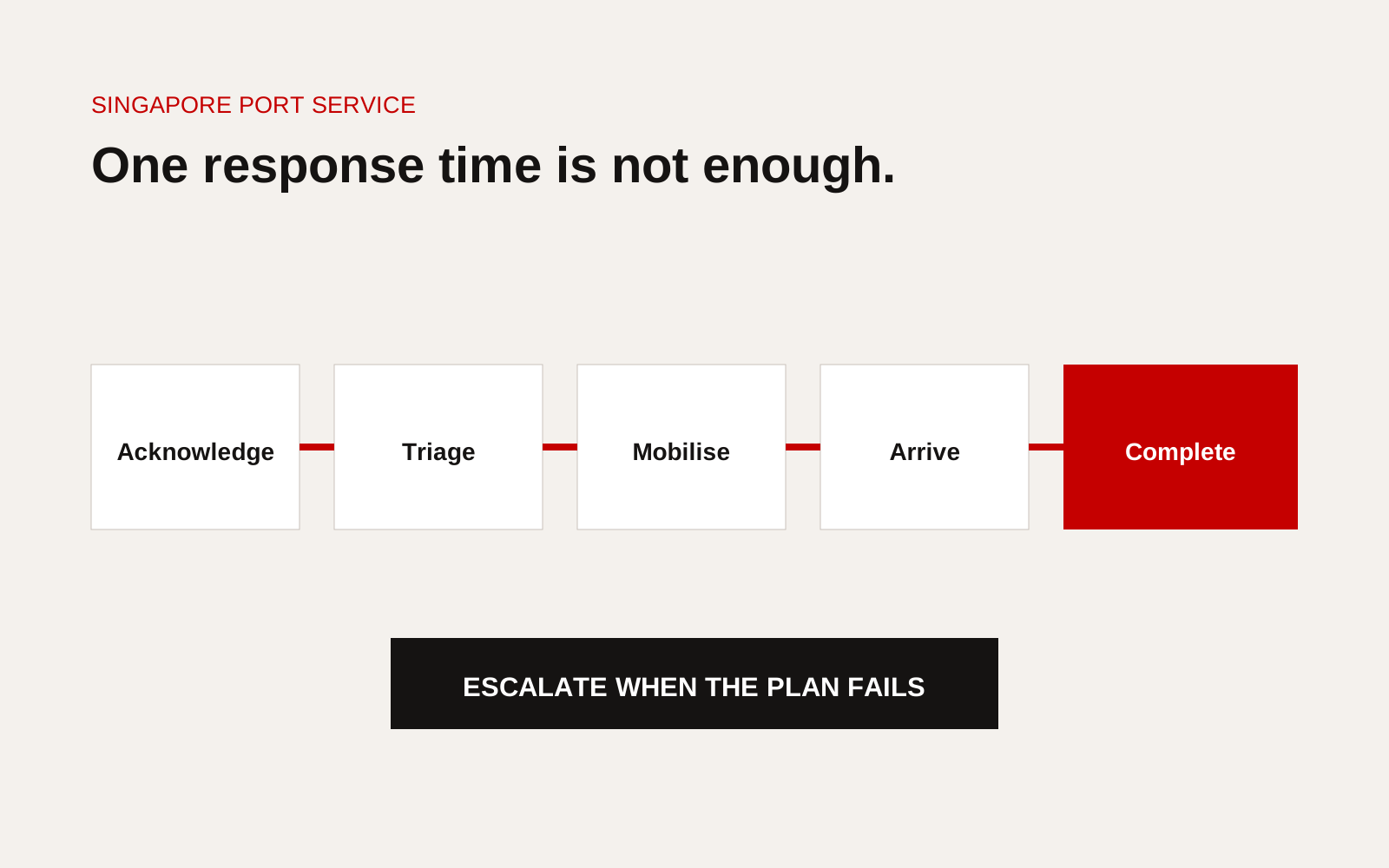
Singapore port service response model separating acknowledgement, technical triage, mobilisation, arrival and completion.
Break one response time into stages
A single four-hour claim can hide a one-minute automated reply and several hours before technical action. Contract each stage where it matters.
Define:
- incident or request priority
- start and stop event for each clock
- coverage hours and public holidays
- information required from the vessel or agent
- weather, anchorage, berth and access assumptions
- work that can begin remotely
- escalation when the target cannot be met
Use service-specific times. Delivery of a standard spare and troubleshooting a control fault need different routes.
Describe coverage operationally
State workshop or base, port and anchorage coverage, transport and launch arrangements, customs or security dependencies, and partner-supported areas. Do not colour a map without explaining mobilisation.
If the supplier serves the wider Singapore Strait or regional ports, state the different response basis and local partner role.
Create an escalation tree
The buyer should know who receives the call, who triages, who approves mobilisation, who supervises work and who handles a service failure.
Provide role contacts, not only personal mobile numbers. Include a backup when the duty person is unavailable and a management escalation for safety, delay or commercial authority.
Ask for the right first information
A useful urgent request may include:
- vessel name and location
- agent and onboard contact
- equipment and model
- fault or service required
- safety condition and whether equipment is isolated
- photos, alarms or relevant documents
- sailing or operation deadline
- access, launch or berth constraints
- purchase-order or authority route
Do not delay safety advice while waiting for commercial details.
Compare evidence, not slogans
Request anonymised examples showing request time, triage, mobilisation, arrival, work, test and close-out. Check whether performance data uses all calls, priority calls or a selected subset.
| Metric | Definition to agree |
|---|---|
| Acknowledgement | Human confirmation with case number |
| Triage | Competent review and action plan |
| Mobilisation | Team and required resources dispatched |
| Attendance | Team reaches agreed access point |
| Restoration | Equipment safe or returned to stated function |
| Completion | Report, test and client acceptance supplied |
Plan the failure path
Ask what happens when a part is unavailable, access is denied, the first technician cannot solve the fault or the vessel moves. A credible supplier gives options, decision owners and communication intervals.
Separate make-safe from permanent repair
An urgent attendance may isolate equipment, restore limited operation or install a temporary measure. Define the status, restrictions, monitoring and next action. Do not record the case as completed simply because the vessel can move.
The close-out should state permanent or temporary outcome, tests, parts, outstanding work and responsible owner. The buyer should know whether class, flag, maker or another approval is still required.
Review performance by service type
Averages across spare delivery, inspection and complex fault finding can be misleading. Group requests by priority, service, location and access condition. Show the period, sample and excluded cases.
Use missed targets to improve the duty roster, parts, partner coverage or enquiry data. Do not remove difficult calls from the metric without an agreed rule.
Include commercial authority
Agree who can authorise attendance, temporary work, parts and changes outside the initial scope. An operational response should not stall because the duty team cannot obtain a purchase order, but the authority route must be clear and recorded.
Buyer checklist
- Priority levels and clocks defined
- Human acknowledgement separated from attendance
- Coverage and access assumptions stated
- Duty and backup roles identified
- Spares and subcontract dependencies clear
- Safety and commercial authority separated
- Status update frequency agreed
- Failure escalation tested
- Completion evidence defined
- Performance data boundary disclosed
Run one escalation exercise
Use a realistic scenario outside normal office hours. Provide only the information a vessel agent or superintendent would initially have, then observe acknowledgement, triage, authority checks, mobilisation and status updates. Record who handled each stage and where the process paused.
The exercise should test unavailable staff, uncertain access, missing parts and a change in technical scope. Confirm that safety decisions are not delayed by commercial approval and that the customer receives a named contact and next update time. Afterward, compare the actual sequence with the service description and contract. Correct any promise the operating team cannot sustain. Store the learning with the duty procedure, not only in meeting minutes. Repeating this exercise quarterly, or after a significant failure, gives response-time claims an operational basis and exposes single points of failure before a live vessel depends on them.
Creatif Work builds marine websites that turn service operations into clear buyer information. Our website service can connect urgent contacts, coverage and service evidence, while custom software can support case routing and response records when the operational workflow needs control.