

The UK Maritime Innovation Hub: A Supplier's Route to a Credible Trial
The UK Maritime Innovation Hub gives maritime innovators a coordinated route into regulatory engagement. It does not turn an early prototype into a proven system. Suppliers still need a defined use case, an honest regulatory gap analysis, controlled trials and evidence that supports the next decision.
The strongest preparation begins before an application or meeting. Decide what the trial must prove, what it will not prove and how the result will be captured.
What should a supplier prepare for the UK Maritime Innovation Hub?
Prepare a clear concept of operations, vessel and system description, regulatory gap analysis, risk controls, trial safety case, measurable objectives, data plan and route from trial result to the next approval or commercial decision.
The Maritime and Coastguard Agency's UK Maritime Innovation Hub collection says the service supports coordinated regulatory engagement from early concept through trials. Priority themes include autonomy, decarbonisation, digital systems and nuclear propulsion.
| Preparation item | Question it should answer |
|---|---|
| Concept of operations | Who uses the system, where and for what task? |
| Regulatory map | Which rules apply, and where is interpretation needed? |
| System boundary | What is being trialled, and what remains unchanged? |
| Safety case | What can go wrong, and how is risk controlled? |
| Trial objective | Which decision will the test support? |
| Data plan | What is measured, by whom and at what interval? |
| Acceptance rule | What result is sufficient to proceed, revise or stop? |
| Evidence route | Who receives the result and what comes next? |
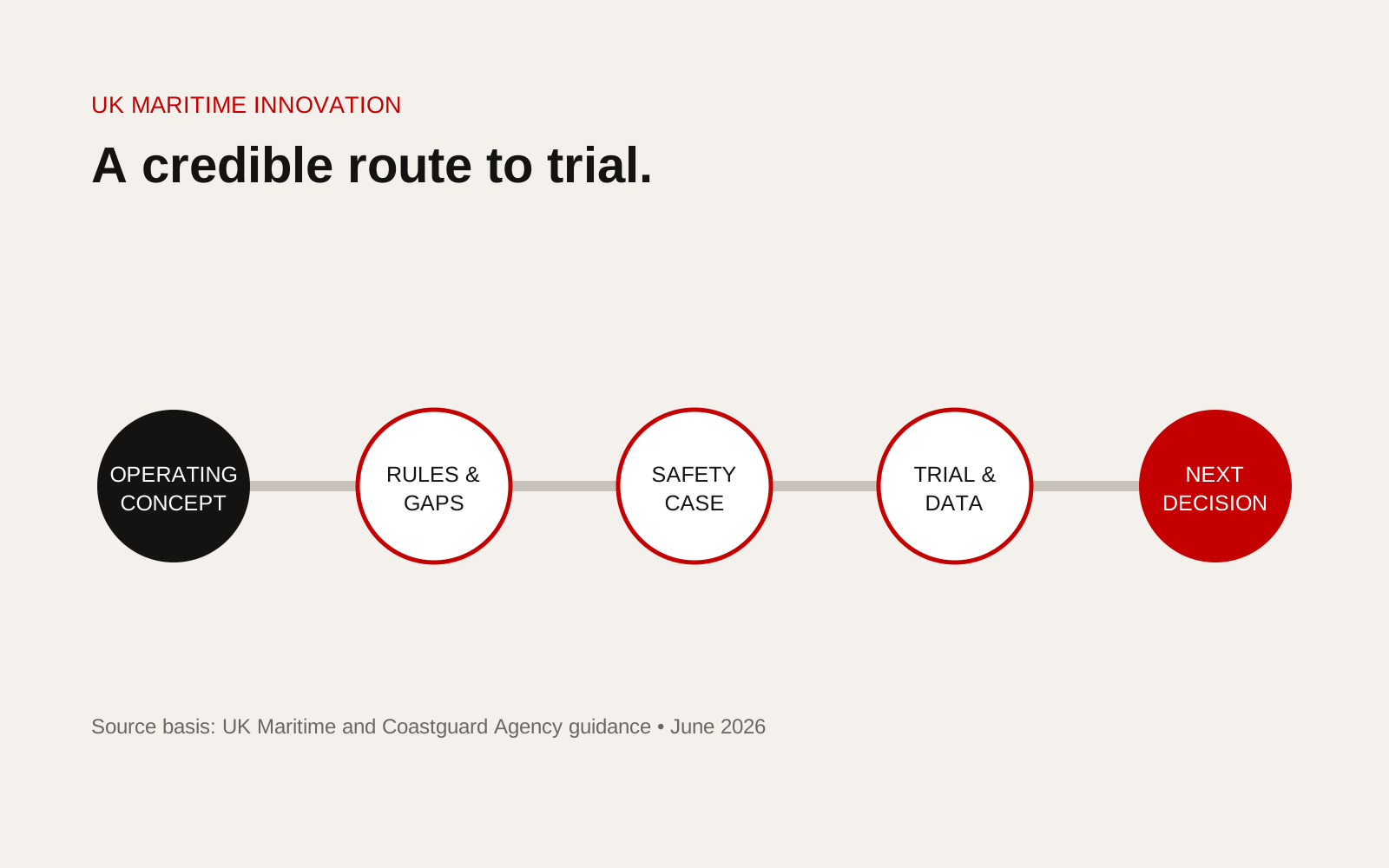
UK maritime innovation trial route from concept and regulatory gap to safety case, trial and evidence.
Begin with the operating situation
Describe the actual operation rather than only the technology. Include operating area, vessel type, personnel, traffic, weather limits, communications, fallback arrangements and interaction with existing bridge or shore processes.
A concept of operations should let a regulator and trial partner see the complete activity. For an autonomous or remote system, that includes the human role during normal, degraded and emergency states. For an energy technology, it includes fuel, storage, interfaces, maintenance and emergency response.
Map the regulatory questions early
List applicable requirements, evidence already available and issues needing regulatory discussion. Do not frame every difference as a barrier. Some gaps can be closed through design, operating limits, additional tests or a different trial sequence.
Use a three-column record:
| Requirement or concern | Current evidence | Action before trial |
|---|---|---|
| Applicable rule or standard | Drawing, calculation, test or procedure | Review, test, approval or operating limit |
| Novel feature | Hazard analysis and design rationale | Authority discussion and evidence plan |
| Vessel interface | Integration design and responsibility | Installation check and commissioning |
| Human operation | Roles, training and fallback | Simulation, drill or competency evidence |
The Hub's prototype vessel trials guidance lists a regulatory gap analysis and trials safety case among the application information for its Plymouth pilot route. That route has specific eligibility and location conditions, so suppliers should check the current guidance rather than assume it fits every trial.
Write a trial objective that can fail
"Demonstrate the technology" is not a measurable objective. Define the decision, metric, operating condition and acceptance rule.
For example:
- detect a defined target under stated sea and visibility conditions
- complete a remote-control handover within a set procedure
- maintain a temperature or pressure range during a defined duty cycle
- reduce fuel use against a comparable baseline without breaching performance limits
- recover safely from named communication or equipment failures
A credible trial includes stop criteria and an outcome for an inconclusive result. This protects crew and makes the evidence more valuable.
Build the safety case around the trial
The trial safety case should describe hazards created by the trial setup and how they are controlled. It should connect risk assessment, operating limits, responsibilities, emergency arrangements, communications and evidence of readiness.
Before execution, confirm:
- competent trial director and decision authority
- vessel master and crew roles
- shore team and emergency contacts
- approved operating area and environmental limits
- installation and commissioning records
- pre-trial briefing and drills
- live monitoring and data custody
- stop-work authority
- post-trial review and incident process
The MCA guidance says its Plymouth prototype route uses risk-based certification supported by a trials safety case and is limited to eligible UK ships under 24 metres with no more than 12 people, among other conditions. Treat those as route-specific rules, not a general definition of maritime trials.
Capture evidence that survives the demonstration
Record configuration, software version, sensors, calibration, timestamps, environmental conditions, operator interventions and deviations. Link each dataset to the test step and acceptance rule.
The Hub's decarbonisation guidance recommends clear test plans, key performance indicators, risk controls and structured data capture. The same discipline helps any trial produce evidence a buyer can inspect.
Supplier readiness checklist
- One operational problem and user group defined
- Trial system and unchanged vessel systems mapped
- Applicable rules and open questions recorded
- Hazards, controls and stop criteria approved
- Metrics and acceptance rules agreed
- Data ownership and format agreed
- Configuration and calibration records ready
- Trial partner responsibilities signed off
- Public claims limited to what the trial can prove
- Next approval or commercial decision identified
Creatif Work helps marine suppliers turn technical development into clear, dated evidence. Our marine practice connects service, fleet and trial information, while our custom software service can structure trial records and review steps when spreadsheets no longer provide enough control. Our guide to UK marine decarbonisation supplier content shows how to publish useful proof without overstating readiness.