

Construction Marketing: A Practical Guide for Contractors and Suppliers

Construction marketing should make your company easier to assess for suitable work. Define the packages you want, show what you actually delivered and give buyers the information needed to qualify you. A website, capability statement and project library can support that process. They cannot replace tender requirements, safe working practices or an unsuitable track record.
A director may ask for more enquiries when the actual problem is different. The company gets invited to quote for work outside its scope. Its specialist capability is hidden inside a broad company profile. Photographs show completed buildings but never explain what the company contributed. Sales staff rebuild the same presentation for every meeting.
Those problems need different responses. This guide separates main contractors, specialist subcontractors and product suppliers. It covers evidence, procurement routes, websites, photography and follow-up. It also shows how to put the work into a manageable ninety-day programme.
All diagrams and example records here are original planning examples. They are not photographs of a client's construction project, an industry survey or measured campaign results. The market figures come from BCA's dated release. No interview findings or marketing-performance gains are claimed.
Download the construction marketing templates, or use the CSV template pack. Both are free. The steps below can also be followed without a spreadsheet.
Choose the work before choosing the channel
Start with the packages your company can deliver and wants to pursue. “Construction clients” is too broad. A concrete repair specialist, a building contractor and a distributor of facade components may share project locations but sell different things to different people.
List the type of project, the scope, the geography and the conditions that make work suitable. Add important exclusions. A company that handles planned refurbishment does not necessarily offer emergency attendance. A supplier that stocks a component does not necessarily provide installation or design responsibility.
Ask the estimating team which requests waste time. Ask project staff which questions reveal whether a job fits. Ask directors which work they would refuse even if someone offered it. The answers are useful marketing requirements. They help prevent copy that attracts every possible buyer and qualifies none.
Write a practical pursuit statement. For an illustrative specialist, it might be: “We want enquiries for occupied-building concrete repair packages in the locations our site team can cover. We need drawings, access constraints and the proposed programme before assessing the work.” This is not public copy yet. It is the decision behind the copy.
Check the capacity behind the promise
Do not publish a new capability because somebody hopes to develop it. Check people, equipment, partner arrangements and approval authority. Explain whether the company self-delivers, coordinates partners or supplies a product. Those distinctions affect how buyers assess risk.
Marketing should also reflect capacity. If a site team cannot take another concurrent package, a campaign aimed at immediate mobilisation may create a response problem. The commercial team can still develop future relationships. The message and next step should match the work the company can actually discuss.
Keep the pursuit statement under review. A new location, changed service or different procurement route can make yesterday's description inaccurate. Treat it as an operating decision, not a slogan that survives every change to the business.
Separate discovery from formal procurement
The path to work can begin with a referral, a search, a trade event or an existing relationship. That does not mean the final purchase is informal. A buyer may still require supplier registration, a technical assessment, commercial review and a tender submission.
For Singapore public procurement, use the GeBIZ supplier guide to understand the formal process. Read the documents for the actual opportunity. A polished capability statement is supporting material, not a substitute for the requested bid format or eligibility conditions.
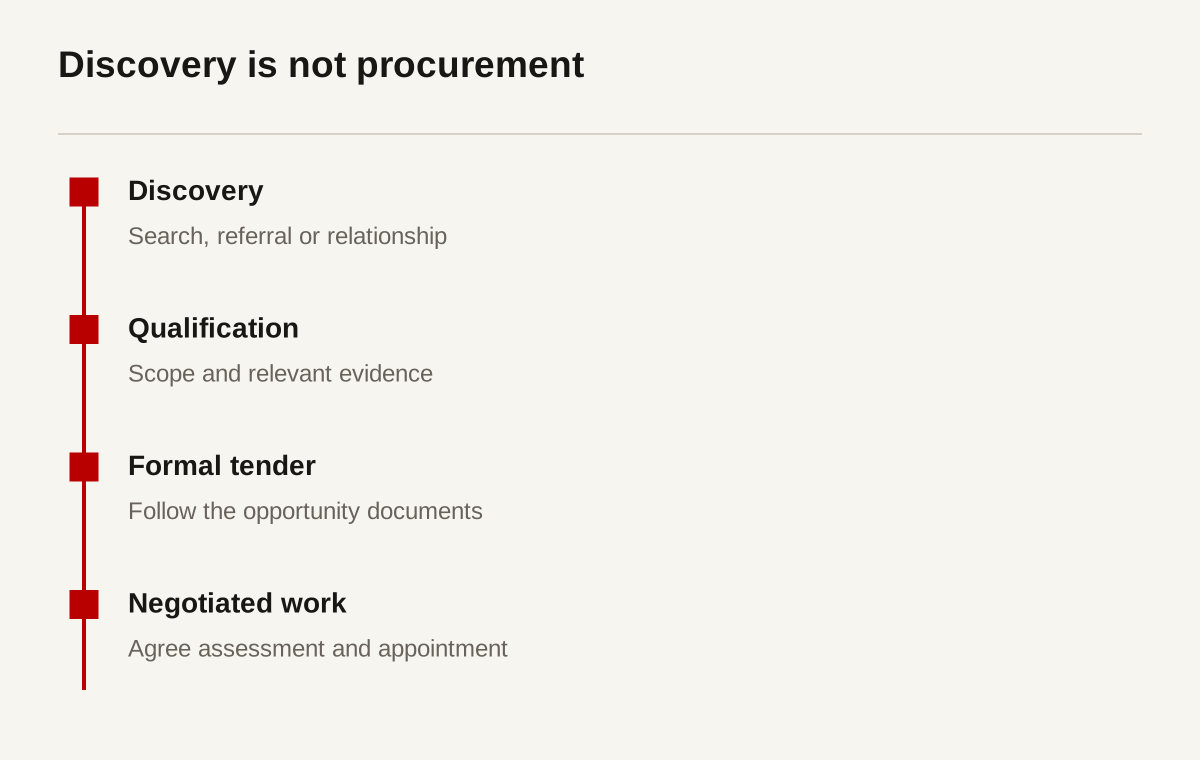
Private work also varies. A property owner may appoint directly for a small package. A main contractor may run a formal subcontract procurement exercise. A consultant may influence a specification without being the purchasing party. Map the route used by the work you want, rather than assuming every reader can commission you immediately.
Make the role of each asset explicit
The website helps somebody identify scope and check evidence. A capability statement gives a concise, controlled record they can circulate. A project sheet supports a particular comparison. A tender response answers the requirements of one procurement exercise.
Keep those purposes separate. A general brochure with attractive photographs can still fail to answer a tender question. Conversely, a technical submission written for one confidential project may be unsuitable as public marketing content. Reuse approved underlying facts, not entire documents without review.
For Singapore construction registration, consult BCA's current Contractors Registration System guidance. Verify the workhead, grade and registration record relevant to the company. Never turn a registration into a blanket promise that the company qualifies for every public project.
Give each business type the right evidence
A contractor's delivery responsibility is not the same as a specialist's trade scope. A product supplier may need precise model information rather than a long narrative about a building. The differences should be visible in the page structure and capability pack.
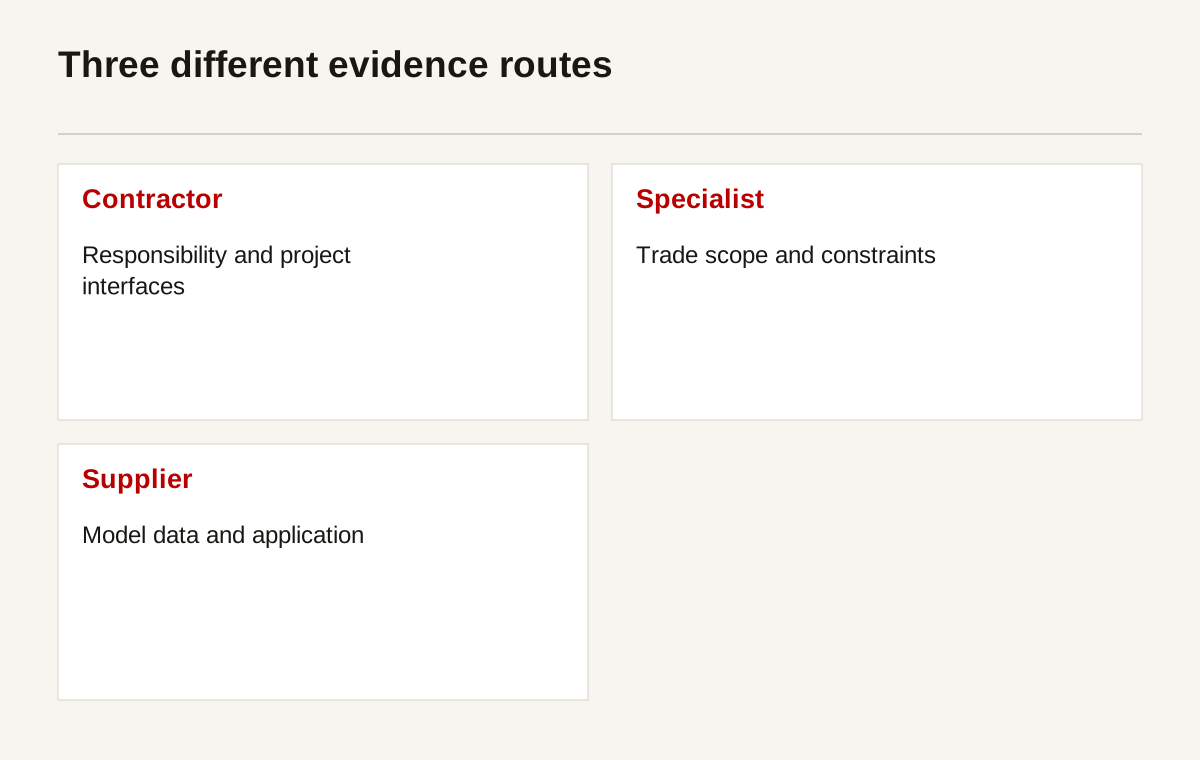
| Business type | Typical assessment question | Useful proof | Suitable discovery route |
|---|---|---|---|
| Main contractor | Can this company manage the proposed package and interfaces? | Comparable scope, project responsibility and delivery records | Referrals, targeted search and qualification meetings |
| Specialist subcontractor | Can this team handle our trade and constraints? | Trade-specific work, methods within approved scope and interface examples | Main-contractor relationships and specialist search |
| Product supplier | Does this product fit the specified application? | Current model data, test scope and document revision | Product search, technical content and distributor relationships |
| Design-and-build provider | Which responsibilities does the proposed appointment include? | Clearly stated design, supply and construction boundaries | Project-specific assessment and relevant case evidence |
| Maintenance contractor | Can they work within an operating site? | Access planning, coverage and relevant maintenance experience | Facilities relationships and service-specific search |
Treat this table as a starting point. Your own buying process may combine several routes. A manufacturer with an installation team needs to explain both parts without implying that every sale includes installation.
Choose one audience for each important page. A supplier page for specifiers can cover product selection and documentation. A procurement page can cover company identity and the supply arrangement. Connect them with links instead of forcing both readers through one long introduction.
Do not assume a social channel is necessary because competitors use it. First decide which evidence the buyer needs, where the buyer encounters the company and who can maintain the information. The appropriate channel follows those answers.
Build a capability statement someone can forward
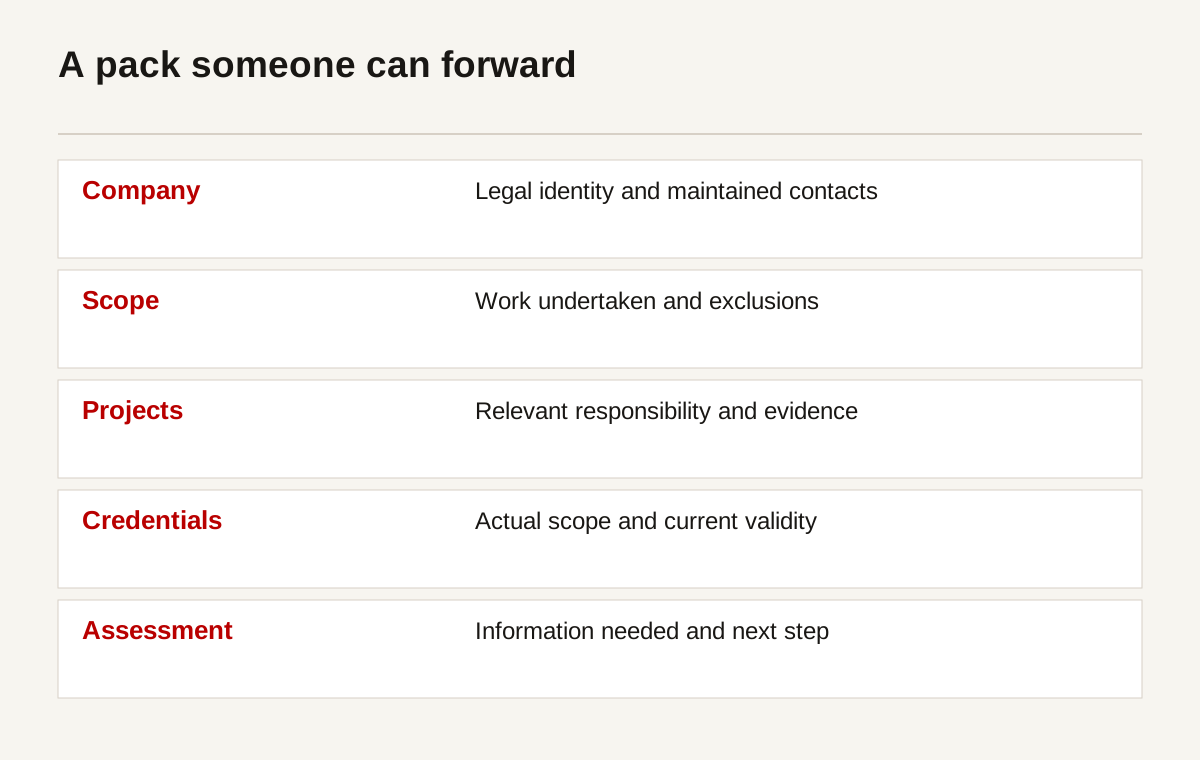
A capability statement should survive being opened without a sales explanation. The reader needs to know the legal company, actual scope, operating locations, relevant evidence and contact route. A presentation that only makes sense when its author talks through it is not doing that job.
Use an outline before designing the document. Begin with the work the company takes responsibility for. Add a concise company record, selected capabilities, relevant projects and current credentials. Finish with the information needed for an assessment and a named commercial contact or maintained team route.
Make the short version useful
Create a concise general pack, then maintain supporting sheets for specific disciplines. A buyer should not need to search through unrelated projects to find the one trade they care about. A shorter document is useful when it removes unrelated information, not when it removes the conditions needed to judge a claim.
Put revision information on the document. Give the internal source record an owner. If a certificate expires or an office closes, the website and downloaded pack both need updating. A file called “final-new-latest” provides no reliable revision control.
Check the document on a phone and in print. Small text on a large landscape slide often becomes unreadable when forwarded as a PDF. Links should make sense outside the original presentation. Do not rely on a QR code as the only way to contact the company.
Have someone outside the authoring team read it. Ask them to identify the scope, a relevant example and the next step. If they cannot, improve the content order before adding more graphics. This simple task check is more useful than asking whether the document looks professional.
Explain the company's role on every project
A photograph of a completed building does not establish what your company delivered. The company might have managed the whole project, supplied one product range or completed a small specialist package. All can be credible evidence. Confusing them is the problem.
Build a project record from the actual scope. Include the project type, the period, the location at an approved level of detail, the appointment and the constraints relevant to the work. State what was outside your responsibility. Obtain approval for any client name, photograph or result before publication.
| Proposed project claim | Evidence to inspect | Approval needed | Important limitation |
|---|---|---|---|
| Delivered a specialist package | Scope record and approved completion information | Project and commercial owners | Do not imply responsibility for the entire building |
| Worked in an occupied facility | Approved project description and access record | Client and project owner | Do not disclose sensitive operating arrangements |
| Supplied a named product | Delivery or project record and exact model | Commercial owner and client where required | Supply does not imply installation |
| Reduced a measured problem | Defined before-and-after measurement | Data owner and client | State period, method and other influences |
| Completed within an agreed period | Programme and completion records | Project owner | Explain changes to the original scope |
If there is no approved measurement, describe the work without inventing an outcome. “Installed the specified panels in the approved work area” may be a clear factual statement. “Improved efficiency by forty percent” is not acceptable without a defined method and evidence.
Use before-and-after material carefully
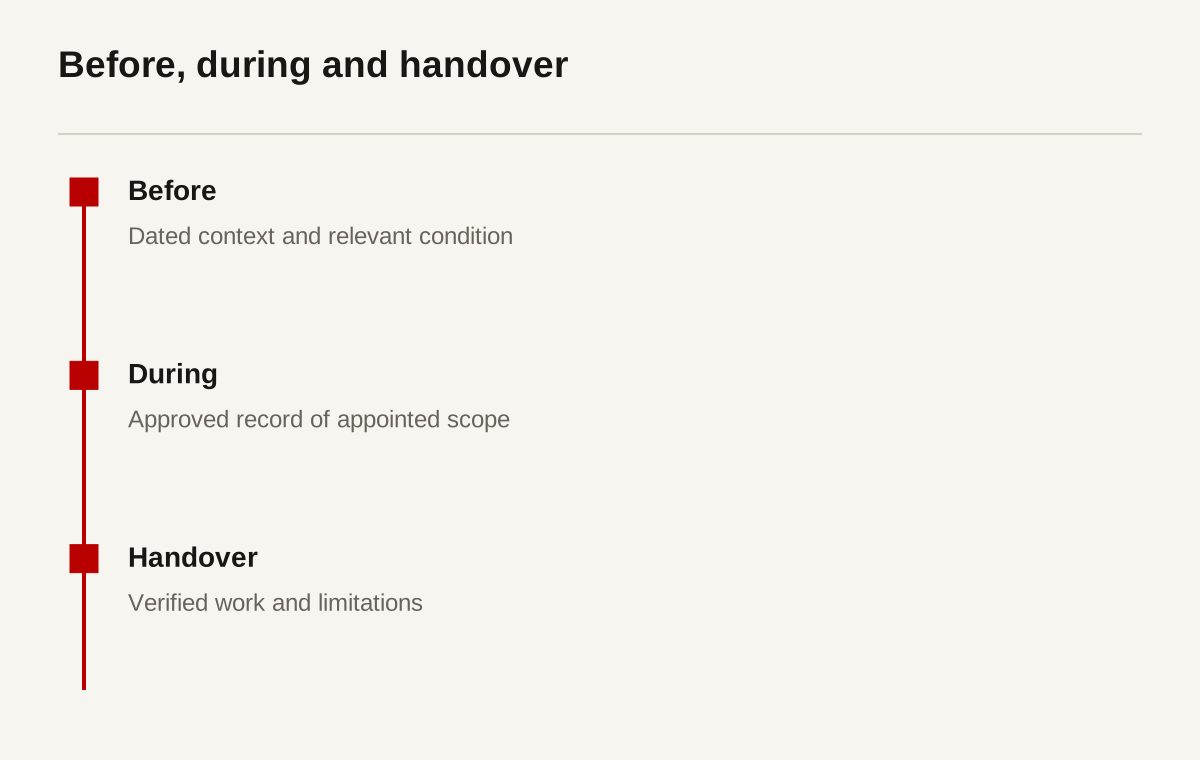
Before, during and after photographs can make a project understandable. They should show comparable areas and be dated or clearly staged. A dramatic angle change can make a small intervention appear much larger. Explain what changed instead of asking the image to imply it.
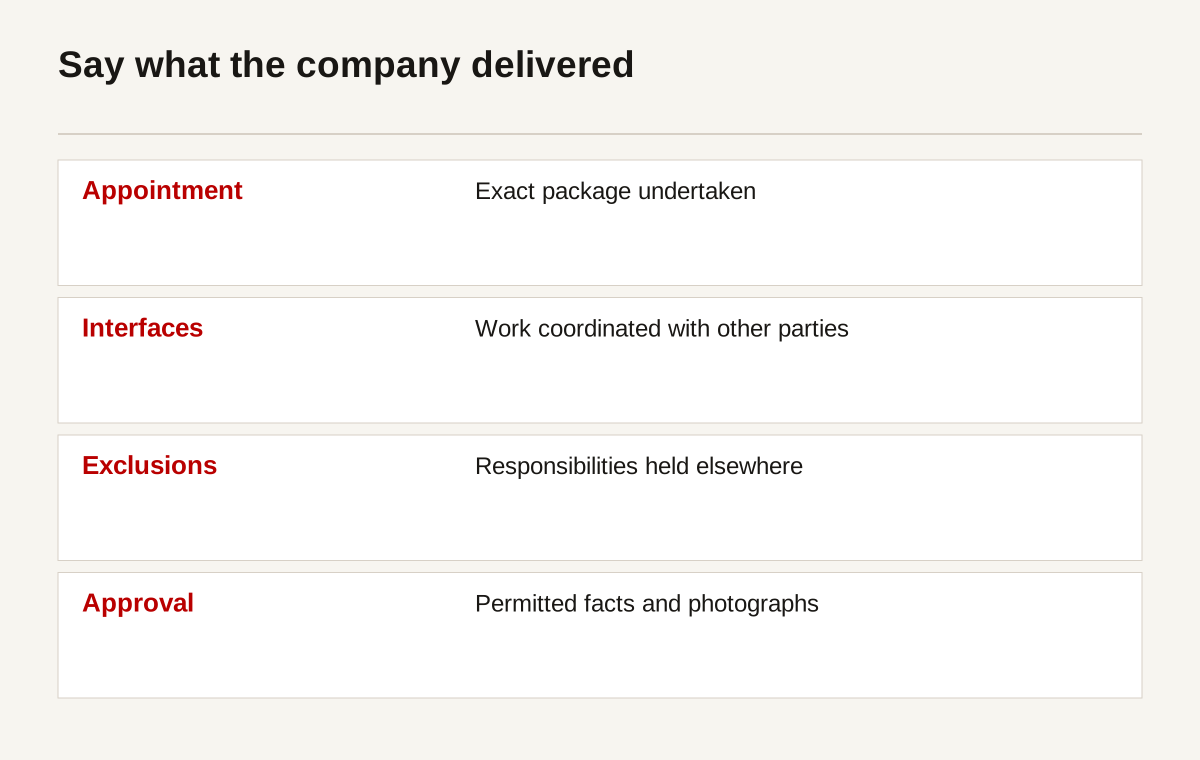
Keep a permission register alongside the image library. Record who owns the image, where it may be used and whether people, logos or security information need removal. A project team having a photograph on a phone does not prove the company may publish it.
When confidentiality prevents naming a project, describe the permitted context precisely. “Occupied industrial facility, location withheld” can be useful if the scope and constraint are approved. Do not decorate that record with a stock photograph that a reader could mistake for the actual site.
Publish credentials with their actual scope
Credentials are records, not decorative badges. Buyers need the issuer, the company or product covered, the relevant scope and current validity. A logo alone leaves them to guess all four.
Singapore's bizSAFE programme information explains its workplace safety and health context. Marketing should reproduce the company's actual status accurately. It should not imply that a programme recognition certifies every product or guarantees that no incident can occur.
| Credential record | Scope to state | Validity check | Display location |
|---|---|---|---|
| Company registration or workhead | Exact entity and relevant classification | Verify current official record | Company and qualification information |
| Management-system certificate | Entity, locations and activities covered | Certificate and issuer verification | Relevant capability page and controlled pack |
| Product test report | Tested product, method and conditions | Report revision and applicable model | Product page and technical download |
| Safety programme recognition | Actual programme and level | Current recognition and permitted use | Company safety information |
| Staff qualification | Person and role where publication is appropriate | Current record and staff consent | Relevant team or capability information |
Assign a renewal owner. Set review reminders before the expiry date rather than discovering the issue when a buyer asks. Keep archived evidence internally, but do not leave an obsolete public credential presented as current.
For overseas work, verify requirements in the actual jurisdiction and procurement exercise. Singapore records cannot be described as universal approval for Malaysia, Australia, Germany, France or the UK. A market page should distinguish local delivery, partner support and enquiries subject to assessment.
This guide is not a compliance assessment. Have responsible technical, safety and legal reviewers approve the claims that fall within their remit. A marketing editor can organise the information; they should not invent the interpretation of a certificate.
Organise the website around assessment tasks
Use service or product pages to answer specific questions. Put comparable project evidence near the relevant scope. Give controlled downloads useful names. Keep company identity and maintained contact details easy to find.
The homepage can explain the business and lead people to the right route. It should not carry every detail. A specialist page can describe access constraints and exclusions. A product page can carry dimensions, units and revision links. A project page can explain the responsibility behind a photograph.
Use ordinary HTML for important summaries. A buyer should not have to download a large file to discover whether the company supplies or installs. The PDF can carry supporting detail and a circulation-friendly record, but it should not be the only searchable explanation.
Images need useful context. A progress photograph may show a work stage; a product photograph may help identify a model. Write the alternative text for that purpose. The W3C image tutorial helps distinguish informative and decorative images. Avoid repeating the same keyword phrase in every image description.
Tables should compare genuine dimensions. Do not place unrelated services in a table just because the layout looks tidy. Give each table a meaningful caption and labelled headers. The W3C table tutorial is a practical accessibility reference for implementing that structure.
Keep editing ownership visible
Name an owner for services, projects, credentials and contacts. A single marketing person may publish the changes, but the underlying facts need approval from the team that knows them. Record which edits are routine and which require technical review.
Test the editing tasks before choosing the system. Can the intended editor replace a project image, update a specification and remove an expired document? If each task needs a developer, account for that maintenance arrangement rather than promising effortless updates.
Use market data as context, not a sales forecast
In its 22 January 2026 construction outlook, BCA reported preliminary 2025 construction demand of S$50.5 billion. Its 2026 forecast was S$47 billion to S$53 billion. These are nominal values of contracts awarded. They are not the value of completed work or a forecast for one company's enquiries.
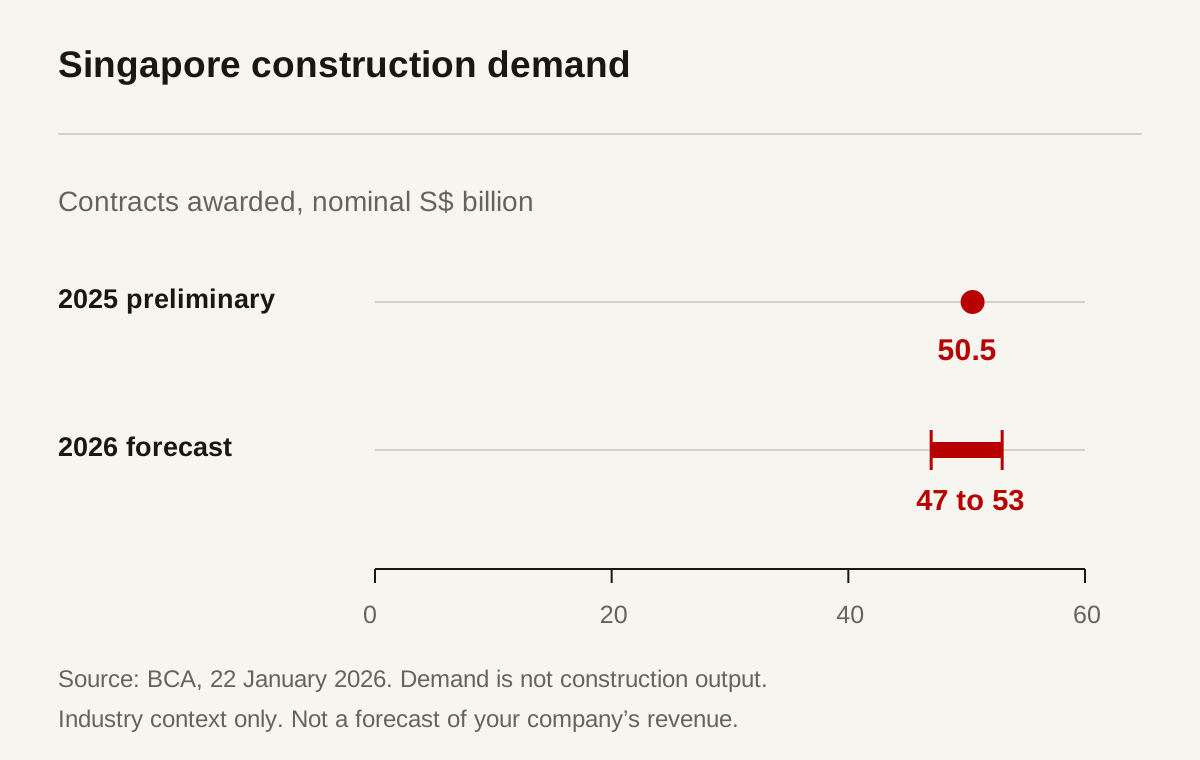
The chart uses the release's two periods and preserves their different statuses. It does not turn the forecast range into an actual result. The downloadable data records the source date and units. Do not combine a later revised series with an earlier forecast without explaining the change.
The commercial interpretation is yours to test. A large project pipeline may create relevant packages, but your business still needs the correct scope, relationships and capacity. Identify the specific opportunities that match your pursuit statement. Do not advertise a general market figure as evidence that hiring a marketing agency will produce work.
Select channels after checking the evidence
Search can connect a buyer's specific question to a service or product page. Referrals can lead to a qualification meeting. A trade event can support planned conversations. A professional network post can point existing contacts to an approved project record.
| Activity | Prerequisite | Useful output | Review measure |
|---|---|---|---|
| Service-page improvement | Approved scope and enquiry owner | Findable explanation and relevant project links | Suitable enquiries and task feedback |
| Capability-pack refresh | Current records and permissions | Controlled document buyers can forward | Use in relevant qualification conversations |
| Project publishing | Approved images and responsibility | Specific evidence page and supporting sheet | Buyer questions answered |
| Selected trade event | Relevant audience and meeting plan | Agreed conversations and recorded follow-up | Suitable contacts progressing to assessment |
| Search content | Real buyer question and credible answer | Useful page connected to the service | Relevant discovery and enquiry quality |
Google's Search Essentials provides the general search foundation. Following guidance does not guarantee a ranking. The work still needs to be useful and accessible to the buyer who lands on the page.
For photography on the website, use Google's image guidance to check discoverability and surrounding context. File size, rendered quality and descriptive information should be reviewed together. A large image alone is not a search strategy.
Make enquiries reach the right person
Describe what the reader should send. For a specialist package, it might be location, drawings, access constraints and intended programme. For a product enquiry, it might be a model, application and quantity. Do not ask for detailed information the team does not use.
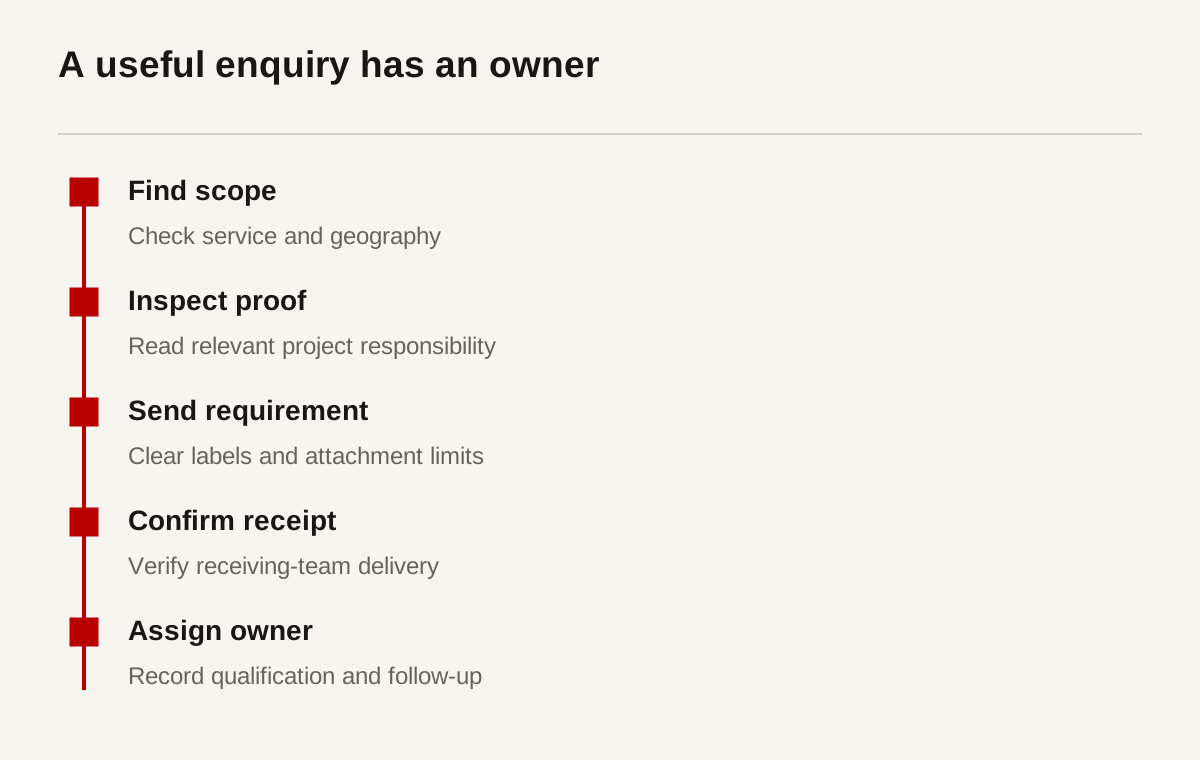
Use clear form labels and useful error messages. Follow the W3C forms tutorial for accessible implementation. An error should tell the reader what to correct without deleting the rest of their submission.
Test the entire route on your own website. A successful response from a form endpoint does not prove the message reached the sales inbox. Confirm receipt, attachment handling, assignment and the reply path. Use a clearly marked test and agree the receiving team in advance.
Record what happened after the enquiry. Suitable scope, wrong geography, missing information and duplicate requests are different outcomes. A higher raw count may be worse if the estimating team spends more time on unsuitable work.
The Google Analytics recommended event definitions can help standardise website measurement. Your team must still define qualification and maintain the commercial record. A recorded contact event is not proof that an opportunity exists.
Respect the information being collected
Drawings, contact details and project requirements can contain sensitive information. Collect what is needed, explain the purpose and route it only to people who need it. Use the company's actual privacy process. Do not place client names or drawing contents in analytics event labels.
Make attachment limits visible before someone completes the form. Provide a maintained alternative when a file is too large. Do not suggest ordinary email or a public upload folder for confidential drawings without checking the appropriate handling arrangement.
Plan photography around the evidence gap
Do not begin with a request for “more construction photos”. Decide which questions the existing library cannot answer. You may need an overview of the approved work area, a process stage, a product detail or a handover condition. Each has a different access requirement.
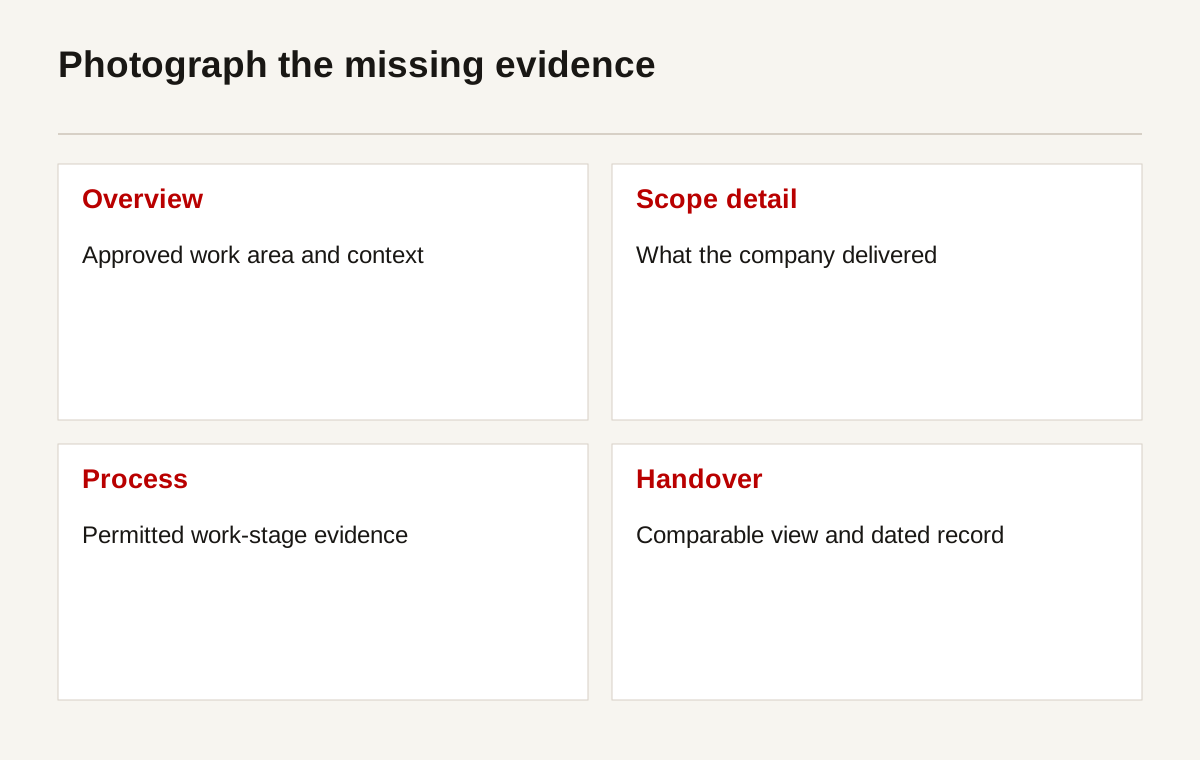
Arrange the shoot with the project team and site authority. The photographer's brief does not replace site induction, access approval or safety controls. Do not interrupt work to create a more dramatic shot. If a useful photograph cannot be obtained safely and with permission, use an approved diagram instead.
Record what every selected photograph shows. Include the period, work stage and company responsibility. Remove sensitive information only with an approved editing approach. Avoid retouching that misrepresents protective equipment, site conditions or the actual work.
Keep original files and permitted exports organised. The website needs compressed, correctly sized versions; the capability pack may need higher-resolution images. Store ownership and use restrictions beside the source record so future editors do not have to guess.
For diagrams, label them as examples where appropriate. A clearly marked project-evidence diagram is useful. A photorealistic invented site shown beside a case study can mislead the buyer about the company's experience.
Run a ninety-day programme with dependencies
The first quarter should repair the most important information and workflow gaps. It does not need an arbitrary daily posting quota. Begin with approved scope and ownership, then produce the evidence and pages that support it.
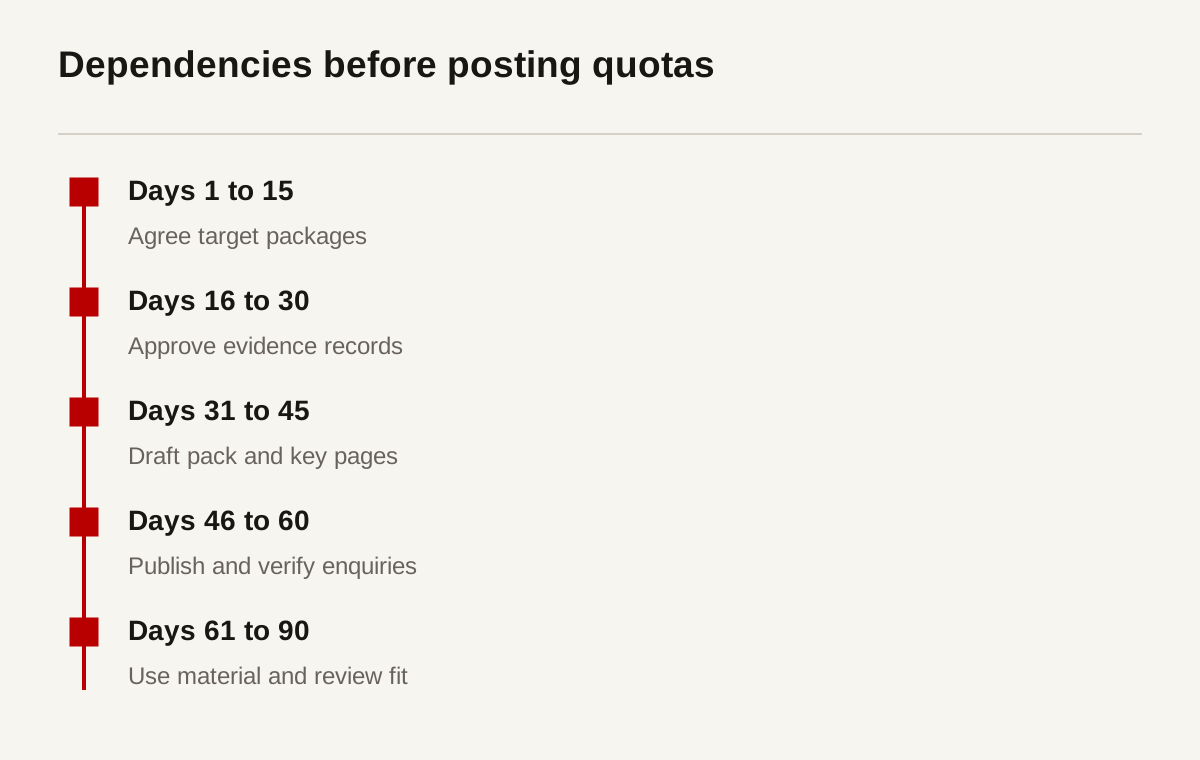
| Period | Action | Responsible owner | Dependency | Completion evidence |
|---|---|---|---|---|
| Days 1 to 15 | Agree target packages and exclusions | Director and estimating lead | Current capacity and past enquiry review | Signed-off pursuit statement |
| Days 16 to 30 | Collect project and credential records | Project and safety owners | Permissions and source documents | Approved evidence register |
| Days 31 to 45 | Draft capability pack and key pages | Commercial and content team | Approved scope and project facts | Readable drafts checked by buyers' tasks |
| Days 46 to 60 | Publish and test the enquiry route | Website and sales owners | Content approval and routing plan | Public-page and receipt checks |
| Days 61 to 75 | Use material in selected channels | Commercial lead | Maintained evidence and contact list | Recorded conversations and follow-up |
| Days 76 to 90 | Review suitable opportunities and gaps | Director and responsible teams | Consistent qualification records | Next-quarter decisions with owners |
Keep a smaller weekly work list underneath this programme. A blocked client permission should not prevent publishing an unrelated, approved service explanation. Equally, a publishing deadline should not force someone to guess a specification or project outcome.
Use task-based checks for important documents and pages. The GOV.UK moderated usability method offers a practical way to observe whether readers can complete defined tasks. Your sample can identify problems; it does not establish a representative industry conversion rate.
Keep the programme within the team's capacity. If there is no owner for monthly content maintenance, reduce the publication plan. A small set of current, useful records is more credible than a large library that nobody can approve or update.
Review commercial usefulness, not attention alone
Set the review definitions before comparing results. A website visit, download, enquiry, qualified opportunity, tender invitation and awarded package are different stages. Keep their counts separate. Record the time period and any limits in the data.
Ask the commercial team what the material helped them do. Did a buyer identify the relevant scope without a long explanation? Could staff send one current capability pack? Were repeated questions answered by a maintained page? These observations can justify further work without inventing an attribution claim.
Do not credit the website for every contract won after launch. Relationships, timing, price, capacity and procurement decisions also matter. When a buyer identifies the website as useful, record that as a reported contribution, not proof of sole causation.
Review lost and unsuitable opportunities too. A page attracting enquiries outside your coverage may need a clearer boundary. A product download generating repeated compatibility questions may need better conditions. A low enquiry count can be acceptable if the relevant buying audience is small and the enquiries are suitable.
Use the templates as working records
The workbook includes a pursuit planner, project-evidence register, credential register and capability outline. The sample rows are labelled examples. Replace them with approved facts, and leave unknown information as an assigned question rather than filling the gap by guessing.
Use the pursuit sheet first. It defines who the material serves. Complete the evidence register next. Then draft the capability pack and website pages from those records. Keep the credential sheet with the person responsible for renewal, not only with the marketing editor.
The CSV pack contains the same working structures. Both formats are available without registration. Neither contains client information, macros or a promise that completing the sheets will produce enquiries.
Questions directors should settle
Will a better website help us win tenders?
It can help a buyer understand the company and inspect relevant evidence. It cannot replace eligibility, the requested submission or evaluation criteria. Treat the public website as a maintained supporting record. Prepare each tender response around the actual procurement documents.
Should every project become a case study?
No. Prioritise projects that explain a relevant capability or constraint and can be published accurately. Permission, responsibility and useful evidence matter more than the number of entries. Keep other records internally for qualification work where appropriate.
Do we need different packs for every audience?
Maintain one source of approved company facts, then produce concise versions for genuinely different assessment tasks. A product-selection document and a contractor qualification pack need different detail. They should not contradict each other about the company or scope.
Is construction marketing mainly social media?
The most useful starting work may be scope clarity, project evidence, a capability pack or a functioning enquiry route. Use social channels where they reach relevant people and support a defined task. Do not judge the programme only by post frequency or reactions.
Make the work easier to assess
At Creatif Work, we begin with the missing information and the broken handoff. A construction company may need clearer project responsibility, a current capability pack or a website that helps the right buyer find its scope. Those needs should be diagnosed before choosing what to build.
We can connect approved evidence to website structure and editing, and bring the capability material into a consistent brand identity. The aim is a usable record that the commercial team can maintain and buyers can assess.
Sources and scope
Sources were reviewed on 1 October 2026. Recheck formal procurement and credential requirements for the actual opportunity. This is a commercial planning guide, not a tender, safety or legal assessment.
- BCA construction outlook, 22 January 2026: nominal demand values, preliminary and forecast labels.
- GeBIZ supplier guide: Singapore government procurement process.
- BCA Contractors Registration System: current registration context.
- WSH Council bizSAFE programme: programme scope and status information.
- Google Search Essentials and image guidance: search foundations and image context.
- W3C images, tables and forms: accessible presentation and interaction.
- Google Analytics recommended events: measurement definitions.
- GOV.UK moderated usability testing: task-based review method.
There is no representative website audit or interview study behind this article. The example records and diagrams are planning aids. The BCA figures describe the market, not results achieved by Creatif Work or a client.