

Electrical Safety Evidence for Australian Domestic Commercial Vessels
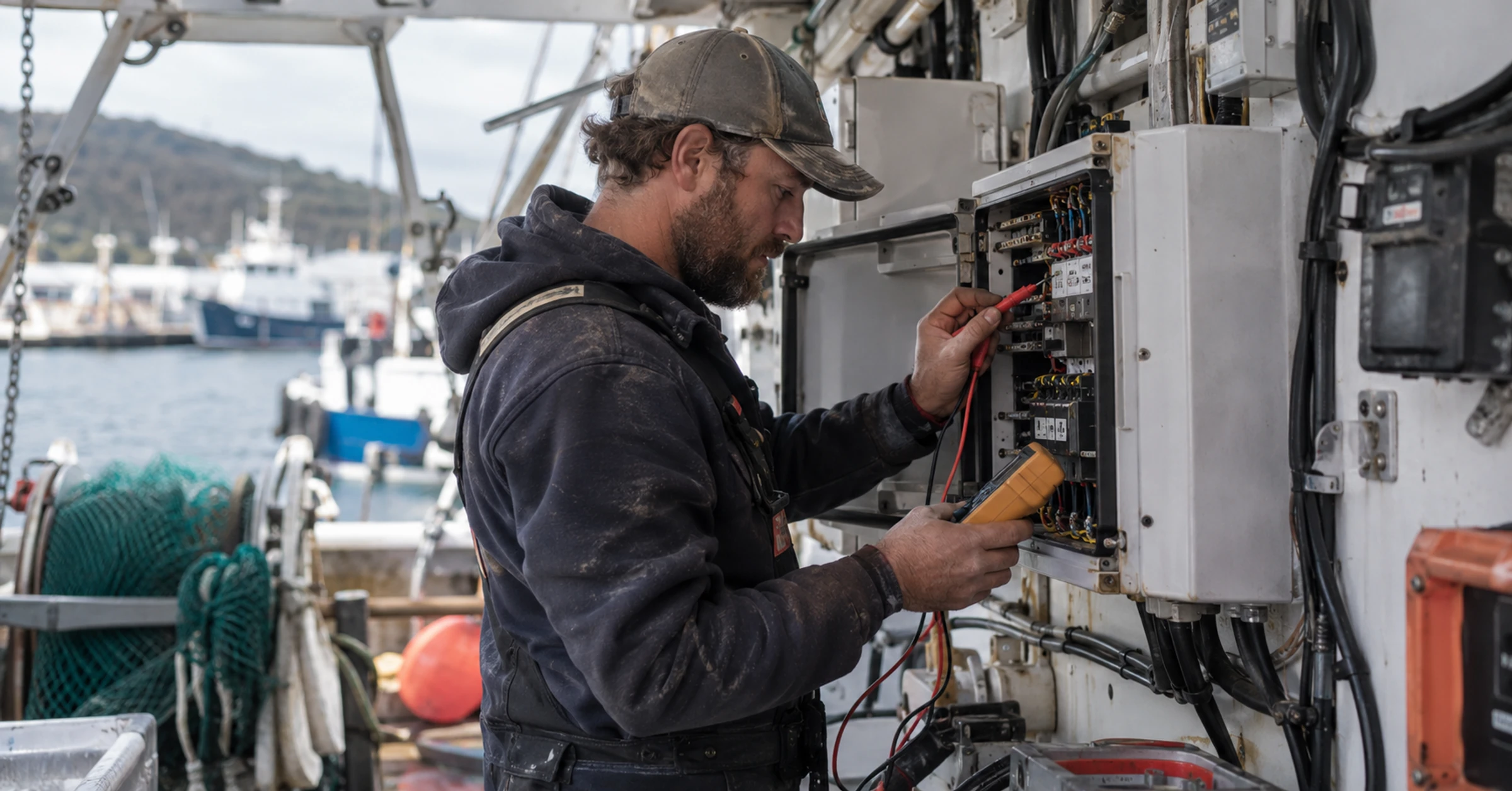
Electrical safety evidence on an Australian domestic commercial vessel should show that hazards are identified, equipment is maintained, isolation is controlled, competent people perform work and defects are closed. A current certificate alone does not show how the system is managed between surveys.
The vessel's operation, class, equipment and applicable standards determine the exact records required.
What electrical safety evidence should a vessel operator organise?
Organise the electrical risk assessment, system information, maintenance schedule, inspection and test records, isolation process, competency records, defect and repair history, emergency arrangements and evidence that changes were reviewed.
AMSA's National Compliance Plan 2026-27 identifies electrical safety among its inspection focus areas. Operators should use current legislation, Marine Orders, National Standard for Commercial Vessels requirements and AMSA guidance applicable to the vessel.
| Evidence area | Record to check | Weak sign |
|---|---|---|
| System | Current drawings, labels and equipment list | Changes exist only in the engineer's notes |
| Risk | Hazards, wet areas, stored energy and controls | Generic shore-based assessment |
| Maintenance | Planned tasks, frequency and responsible role | Tasks close with no result |
| Isolation | Procedure, devices, verification and handover | Tags used without test for dead |
| Testing | Instrument, calibration, result and acceptance | Pass stated with no measured value |
| Defects | Finding, temporary control, repair and verification | Repeated fault with no cause review |
| Competence | Role requirements and authorised people | Qualification copied with no scope check |
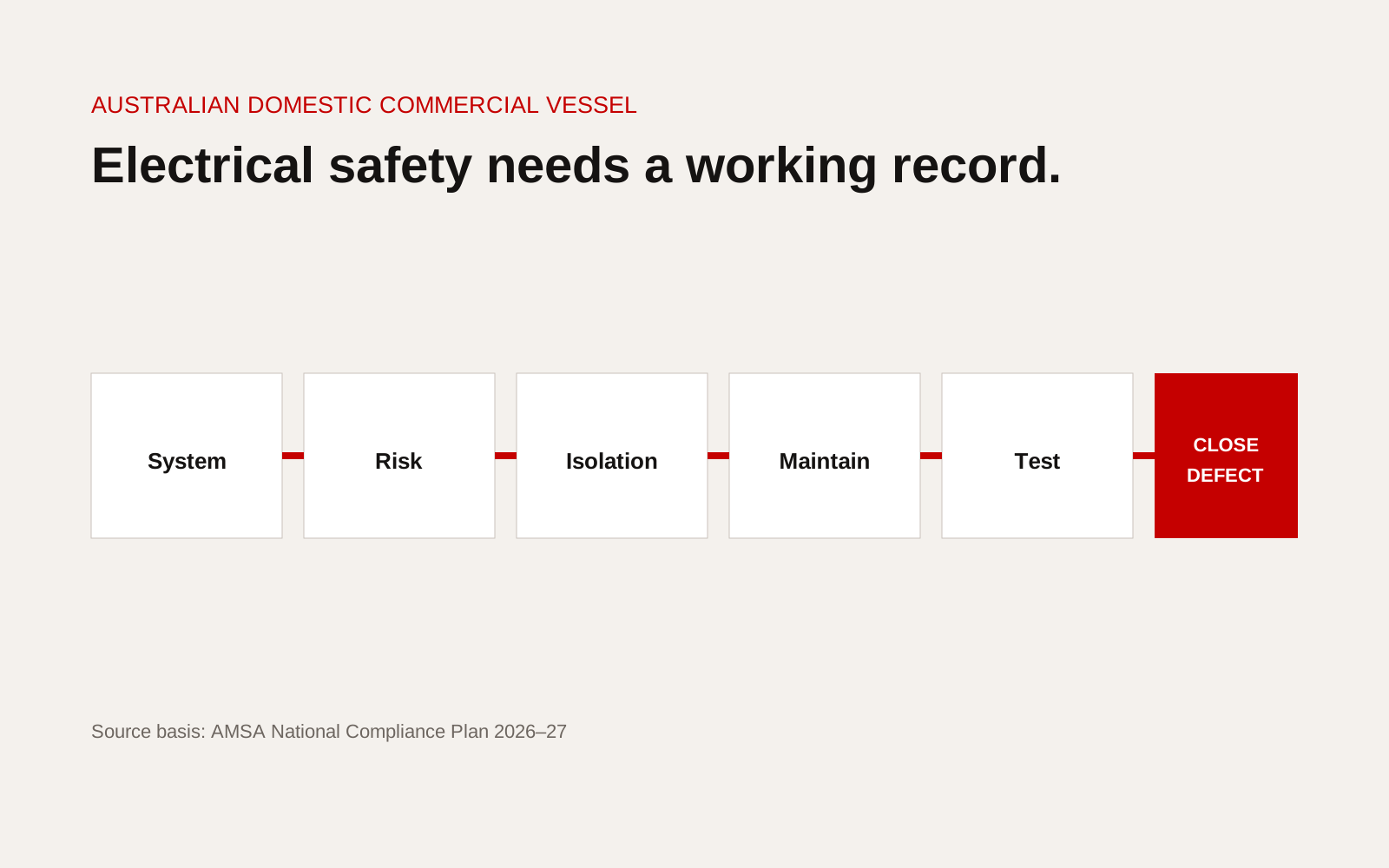
Domestic commercial vessel electrical safety evidence chain from risk assessment and isolation through maintenance, testing and defect close-out.
Keep system information current
Maintain diagrams, distribution information, protective devices, battery systems, shore supply, generators, inverters and significant consumers. Label equipment consistently with drawings and maintenance records.
When equipment is added or changed, review load, protection, cable, ventilation, fire and emergency implications before closing the modification.
Base maintenance on the actual system
The planned maintenance system should identify task, interval, method, isolation, acceptance and record. Include environmental effects such as vibration, salt, moisture, heat and mechanical damage.
Trace one critical item from schedule to completed work. The record should show who did the task, what was found, measured values where relevant, defects raised and return to service.
Control isolation and stored energy
Describe how circuits are identified, isolated, locked or tagged, tested and handed back. Address multiple supplies, batteries, capacitors, backfeed, generators, inverters and shore connections.
Test the process with crew and contractors. A written procedure is weak if labels, devices or access do not match the vessel.
Verify competent work
Define who may inspect, test, repair, modify and authorise return to service. Check qualifications and vessel-specific familiarisation without publishing personal records.
When shore contractors attend, record scope, induction, isolation responsibility, test results and handover to the vessel.
Close defects with evidence
Every defect should show immediate risk control, priority, repair, parts, test and verification. Recurring faults should trigger a cause and system review rather than repeated reset or replacement.
Use photos only as support. A photograph of a repaired cable does not show protection, test or acceptance.
Connect electrical safety to the SMS
AMSA's safety management system guidance explains that the SMS should be based on operational risk and put into practice. Electrical maintenance, emergency response, crew roles and contractor control should connect to that system.
Review emergency and degraded operation
Test the loss of a generator, shore supply, distribution section, battery system or essential consumer at the level appropriate to the vessel. Record the expected alarms, automatic actions, manual response and equipment that must remain available.
Drills and tests should not create a new hazard or damage equipment. Use approved procedures and competent people. Close any mismatch between drawings, labels, crew understanding and actual system response.
Control portable and temporary equipment
Extension leads, portable tools, chargers and temporary supplies can bypass the discipline applied to fixed systems. Define inspection, testing, protection, environmental suitability and removal. Include contractor equipment brought onboard.
When a temporary supply remains for longer than intended, treat it as a defect or modification requiring review rather than allowing it to become an undocumented permanent arrangement.
Use trends to find repeat failure
Group defects by equipment, cause, location and recurrence. Repeated tripping, corrosion or heat damage may show an environmental or design issue that replacing one component will not solve.
Evidence review checklist
- Drawings and labels match the installed system
- Electrical hazards reflect vessel conditions
- Maintenance tasks have methods and acceptance
- Isolation covers every energy source
- Test instruments and calibration are recorded
- Competency and authorisation are defined
- Contractor work has vessel handover
- Defects include control, repair and verification
- Modifications trigger design and risk review
- SMS review captures electrical lessons
Sample one completed job
Choose a recent electrical maintenance or repair task and follow it from reported defect to return to service. Confirm the asset identity, risk assessment, isolation, competency, method, test instrument, results, defects found, parts used, drawing updates and authorisation to close.
Look for breaks between systems rather than missing paperwork alone. A test result may exist but not be linked to the equipment. A modification may be safe but absent from the drawing. A contractor may have completed the work without a clear vessel handover. Record the corrective action, owner and due date, then feed the lesson into the safety management system review. Repeat the sample across different systems during the year. This provides a practical view of whether procedures produce a reliable vessel record and helps distinguish an isolated filing error from a recurring control weakness.
Creatif Work helps marine operators organise approved public evidence without exposing controlled vessel records. Our website service can explain maintenance and safety processes to buyers, while custom software can support defect, approval and evidence workflows when records are fragmented.