

How French Contractors Should Explain Whole-Life Carbon Without Green Claims
A contractor can complete serious carbon work and still describe it badly. “Low carbon”, “sustainable” and “eco-responsible” say almost nothing about what was assessed, which stage changed or whether the figure came from a design model, a product declaration or a completed building.
Whole-life carbon content needs the opposite approach. Start with the boundary. Name the evidence. State the comparison. Leave out the claim when the supporting record cannot survive those three questions.
How should a contractor explain whole-life carbon?
State the project or product covered, life-cycle stages included, calculation method, data source, comparison baseline, result, date and reviewer. Separate designed, specified, installed and measured outcomes. Avoid labels such as “green” or “carbon neutral” unless their exact scope and recognised evidence are immediately available to the reader.
France’s DGCCRF says an environmental claim should be clear, precise, verifiable and supported by scientific evidence or a recognised method. Its current guidance on environmental claims also says claims should address significant impacts and should not hide a transfer of impact to another life-cycle stage.
RE2020 provides a project calculation framework for new buildings. It does not make every contractor, product or company “low carbon”. The official RE2020 overview confirms that the regulation considers energy, carbon and summer comfort, including emissions related to construction.
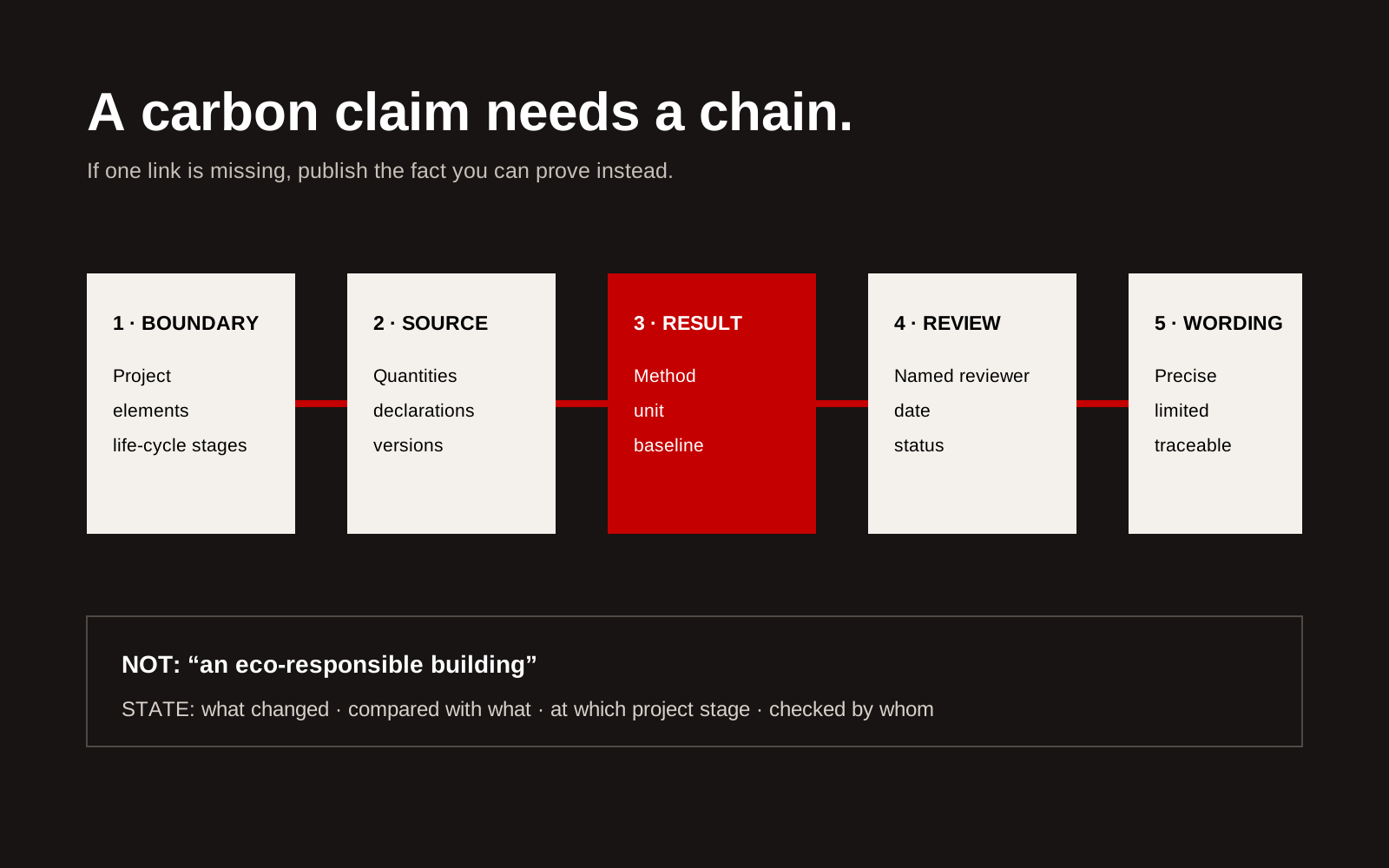
Evidence chain for a French contractor carbon claim from project boundary and source data to calculation, review and public wording.
Build every statement from an evidence chain
Use the following order before writing public copy:
| Evidence field | Question it must answer | Weak version | Publishable version |
|---|---|---|---|
| Subject | What does the figure cover? | “Our project” | Named building, package or product family |
| Boundary | Which stages and elements are included? | “Whole life” | Named life-cycle stages and exclusions |
| Source | Where did inputs come from? | “Verified materials” | Named declarations, quantities and versions |
| Baseline | What is the result compared with? | “30% less” | Defined reference design or prior option |
| Status | Is it predicted or achieved? | “Saved carbon” | Calculated at design stage, specified, installed or measured |
| Review | Who checked it and when? | “Independently assessed” | Organisation, role, review date and document reference |
This chain prevents a common mistake: turning one favourable number into a claim about the whole project. A concrete substitution may lower one product-stage result while other materials, transport, use or end-of-life effects remain unchanged. Say what moved. Do not imply that everything improved.
Keep four statuses separate
Calculated at design stage means the figure reflects a model and its assumptions. It may change.
Specified means the project documents require a product or performance, but it does not prove installation.
Installed means records show what went into the completed work. It still does not automatically prove operational performance.
Measured in use means a result came from actual operation over a stated period. Weather, occupancy and system settings may affect it.
These labels should appear beside the number, not in a footnote. A buyer should not have to infer whether “18% reduction” is a modelled design option or a measured completed outcome.
Replace green language with project facts
The DGCCRF’s 2025 report on non-food products and services found that broad environmental claims and unsupported claims were recurring problems. The authority reported that one in four of the 1,317 establishments checked had an anomaly. The safest editorial response is also the most useful for technical buyers: remove broad labels and publish the record underneath them.
Instead of:
We delivered an eco-responsible low-carbon building.
Write:
At developed design stage, the team compared the structural option with the project reference model. The published result covers the product and construction stages included in the RE2020 calculation dated [date]. It is a calculated result, not measured operational performance.
That wording is less dramatic. It is also much harder to misunderstand.
Use a publication checklist
Before a claim appears on a service page, case study, brochure or social post, confirm:
- The subject and project phase are named.
- The boundary and exclusions are visible.
- The method and data sources can be retrieved.
- The baseline is a real documented comparison.
- The unit is correct and consistent.
- The status is labelled as calculated, specified, installed or measured.
- The reviewer and date are recorded.
- A result for one element is not presented as a result for the entire building.
- The public wording matches the approved technical record.
- Someone owns corrections if the underlying record changes.
Marketing should not simplify a figure without technical review. Technical teams should not send marketing a 90-page report with no approved summary. Create a short publication record that both sides sign off.
Make the project page answer the buyer’s next question
A useful carbon case study does more than state a percentage. It explains what decision produced the result, what constraints remained and whether the approach can transfer to another project. Our guide to French construction case studies shows how to connect evidence to the buyer’s decision rather than to a gallery.
Creatif Work builds construction websites that keep technical evidence, project narrative and environmental claims aligned. Through our website service, we can turn an approved calculation summary into language that procurement teams can understand without making the claim broader than the evidence.