

Singapore Green Mark 2026: What Contractors Need to Publish
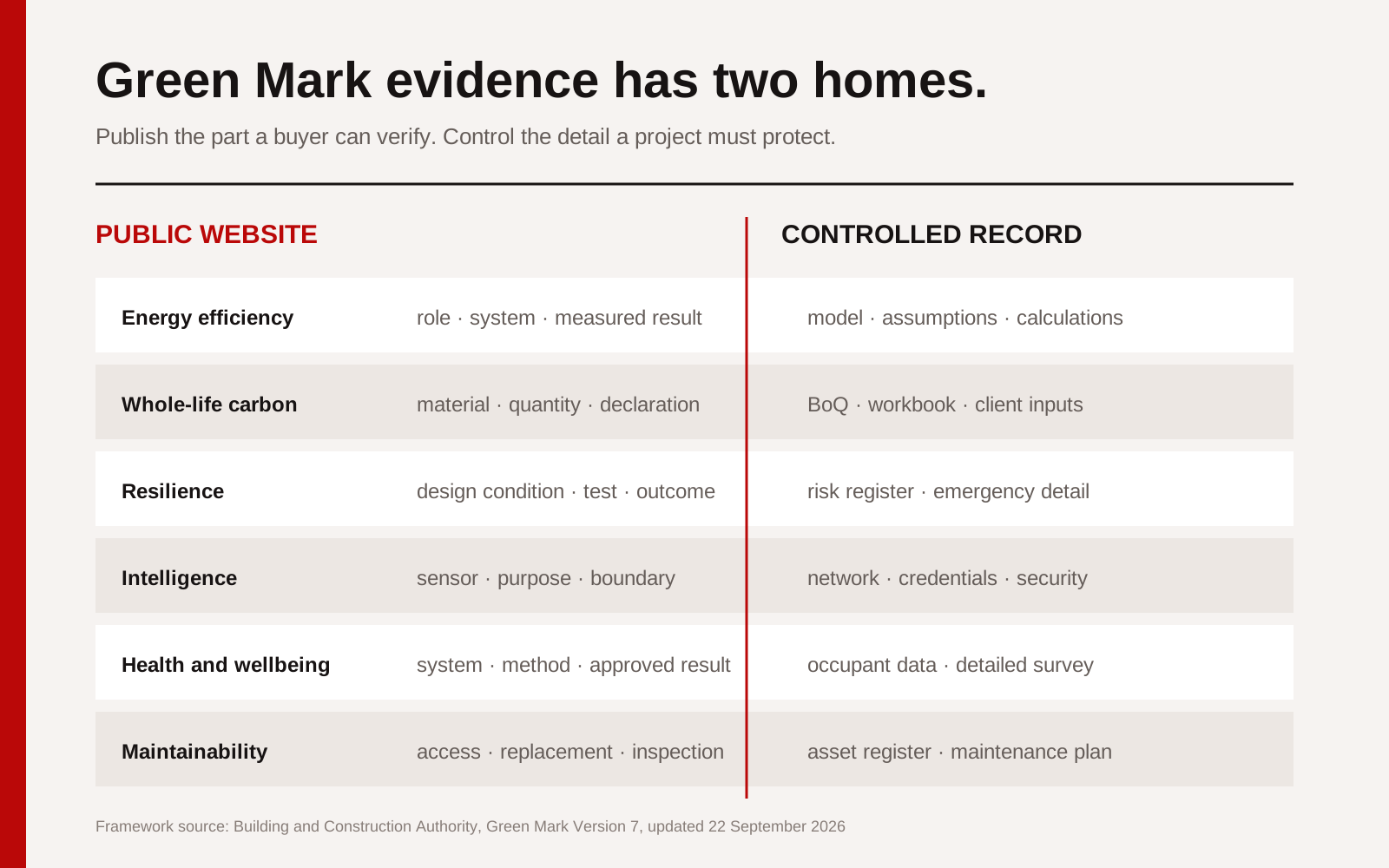
Singapore launched Green Mark Version 7 in September 2026. For contractors, the immediate website question is not how to reproduce a certification submission online. It is what to publish so a developer, consultant or main contractor can see which Green Mark outcomes the company can support, where the evidence comes from and where the claim stops.
The distinction matters. Green Mark applies to a building and its assessed performance. A contractor can show experience, methods and measured contributions. It should not imply that a company, product or work package carries a building certification that it does not hold.
What changed in Green Mark in 2026?
BCA launched Green Mark Version 7 on 2 September 2026 and set a transition towards it. No new Green Mark 2021 applications will be accepted from 1 April 2027, while ongoing Green Mark 2021 projects must finish by the end of 2027.
Those dates come from BCA's Green Mark Version 7 implementation page, last updated 22 September 2026. BCA also publishes the certification standard, technical guides, scoresheets and calculation tools on that page.
The public evidence a contractor needs is organised more usefully by the six areas in the Green Mark framework:
| Green Mark area | What a contractor can publish | What to keep controlled |
|---|---|---|
| Energy efficiency | Systems installed, commissioning role, controls approach and measured project result | Energy model, assumptions, detailed calculations and client files |
| Whole-life carbon | Materials, quantities, lower-carbon alternatives and how records were collected | Bills of quantities, product-specific inputs and assessment workbook |
| Resilience | Design conditions addressed, protection measures and testing completed | Risk register, vulnerability details and emergency procedures |
| Intelligence | Sensors, controls, integration boundaries and operating purpose | Network architecture, credentials and security-sensitive diagrams |
| Health and wellbeing | Ventilation, lighting, thermal or indoor-air work delivered | Occupant data and detailed post-occupancy records |
| Maintainability | Access, replacement, inspection and maintenance provisions | Asset register, detailed maintenance plan and proprietary instructions |
This is a publication framework, not a list of points a contractor can claim. The project team should check the current BCA standard and the applicable project brief before making any statement about criteria or achievement.
What should a contractor publish?
Publish enough for a buyer to connect four things: the project condition, your work package, the evidence produced and the result. A generic sustainability page does not make that connection.
The exact role on the project
State whether the company acted as main contractor, specialist subcontractor, system integrator, supplier, installer or commissioning party. Green Mark is collaborative. A project may involve the developer, qualified persons, consultants, assessors, contractors and facilities teams. Claim only the part your company controlled.
For example, “supported the project's energy-efficiency work” is still too broad. A useful project record might state that the team installed and commissioned a variable-air-volume control package, recorded test results and handed the verified settings to the facilities manager.
The inputs and records you supplied
Name the evidence created during delivery. Depending on the package, this could include:
- product declarations and material quantities;
- approved shop drawings and equipment schedules;
- testing and commissioning records;
- controls sequences and trend logs;
- installation inspection records;
- as-built information and asset data; or
- maintainability reviews and access provisions.
Do not upload every file. Publish the evidence type, its purpose and who verified it. Keep client documents, calculations and security-sensitive information in the controlled project record.
One measured result with its boundary
A result needs a baseline, period and unit. “Reduced energy use” cannot be assessed. “The controls change reduced weekday plant operating hours during the eight-week observation period” can be understood, provided the company has permission to publish the evidence.
Do not convert a modelled figure into an operational result. Do not describe a product declaration as proof of whole-building carbon performance. State whether the number is predicted, tested, commissioned or measured in use.
Our guide to publishing prequalification evidence uses the same discipline for certifications: name the scope, issuer, validity and relevance instead of displaying a badge without context.
What should not appear on the public website?
Some information becomes less useful, or creates risk, when it is public.
Keep these in the submission, project common data environment or approved record:
- detailed assessment calculations and editable score sheets;
- client-owned models, drawings and asset information;
- security architecture, device addresses and access details;
- unapproved performance data;
- personal data from occupants or project staff; and
- claims that depend on a certification decision not yet issued.
A website is the public index to the evidence. It is not the evidence repository itself.
A Green Mark project-page checklist
Before publishing a case study, ask the project director and sustainability lead to approve these fields:
- Building and stage: new building, existing building or in-operation work, plus the stage in which the company participated.
- Contract role: the exact package and contractual responsibility.
- Green Mark version: Green Mark 2021 or Version 7, if relevant and confirmed.
- Outcome area: energy efficiency, whole-life carbon, resilience, intelligence, health and wellbeing or maintainability.
- Method: what the team installed, changed, checked or recorded.
- Evidence: the test, document, calculation input or handover record created.
- Result: measured, modelled or verified outcome, with period and boundary.
- Approval: written client permission for names, photographs and figures.
- Limit: what the project example does not prove.
- Contact: the role that can answer a technical buyer's next question.
If any field is unknown, leave it out until it is verified. A smaller accurate case is more useful than a broad claim that fails during prequalification.
How should product suppliers handle Green Mark content?
Product pages should publish the data a project team can use, not promise points. State product identity, applicable standards, performance values, test conditions, material composition, declarations, certificates and the latest revision date. Link to the current document rather than an old PDF copied into several pages.
BCA provides the Building Embodied Carbon Calculator and whole-life carbon templates through the Version 7 resource page. A supplier can help the assessment team by providing complete inputs in the right units. The project assessor still determines how those inputs apply to the building.
For products that affect energy or indoor conditions, state the tested operating range and the standard used. A best-case laboratory value without its test condition gives the designer little to work with.
Review the website during the transition
Green Mark 2021 does not disappear on launch day. The transition runs into 2027, so a contractor may have live projects under both versions. Label each project correctly. Do not rewrite older work as Version 7 experience.
Review these pages before the first Version 7 tender:
- sustainability and environmental pages;
- project case studies;
- product and system pages;
- capability statements and downloadable PDFs;
- staff biographies that mention Green Mark roles; and
- news posts announcing awards or certifications.
Add a review date wherever technical content may change. Link to BCA rather than copying criteria that could be revised.
Creatif Work structures construction websites around the evidence buyers need to verify. Our website service can turn approved project records into clear capability and case-study pages while keeping controlled documents out of the public site. If the material exists but nobody can find or maintain it, start with the problem.