

What Belongs on an Australian Marine Safety and Welfare Page?
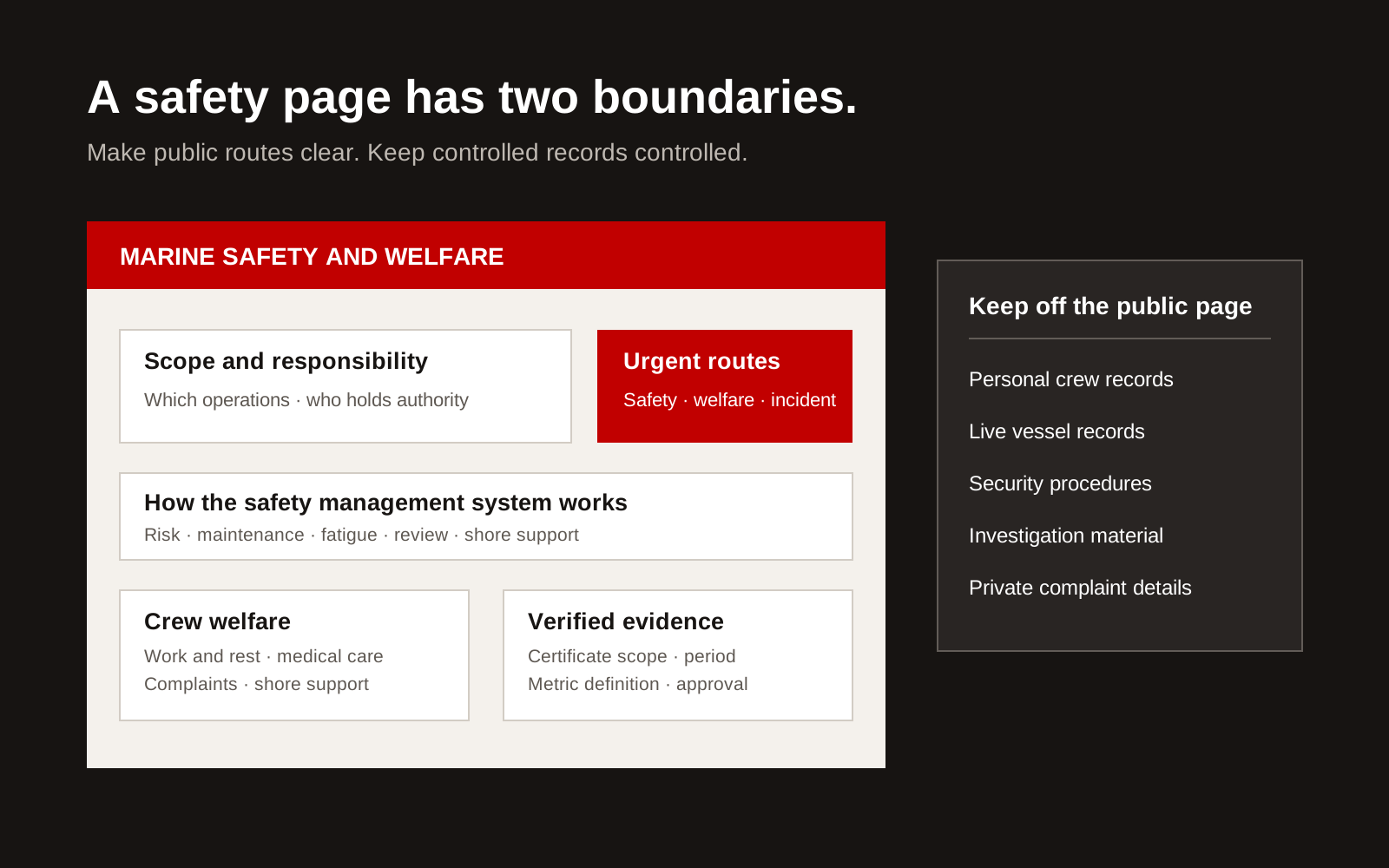
A marine safety and welfare page has several readers. A client wants to know how risk is managed. A seafarer needs the complaint or support route. A job candidate wants to understand living and working conditions. An inspector needs the controlled records, but those records should not be sitting on a public website.
Trying to satisfy all four readers with certificates and a statement about "safety first" leaves each of them short of what they need.
The page should explain the operating system, publish the routes people may need quickly and show evidence at the right level. It should also make clear which detailed records are controlled elsewhere.
What should a marine safety and welfare page include?
Include the scope of operations, safety responsibilities, safety management approach, crew welfare commitments, complaint and emergency routes, current certifications and a small set of verified performance evidence. Keep personal information, security-sensitive procedures, live vessel records and internal investigation material out of the public page.
This structure follows the distinction in Australian Maritime Safety Authority guidance between an effective safety management system and public information. AMSA says an SMS must describe how safety, maintenance and operation are managed and must be put into practice. It is not just a document.
Give the page one clear first screen
The first screen should answer three questions:
- Which vessels, services or operations does this information cover?
- Who holds operational responsibility?
- Where does someone go for an urgent safety or welfare matter?
A useful opening is factual: "This page covers our Australian offshore support operations and shore team. The master holds operational authority on board. Urgent safety concerns can be raised through [route]."
Do not open with a safety slogan. A slogan cannot tell a crew member whether the page applies to their vessel or help a client understand the operating boundary.
Use separate routes for separate needs
One contact form is not enough. The person reporting a welfare concern may need confidentiality. The client reporting an operational issue may need a fast response and a reference number. A job applicant asking about roster conditions needs neither route.
| Need | What the public page should provide | What stays controlled |
|---|---|---|
| Immediate danger or marine incident | Emergency instruction and official reporting route | Incident log, evidence and investigation |
| Seafarer welfare concern | Onboard and onshore complaint routes, confidentiality statement | Identity, case notes and outcome records |
| Client safety question | Named business contact, response expectation and scope | Contract records and internal assurance material |
| Recruitment question | Conditions, roster context and support available | Personal records and employment casework |
| Certification check | Certificate name, scope, issuer and current status | Audit working papers and corrective actions |
AMSA explains that complaints under the Maritime Labour Convention can be made when issues cannot be resolved using onboard procedures. Its seafarer welfare guidance links to both onboard and onshore complaint information. A company's page should not obscure those official routes.
Explain the safety management system in plain words
Describe how the system works, not how committed the company feels.
A concise section can cover:
- how vessel and operational risks are assessed
- who approves operating procedures
- how crew are inducted and familiarised
- how drills, maintenance and defects are recorded
- how fatigue and work hours are monitored
- when the system is reviewed
- how shore support reaches the master and crew
For domestic commercial vessels, AMSA says the owner, operator, master and crew must be involved in developing and reviewing the risk assessment. Its SMS guidance also points operators to verification tools for assessing whether the system is healthy.
That is a better model for website copy than a list of software names or a photograph of a safety meeting. Readers can see who participates and what the process produces.
Cover welfare as working conditions, not a side programme
Marine Order 11 implements the Maritime Labour Convention in Australia for vessels within its scope. AMSA lists conditions of employment, accommodation, food and catering, health protection, medical care, welfare, social security protection and onboard noise among the covered matters.
Use those subjects as a coverage check. The page does not need to reproduce the order. It should state how a seafarer finds the relevant company procedure and where official guidance sits. Link directly to Marine Order 11 rather than paraphrasing legal duties from memory.
Useful public content may include:
- who the welfare contact is by role
- access to medical advice and shore support
- complaint options and protection from retaliation
- the approach to fatigue, work and rest
- accommodation and food standards at a summary level
- access to port welfare services
Avoid publishing a generic employee assistance logo with no instructions. State who can use the service, how to reach it and whether it is independent of the employer.
Put certificates in context
A certificate tile should answer four questions: what is it, who issued it, what operation or entity does it cover, and is it current?
Do not imply that one certificate proves every aspect of safety performance. A management-system certificate, a vessel certificate and a crew qualification apply to different things. Grouping them under one "certified safe" claim blurs those boundaries.
If a client needs the document, provide an accessible copy only when publication is appropriate. Otherwise offer a clear request route. Our article on AMSA safety evidence for marine suppliers shows how to connect evidence to the work it covers.
Publish performance data only when it can be explained
Numbers without a denominator or reporting boundary can mislead. "Zero incidents" says little unless the reader knows the period, exposure and definition.
Before publishing a measure, record:
- the exact metric and definition
- reporting period
- vessels, locations or operations included
- exposure measure, if relevant
- data owner and approval date
- whether the figure can be compared with an earlier period
Use a short note below the number. If the qualification takes longer than the claim, the claim may not belong on the page.
Test the page on a phone and in a stressful moment
Open the page on a mobile phone and ask someone unfamiliar with it to find the welfare complaint route. Give them 30 seconds. Then ask them to find the emergency route and the scope of the SMS.
This test matters because urgent users do not browse like procurement teams. Keep contact routes visible, use descriptive link text and avoid placing essential information inside an image or downloadable brochure.
The page should also have an owner and a review trigger. Review it when a contact changes, a certification is renewed, a vessel or operating scope changes, or an AMSA requirement affecting the content is updated.
Creatif Work designs marine websites around the questions crews, clients and procurement teams actually ask. Our website service can turn controlled safety material into clear public information while keeping operational records where they belong.