

France's Maritime Decarbonisation Chain: Where Yard Suppliers Fit
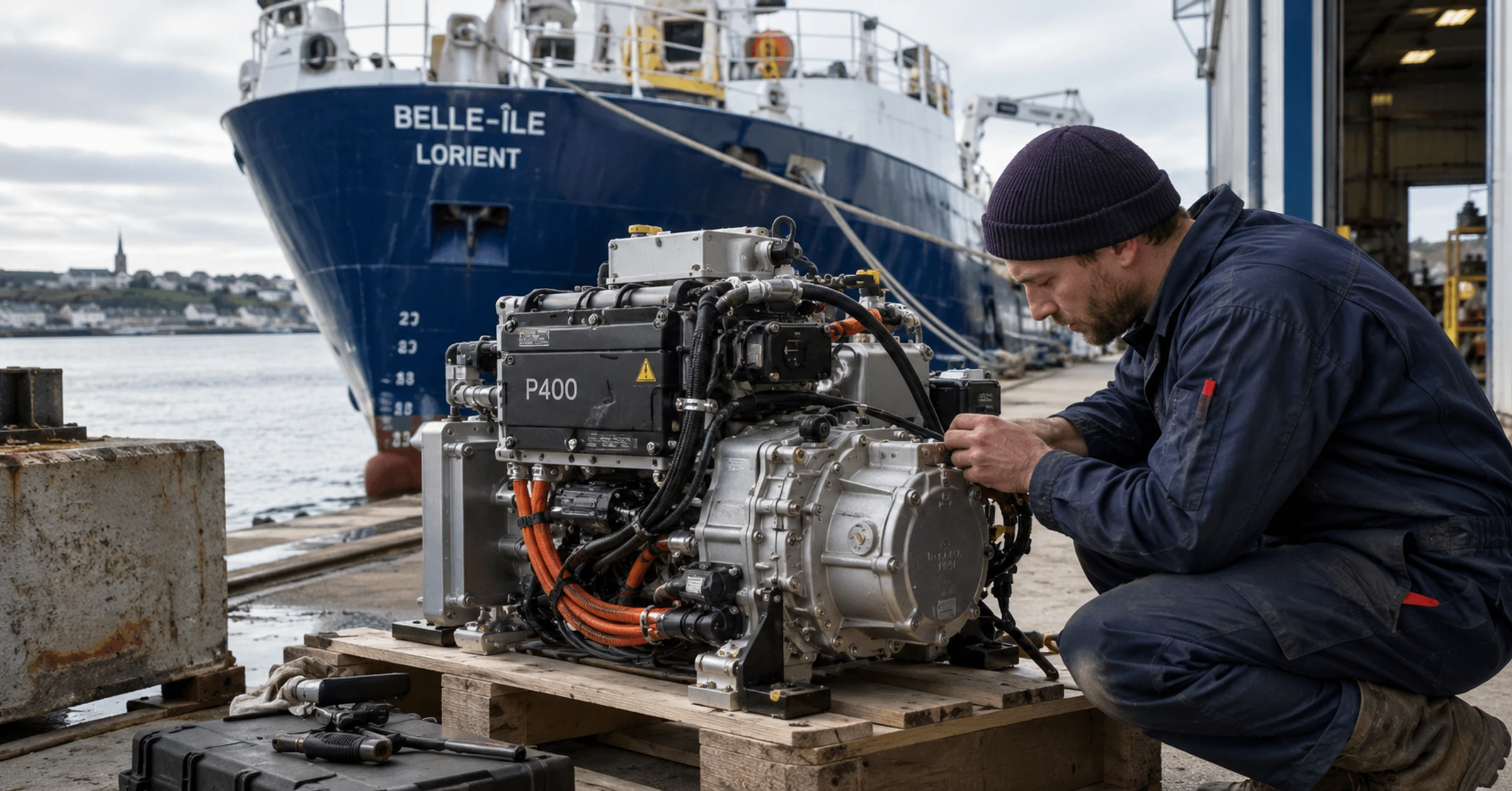
Maritime decarbonisation is not one equipment order. It is a chain linking energy, storage, conversion, propulsion, controls, vessel integration, port infrastructure, crew competence and long-term service.
Yard suppliers need to identify which link they own and which interfaces they can prove.
Where can yard suppliers fit?
Suppliers can fit through equipment, subsystem design, package integration, retrofit engineering, testing, digital monitoring, safety systems, commissioning, training, spares and maintenance. The strongest position is a defined interface with evidence for performance, compatibility, safety, delivery and lifecycle support.
France's Ministry for Ecological Transition says the national maritime decarbonisation roadmap involves the full chain, including shipyards, ports, shipowners, energy providers and the naval innovation ecosystem. Its 2025 maritime decarbonisation paper places the transition across the value chain rather than in one technology.
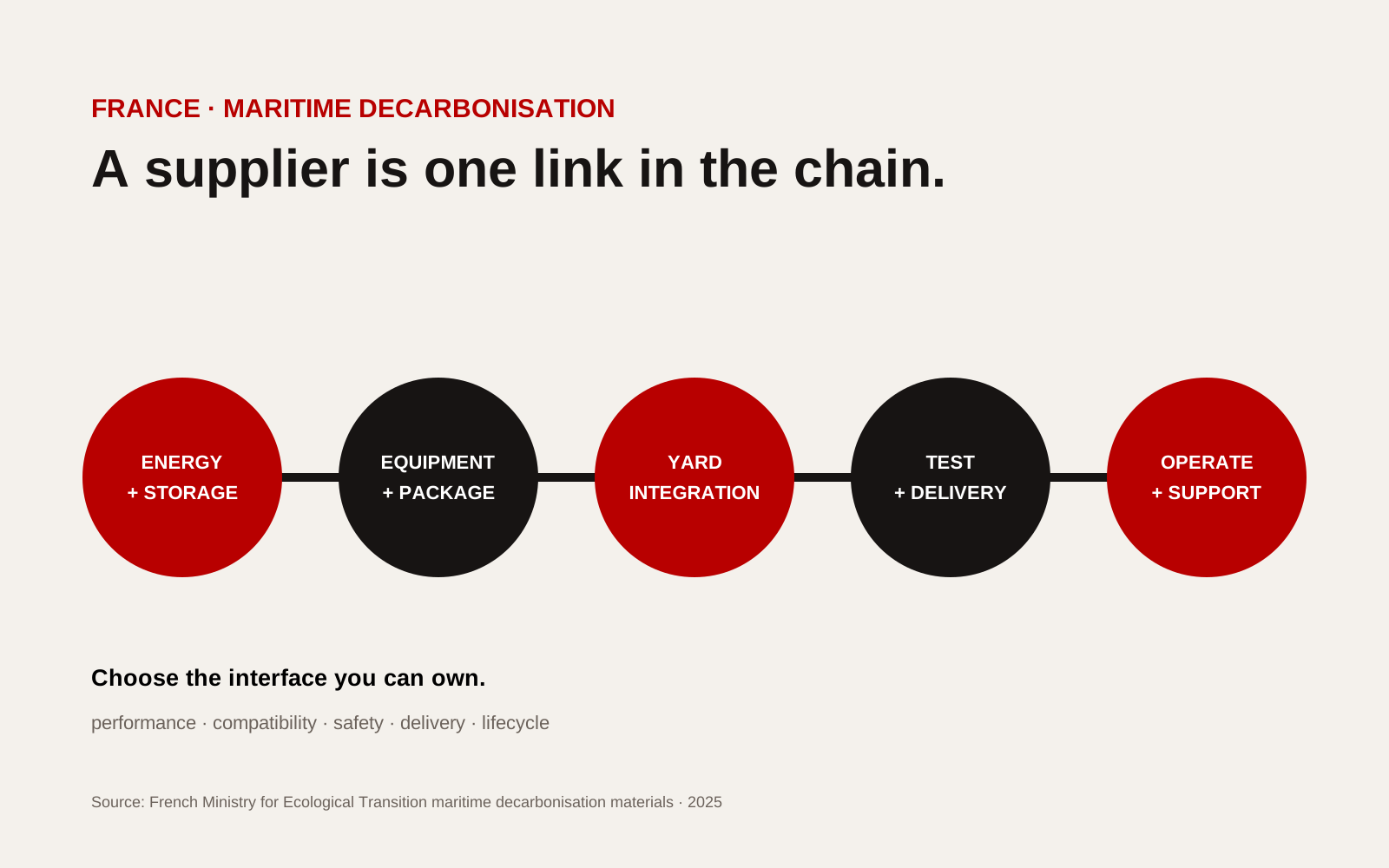
French maritime decarbonisation chain from energy and equipment through yard integration to vessel operations.
Map the chain before choosing the offer
| Chain position | Supplier offer | Evidence needed |
|---|---|---|
| Energy and storage | Fuel, battery, tank or containment support | Specification, compatibility and chain of custody |
| Conversion and propulsion | Engine, motor, fuel cell or power electronics | Duty, efficiency, emissions and test conditions |
| Vessel integration | Structure, piping, ventilation, controls and safety | Interface matrix, hazards and approval route |
| Monitoring | Sensors, data, reporting and optimisation | Data ownership, accuracy and system boundary |
| Operations | Training, maintenance, spares and response | Competence, coverage and recovery process |
Do not claim the entire chain unless the business genuinely owns or governs it. Buyers need a reliable boundary more than a larger market label.
Connect performance to a vessel case
Every result depends on route, load, vessel type, operating pattern, energy pathway and measurement boundary. A supplier should publish the selection inputs and the conditions behind a figure.
If the equipment reduces onboard fuel use but the claim excludes upstream energy, say so. If a result is modelled for a proposed retrofit, label it as modelled. If the trial covers a limited route or season, preserve that limit.
This protects the supplier and makes the result more useful to naval architects, yards and owners.
Treat integration as a product
Many failures and delays occur between packages. Build an integration offer around:
- interface definition and ownership;
- hazard and operability review inputs;
- space, weight and structural constraints;
- piping, electrical and control connections;
- alarms, shutdowns and fallback modes;
- factory, harbour and sea acceptance tests;
- as-built and training records.
Our guide to a shipyard supplier page built around integration points shows how to publish this capability without exposing project-sensitive drawings.
Show the commercial path to scale
Decarbonisation projects often move from study to pilot, first installation, repeat installation and fleet support. State which stage the supplier serves today.
For each stage, explain what is priced and delivered. A feasibility study may produce requirements and a risk register. A pilot may include engineering, equipment, instruments and test support. A repeat package may require manufacturing capacity, standard interfaces and service coverage.
Do not make a first prototype sound like a repeatable production offer. Name the open engineering and approval work.
Prepare evidence for French and international buyers
Useful supplier evidence includes:
- system and vessel boundary;
- applicable class and regulatory route;
- ratings with conditions and method;
- interface and responsibility matrix;
- manufacturing and delivery plan;
- commissioning and acceptance process;
- French and English documentation scope;
- service, spares and lifecycle plan;
- project or test evidence with approved limitations.
The French maritime decarbonisation roadmap page frames the transition toward 2050. Suppliers should connect long-term direction to evidence they can deliver now.
Use the website to qualify, not close, the project
The public site should help a buyer understand fit, interfaces and evidence. Detailed design, hazards, commercial terms and controlled records belong in the project exchange.
Create a specific enquiry route that asks for vessel type, project stage, package, operating profile and location. Do not invite sensitive drawings through an unsecured form.
Choose partnerships with clear responsibility
A smaller supplier may need a yard, integrator, class adviser, French service partner or energy specialist to reach the project. Build the partnership around an interface and deliverable, not a shared announcement.
Record who leads the offer, owns design, signs declarations, carries warranty, holds spares, supports commissioning and responds after handover. Align public pages and proposals with that responsibility map.
Review what happens if one partner leaves. The owner or yard needs continuity for documentation, software access, parts and competent support. A partnership that cannot explain exit risk is not yet a complete lifecycle offer.
Track the opportunity by evidence stage
Use stages such as relevant concept, approved feasibility, tested package, first vessel, repeatable package and supported fleet. Attach required evidence and investment to each stage.
This makes commercial planning more honest. It also helps marketing avoid presenting a study as an orderable product or a first installation as proven fleet scale.
At each review, ask which uncertainty was closed and which new one appeared. Decarbonisation programmes develop through evidence, not through a straight line of announcements.
Keep a dated summary that commercial, technical and service teams can all use. The public message should change only after the underlying evidence does.
Creatif Work designs marine websites that make integration and technical evidence findable. Our website service can position a French yard supplier at the right link in the chain, with clear boundaries and a route into serious technical discussion.