

PAS 2000:2026 and UK Construction Product Information

PAS 2000:2026 gives construction product manufacturers a practical code of practice for bringing safe products to market. It does not replace existing legal duties, and following it is not the same as receiving product certification. Its value is the management structure it puts around risk, production information, control and feedback.
For website and technical-document owners, the immediate question is whether published product information can be traced to an approved, current source.
What is PAS 2000:2026?
PAS 2000:2026 is a voluntary British Standards Institution code of practice for construction product manufacturers. It provides a framework for showing reasonable steps towards product safety, including pre-market risk assessment, factory production control, production information and use of market feedback. It is not itself the future statutory general safety requirement.
BSI announced publication on 27 February 2026. The UK Government's Construction Products Reform White Paper describes PAS 2000 as government-funded and as a tool manufacturers can use while wider reform develops.
Check the current legislation and product route for the specific product. A voluntary code does not remove a regulatory obligation.
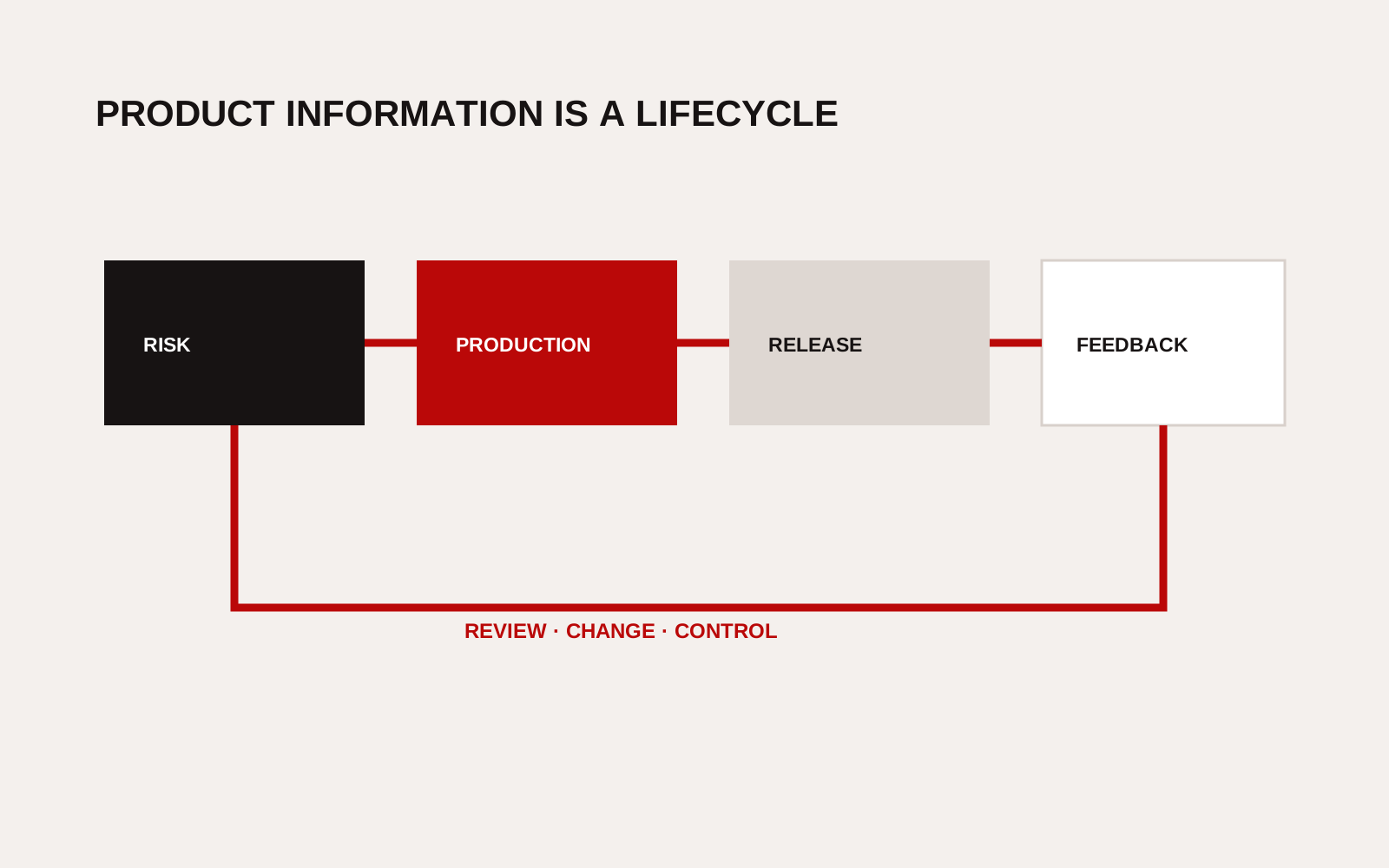
PAS 2000 construction product information lifecycle from risk assessment to market feedback.
Treat product information as a lifecycle
| Lifecycle stage | Information to control | Publication question |
|---|---|---|
| Intended use | Users, conditions and limits | Is the scope stated clearly? |
| Risk assessment | Hazards, foreseeable misuse and controls | Are warnings connected to real risks? |
| Design and testing | Specification, method and result | Is the performance condition visible? |
| Production | Materials, process and conformity checks | Can the published product be linked to production control? |
| Release | Labels, instructions and declarations | Is the current approved issue public? |
| Market use | Complaints, incidents and feedback | Can new information trigger a review? |
| Change | Product, supplier or document revision | Are old claims withdrawn or labelled? |
This lifecycle prevents the website from becoming a separate, weaker source of truth.
Build a controlled product record
Each product family should have an approved record containing:
- unique product identifier;
- intended use and user;
- conditions and limitations;
- applicable technical route and standards;
- declared performance and test basis;
- installation and use instructions;
- warnings and foreseeable misuse;
- manufacturing or conformity references;
- supporting documents and revision dates;
- owner and approver; and
- feedback or incident review status.
The public page can draw from this record. Marketing should not retype a performance figure into a separate field without preserving the unit, condition and source revision.
Connect claims to intended use
A product may be safe and suitable for one use but not another. Publish enough context for a specifier to understand the intended application and material limits. Avoid broad labels such as “suitable for all buildings”.
If performance depends on substrate, fixing, system build-up, installer competence or maintenance, state that near the claim. Do not hide a critical limit in a separate PDF footer.
Make revision status clear
Use stable document identifiers and visible issue dates. When a technical sheet changes, state whether the update is editorial, expands the scope, changes performance or introduces a safety instruction.
For old URLs:
- keep a labelled archive where retention is required;
- remove the old document from active selection paths;
- direct users to the current product record; and
- record the withdrawal or supersession date.
Do not silently replace a file when a buyer may need to show which revision informed a specification.
Use market feedback properly
Product feedback is not only a customer-service inbox. Classify complaints, installation questions, unexpected use, returns, failures and near misses. Define which signals trigger technical review.
A public contact route should collect the product identifier, batch where relevant, installation context, date and description without demanding unnecessary personal data. Safety-critical issues need an escalation path outside ordinary marketing enquiries.
A website publication check
Before a product page goes live, confirm:
- identity matches label and document set;
- intended use and limits are visible;
- performance values show unit and condition;
- certificate scope and validity are correct;
- instructions are current;
- warnings are not reduced for layout;
- revision date appears on page and PDF;
- superseded links are handled; and
- feedback route reaches the responsible team.
Our guide to construction product pages for specifiers shows how to turn controlled fields into a useful comparison. The construction sector page connects product evidence with wider project and supplier proof.
Creatif Work structures construction websites around approved information sources and clear review ownership. If technical records are controlled internally but the public page is not, start with the problem.
Prepare an information withdrawal drill
A manufacturer should be able to identify and correct public information when a safety issue, test change or production deviation affects it. Choose one product family and rehearse the path from technical decision to website, distributor material and customer notice.
Record every location where the affected claim appears. Confirm who can pause downloads, label a page, notify approved distributors and answer technical questions. Preserve the withdrawn revision and the reason for action in the controlled record.
The drill should also test scope. A problem may affect one batch, configuration, factory or intended use rather than the full family. Public wording must be accurate enough to protect users without extending the issue beyond the evidence.
After the exercise, fix missing ownership, untracked duplicate PDFs and contact routes that reach only marketing. Agree the threshold for urgent escalation and the information required before publication resumes. PAS 2000's lifecycle approach becomes practical when market feedback can reach the product owner and change every dependent information source promptly.